

Support CleanTechnica’s work through a Substack subscription or on Stripe.
US government officials and Wall Street analysts are starting to consider the prospect that oil prices might surge to an unprecedented $200 a barrel, according to a Bloomberg report. If that happens, many of the foundations of the global economic system will be disrupted.
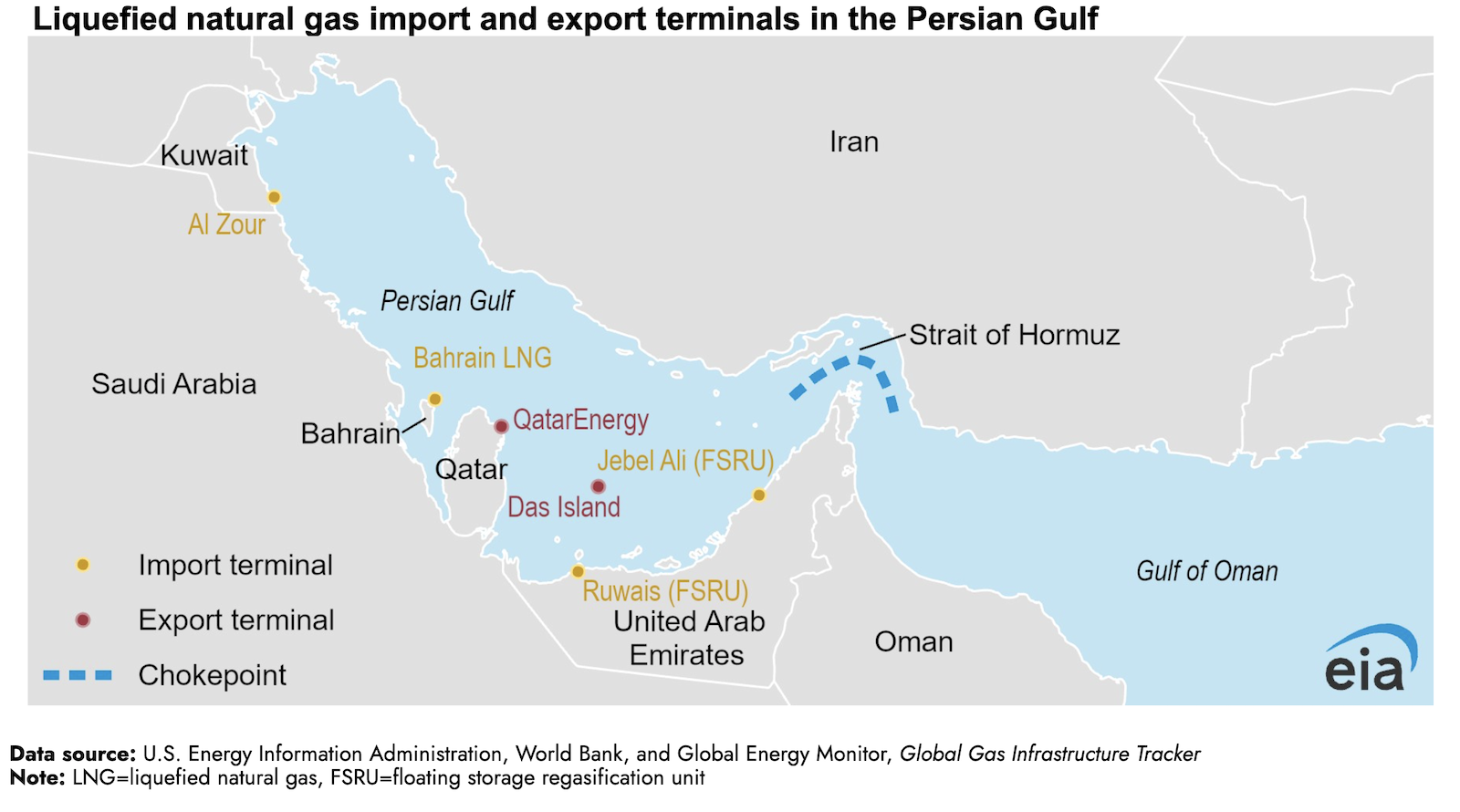
“It’s clear to me if this crisis lasts more than three or four months, it becomes a systemic problem for the world,” Patrick Pouyanne, CEO of TotalEnergies, said at the CERAWeek conference in Houston. “We cannot have 20 percent of the crude oil which is exported globally stranded in the Gulf and 20 percent of the LNG capacity stranded without any consequence.”
A simple calculation suggests the closure of the Strait is reducing global oil flows by some 11 million barrels a day. After accounting for the interventions aimed at offsetting the loss, Bloomberg says there will be a net shortfall of about 9 million barrels a day — an amount equal to what the UK, France, Germany, Spain, and Italy typically consume on a daily basis.
The release of oil from emergency stockpiles and the lifting of sanctions on Russian and Iranian oil have helped moderate price increases, but it is not clear what further tools are available to keep global oil prices from surging in the near term. The situation is even more extreme when it comes to liquefied natural gas. Unlike with oil, there are no alternative routes to get LNG to market and very few strategic stockpiles to cushion the shortfall.
The longer the Strait of Hormuz remains closed, the greater the risk that key energy production assets are damaged in the conflict, which could result in a more prolonged impact on supply. Already, parts of the world’s biggest LNG plant have sustained missile damage which owner QatarEnergy warned will take up to five years to repair.
If the Strait of Hormuz stays closed well into the second quarter, the risk is that oil prices will move sharply higher. “At $170 a barrel, the impact on inflation and growth roughly doubles — a stagflationary shock that could shift everything from the path ahead for central banks to the outcome of the US midterm elections,” Bloomberg claims.
Group of Seven energy and finance ministers are scheduled to hold a video call on March 30 that will be joined by officials from several central banks, the IEA, the International Monetary Fund, and the World Bank.
No Panic — Yet
For now, oil prices have yet to reach panic levels. Futures traded on Monday close to $116 a barrel, up 60% since the war began but far below 2008’s all-time high of $147.50. European natural gas prices are up more than 70% since the start of the conflict, but have come nowhere near the peaks set during the 2022 energy crisis.
One reason why prices have not risen more is that traders are assuming the Jackass in Chief of the United States will do what he usually does and chicken out when it comes to following though on some of the dozens of threats he makes every day. Today on his private antisocial media platform, he has posted a number of times that the war will be ending soon. Unfortunately, Iran disagrees.
The impact on supplies has been partly alleviated by Saudi Arabia and the United Arab Emirates rushing to reroute oil via pipelines that circumvent the Strait of Hormuz. However, the Houthis in Yemen are now threatening shipping in the Red Sea, which happens to be at the other end of those pipelines. Uh, oh.
The US, which has placed significant sanctions on Iranian and Russian oil, has suddenly decided to remove those sanctions, a move that will put tens of billions of dollars into the treasuries of both countries. If you are wondering how the US can bomb a country while presenting it with a major new sources of revenue, you are not alone.
The merits of another stockpile release were also raised at a recent European Union energy task force meeting, although some countries argued that such a move should be reserved for when actual physical disruptions emerge, rather than for price management. It is unclear if further releases would actually boost the amount of oil on the market or simply mean that discharges carried on for longer.
With a record release already underway one month into the crisis, it’s not clear how much more the US can do to protect American consumers from price shocks, said Mike Sommers, CEO of the American Petroleum Institute. “The playbook is pretty bare at this point,” he said in an interview.
Diesel & Jet Fuel Prices Soar
While crude oil futures have remained well below their peaks, prices for refined fuels like diesel and jet fuel have rocketed in recent weeks — at times topping $200 and offering the first glimpses of demand destruction in Asian markets which rely heavily on both crude oil and liquified petroleum gas shipped through the Strait of Hormuz, Bloomberg reports.
FGE NexantECA, an industry consultancy, estimates that Asian demand is already down by almost 2 million barrels a day this month. The bulk of that drop in demand has been in the petrochemical sector, although there have also been reductions in gasoline, jet fuel, and diesel that that will get larger if the war persists into April, it said.
As the crisis spreads, parts of Africa have already facing supply disruptions and governments are implementing measures to reduce consumption. Now some in the industry are warning that Europe is heading toward scarcity pricing — particularly for diesel, the lifeblood of the global economy. Several traders and analysts said that the region faces supply shortages within the coming weeks if the Strait of Hormuz is not reopened, with similar pressures also expected in Latin America.
Forcing The Energy Transition
Here’s where the rubber meets the road. Bloomberg suggests the energy transition those of here at CleanTechnica have been advocating for during the past decade will soon be “forced upon us in a very painful way that’s going to happen very quickly. If the Strait remains closed for a second month, traders and analysts say they expect global energy markets will quickly evolve into a fight for supplies, driving up prices, and benefiting buyers and countries that are able to outbid others.”
That’s happening already. Some LNG suppliers are becoming more selective in negotiating mid to long term volumes because it’s more lucrative to sell into the spot market, said Steven Wilson, a partner at the global energy practice at Mayer Brown. Other industry observers said they were seeing signs that US oil exports to Asia are poised to surge in April, as refineries hunt for alternative suppliers to replace Middle East barrels.
In Latin America, a senior oil trader described receiving calls from buyers they had been unsuccessfully courting for years, who are now desperate to purchase and willing to seal deals with little or no negotiation.
Saudi Arabia Won’t Save Us
Typically, when the world faces an oil supply shock, the market looks to Saudi Arabia to help out because it is the 800 pound gorilla in the OPEC playpen and the only country with significant remaining untapped production capacity. But if it can’t get its oil to market, it is unable to help solve the crisis. Not only that, its leader is advocating for more US and Israeli bombing while zealously guarding his own military assets. Why put its arms at risk when the US will happily do the heavy lifting?
The amount of oil and gas no longer available in the global marketplace is at least as big as it was during the Arab oil embargo when surging energy costs led to sharply slowing growth and stagflation. That shock resulted in not just a sharp drop in oil consumption by the end of the decade, but ultimately a sweeping overhaul of the global energy system.
Today, traders, analysts and economists are again predicting that global fossil fuel demand — and by implication economic activity — will have to decline significantly in order to reduce demand if the Strait remains closed.
“If you think about the magnitude of the shock coming out of the Gulf right now, you could lose between 5-10 million barrels a day of demand, which will have a significant impact similar to the seventies,” said Jeff Currie, chief strategy officer at Carlyle Group. “The main message is that we’re going to get the energy transition forced on us in a very painful way that’s going to happen very quickly.”
Petrochemical Concerns
The impact extends far beyond fuels. Petrochemicals are used in everything from food packaging to polyester clothing, and manufacturers are already warning that a sustained conflict will lead to noticeable price increases. Farmers and governments are also rushing to secure critical crop nutrients ahead of spring planting, as the war drives up prices and squeezes supply.
Global natural gas prices have eased since the last energy crisis and the market was bracing for further declines as more US and Qatari liquefied natural gas plants were due to come online and boost global supply. That outlook has been upended with some analysts now saying the world has moved from the possibility of a glut to a deficit later this year.
Even when the Strait opens, flows will take months to return to normal, even for those producers that haven’t sustained damage in the war. “For as long as Hormuz remains closed, both oil and gas markets don’t balance,” said Aldo Spanjer, head of energy strategy at BNP Paribas. “The significant demand destruction we would require to balance oil and gas markets in a sustained Hormuz outage, will require significantly higher prices than today.”
A Renewables Moment
The one thing missing from the Bloomberg report is news about redoubling efforts to transition away from fossil fuels to renewable energy. Recently, CleanTechnica highlighted a report by DW that details how renewables are surging in most countries around the world.
All of this pain and financial disruption is the result of the fevered ravings of a US president who obviously gets off on hurting others and has surrounded himself with other like minded sadists. Paul Krugman today reports that the Secretary of Defense is now holding prayer meetings in the Pentagon in which he beseeches the Lord to help deliver “overwhelming violence of action against those who deserve no mercy.” Hogsbreath clearly attended different Sunday School classes than I did.
The way to eliminate future energy shocks is to change how we think about energy. Sadly, we do not have the infrastructure in place today to switch fully to renewables, but if this crisis teaches us nothing else, it should be that fossil fuels are a pathway to economic destruction while renewables are a pathway to energy abundance.
Forget all the hoopla about emissions and climate change. We need to adopt clean energy to eliminate the regular occurrence of wars over oil and to allow the global economic system to flourish without fear of such massive disruptions as the world is experiencing today. Our political leaders seem incapable of breaking our addiction to fossil fuels. We need new leaders, ones who make smart decisions that benefit everyone instead of enriching the wealthiest among us.
Sign up for CleanTechnica’s Weekly Substack for Zach and Scott’s in-depth analyses and high level summaries, sign up for our daily newsletter, and follow us on Google News!
Have a tip for CleanTechnica? Want to advertise? Want to suggest a guest for our CleanTech Talk podcast? Contact us here.
Sign up for our daily newsletter for 15 new cleantech stories a day. Or sign up for our weekly one on top stories of the week if daily is too frequent.
CleanTechnica uses affiliate links. See our policy here.
CleanTechnica’s Comment Policy