

Support CleanTechnica’s work through a Substack subscription or on Stripe.
Or support our Kickstarter campaign!
Although American GDP might be doing reasonably well, many of us non-economists have a tendency to look at our personal costs of living as more indicative of how the economy is doing. Inflation, the cost of food, electricity, housing, if people are losing or retaining their jobs, and so on.
Some people are paying more for electricity now than previously, and new data centers are rather power hungry and contributing to that. Many new sources of electricity are being constructed just to power data centers. A CNN article commented on this trend. “Consumers are paying on average 7% more for electricity, a hot topic during the November governor races in New Jersey and Virginia. Natural gas, the most common way to heat homes in America, is 9% more expensive.”
While many may default to assuming coal and natural gas are the solution, new solar power farms are cost competitive and can be built fairly quickly. Solar power is often paired with energy storage in the form of batteries. Fortunately, investors are still supporting solar power even though there are some political headwinds for clean, renewable electricity at the moment.
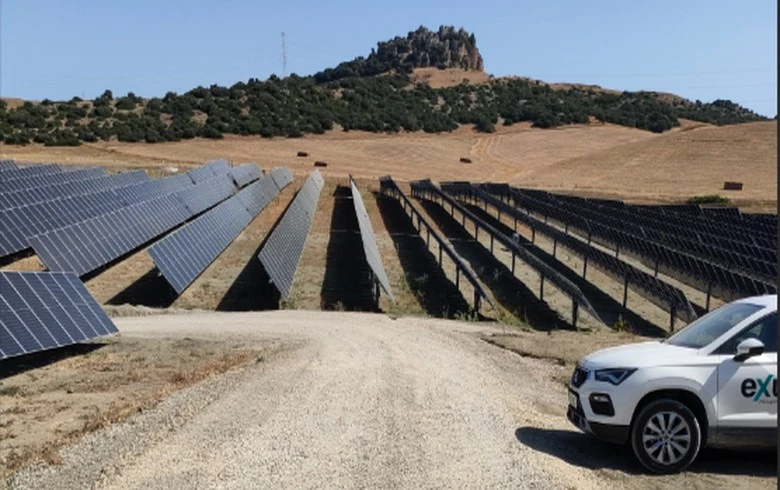
Jim Spencer, President and CEO of Exus Renewables North America, answered some questions about his company’s latest investment round for CleanTechnica.
What is a senior secured corporate credit facility?
A senior secured corporate credit facility is a flexible, low-cost source of capital that’s backed by assets and structured to be highly secure for lenders. In practical terms, it gives Exus readily available funding to move quickly and responsibly.
For Exus Renewables North America (Exus), it’s especially helpful because it lets us accelerate our pipeline of upcoming projects—supporting the early work that turns a good site into a real project, from interconnection and permitting to early procurement and construction planning. It also gives us the agility to act on new opportunities as they emerge.
Bottom line: it’s a strong vote of confidence in our platform, and it helps us bring more projects online faster, with the financial discipline and stability you want in a long-term renewable energy owner-operator.
How large is your current renewable energy portfolio and how much will you grow it?
Exus Renewables North America (Exus) builds, operates and maintains a large and growing portfolio of utility-scale renewable energy projects across the U.S., representing over 700 MW of renewable energy assets in operations or under construction and 5.8 GW in active development. We continue to expand the portfolio steadily, with a strong pipeline that supports long-term growth as demand for clean, reliable, and affordable energy continues to increase.
Is it mostly solar or mostly wind power?
Our portfolio is intentionally diversified across solar, wind and battery projects. That mix allows us to deliver more consistent power generation, manage risk, and support grid reliability across different regions. We invest where each technology makes the most sense based on resource quality, grid needs, and community considerations.
What battery types and chemistries do you use for energy storage?
We primarily deploy lithium-ion battery energy storage systems, which are the most mature and widely deployed storage technology in the market today. Our focus is on commercially proven equipment, established suppliers, and robust system integration to ensure safe, reliable, and long-term operation.
Across our projects, we emphasize high standards for system design, controls, monitoring, and protection, and we develop projects to meet applicable safety, fire, and electrical codes and standards. As the storage sector continues to evolve, we actively track emerging technologies, but our current projects are grounded in technologies with demonstrated operating histories.
Is it all or mostly short-term storage or is some long-term?
Energy storage is not one-size-fits-all. Different grid needs call for different storage durations, and we develop projects accordingly. Our approach is to match storage duration to the problem being solved, rather than applying a single standard across all projects. Some applications benefit from shorter-duration storage designed to address daily peak demand and operational flexibility, while others may benefit from longer-duration storage that helps smooth and firm variable renewable generation, extending coverage beyond daily operating cycles.
Who do you construct renewable energy projects for?
We develop, build, and operate projects for a range of customers—including utilities, large corporate energy buyers, and increasingly hyperscalers and data center operators—who are looking for long-term, reliable, and cost-effective clean power. Our focus is on delivering high-quality assets that meet customer needs while benefiting local communities and strengthening the grid.
Are you optimistic about new renewable energy development, and if so, why?
Absolutely. We’re very bullish on new renewable energy development—because the fundamentals have never been stronger.
Demand for electricity is rising, and utilities, corporations, and data center operators all need more power that’s affordable, reliable, and available at scale. Wind, solar, and storage are increasingly the fastest and most cost-effective way to add new capacity, and storage in particular is making renewables far more flexible and dependable for the grid.
Put simply: renewables are no longer “the future”—they’re a core part of how the U.S. will meet growing power needs with greater energy security, resilience, and cost stability.
Support CleanTechnica via Kickstarter

Sign up for CleanTechnica’s Weekly Substack for Zach and Scott’s in-depth analyses and high level summaries, sign up for our daily newsletter, and follow us on Google News!
Have a tip for CleanTechnica? Want to advertise? Want to suggest a guest for our CleanTech Talk podcast? Contact us here.
Sign up for our daily newsletter for 15 new cleantech stories a day. Or sign up for our weekly one on top stories of the week if daily is too frequent.
CleanTechnica uses affiliate links. See our policy here.
CleanTechnica’s Comment Policy