
India Eyes Foreign Copper Miners to Secure Critical Mineral Supply Chain

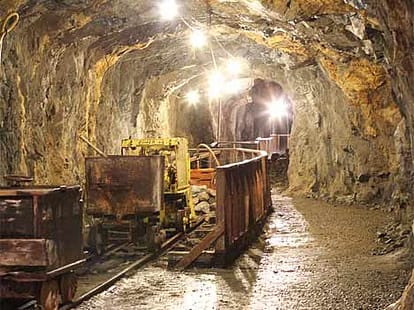
In a strategic push to reduce import dependency and secure future supply chains for critical industrial inputs, the Government of India is planning to attract foreign copper mining companies and expand international partnerships. A recent government policy document highlights the nation’s intent to ramp up copper availability to meet the demands of sectors such as renewable energy, electric vehicles, power transmission, and electronics.
This initiative comes as India’s domestic copper production has lagged, forcing increased reliance on imports at a time when global competition for such minerals is rising.
Copper: A Critical Enabler of India’s Green Transition
Copper is essential for India’s economic transformation. It is widely used in:
-
Solar panels and wind turbines
-
Electric vehicle manufacturing
-
Power transmission infrastructure
-
Telecommunications and electronics
As India accelerates its journey toward clean energy and industrial decarbonisation, demand for copper is expected to soar. However, with domestic production falling short, India’s import bill for refined copper has been increasing sharply over the past few years.
Import Dependence and Production Gaps
The closure of major domestic smelting capacity, combined with limited new mining development, has led to a significant supply-demand mismatch. Currently, India imports more copper than it produces domestically. This vulnerability is prompting policymakers to look outward for supply diversification and upstream resource access.
Policy Shift: Encouraging Foreign Mining Investment
According to the new policy direction:
-
India is actively seeking foreign participation in copper mining and exploration through strategic collaborations, joint ventures, and long-term supply contracts.
-
State-owned entities and private players may be encouraged to partner with overseas mining firms, particularly in Latin America, Africa, and Australia.
-
There is also an effort to ease regulatory barriers and create incentives for foreign direct investment in India’s mineral exploration ecosystem.
This shift aligns with the broader vision of the Make in India initiative, aiming to localise critical supply chains while maintaining global linkages.
Domestic Push: Strengthening Indigenous Capacity
Alongside foreign outreach, India plans to:
-
Revive and expand domestic copper mines
-
Upgrade smelting and refining infrastructure
-
Promote exploration of copper-bearing regions through reforms in the auction and licensing framework
-
Support research and innovation in efficient extraction technologies
These efforts aim to build a resilient domestic ecosystem that complements foreign supply strategies.
Strategic Significance
This proactive copper strategy reflects a larger policy trend where India is prioritising critical mineral security for its industrial future. Copper, along with lithium, cobalt, and rare earths, is central to the nation’s energy transition, manufacturing growth, and digital infrastructure plans.
Securing long-term access to copper will help insulate India from global price shocks, geopolitical risks, and supply chain disruptions.
India’s move to engage foreign copper miners marks a significant evolution in its mineral strategy — one that blends domestic capability-building with strategic global cooperation. As the country gears up for a technology-driven, green economy, ensuring access to foundational resources like copper will be a key pillar of its growth architecture.