
A Century of Struggle and Solidarity: The Legacy of Singareni’s Coal Warriors

– Pittala Ravinder
In the grand saga of mining labour movements world-wide, the Singareni coal miners occupy a chapter all their own. Across India’s coalfields—both near and far—their banners flew first and highest in every protest and battle for justice. Though they account for less than ten percent of the nation’s coal workforce and output, these miners bore the heaviest burdens, defended the rights of over ninety percent of their peers, and steered countless historic victories in the face of adversity. Their deeds didn’t merely shape India’s labour story; they left an indelible mark on the global history of coal mining solidarity.
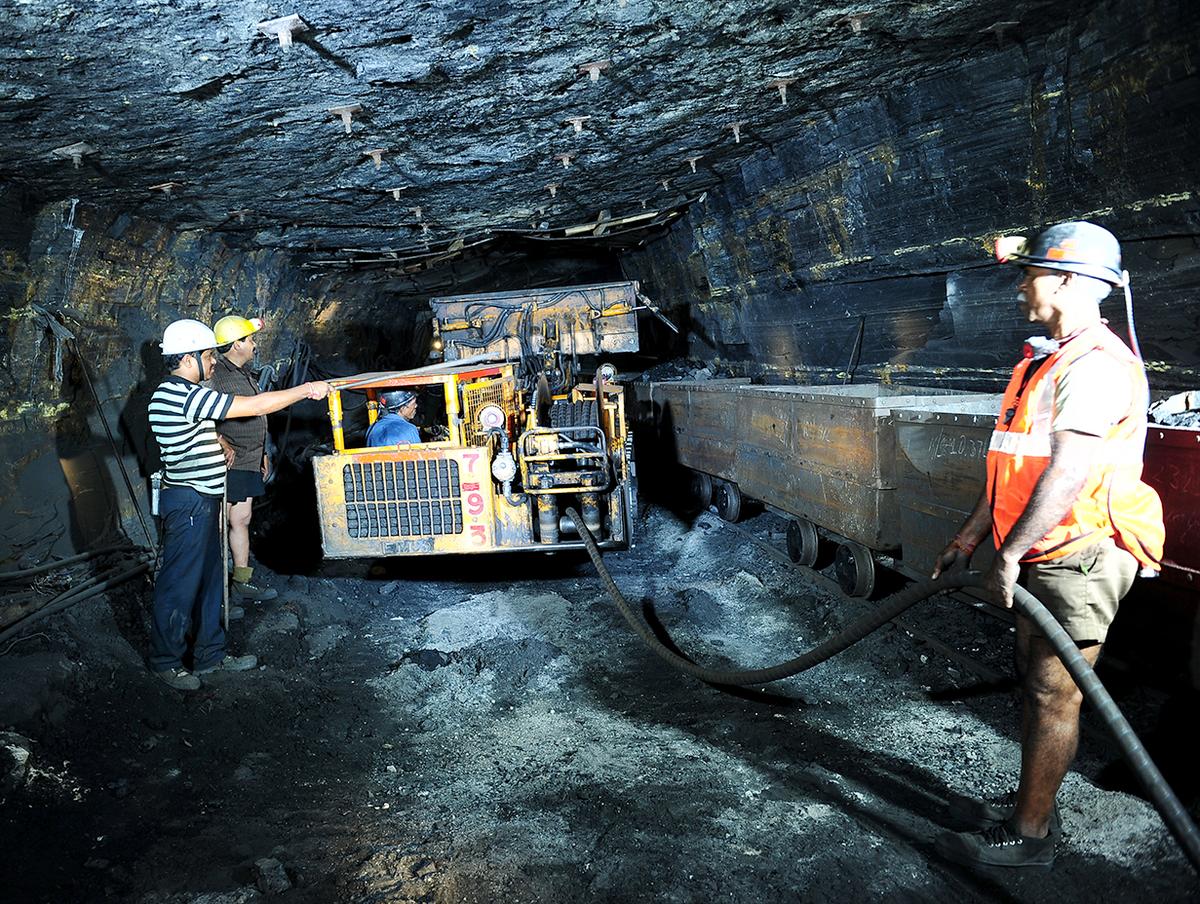
Telangana’s own Singareni movement has become the very heartbeat of India’s workers’ struggle—a proud jewel in the crown of our nation’s labour heritage—and stands as the foundational pillar of miners’ emancipation across continents. This grand narrative unfolded over more than a hundred arduous years, from the earth’s deepest seams to the furnace-hot shafts where black diamonds glowed like embers. In that harsh crucible, lives were consumed by fire, turned to ash—and yet, from those smouldering depths emerged rays of hope, carried aloft by courageous souls.
Many heroes remain unnamed, their stories cast in the dust between history’s pages, yet their legacy whispers through the dawn breeze of every new uprising. In the blood-stained heat of picket lines, dreams were welded into words; voices, hoarse but unwavering, sounded the clarion call of resistance. Bound by shared toil in coal-dust and clay, these flawed yet fearless workers wrote their own destiny with the pick of their will and the hammer of their hearts. Among them stood numerous journalist comrades—pure of purpose, untainted by compromise—who pressed their pen to paper as steadfastly as they planted their feet underground, ensuring that the story of Singareni’s miners would echo through eternity.
Freed from the tyranny of Telangana’s old feudal lords and landowners, the region’s farmers and agricultural labourers discovered in the Singareni coalfields a newfound anchor of hope—an emblem of courage and a bedrock of support. Tens of thousands of peasants and labourers journeyed from the dusty lanes scarred by debt bondage, surrendering their lives above ground to face the furnace-hot pits below.
Welcomed as a lifeline, these migrant families poured in, wave after wave, from the villages of North Telangana—Adilabad, Karimnagar, Warangal, Khammam—transforming once-quiet districts into bustling centres of employment. So powerful was Singareni’s pull that even distant dreams of Mumbai or Dubai began here, as entire kin-networks followed the promise of a steady wage into the coal belt. In the throes of grinding toil, towns sprang up around the mines: not only home to miners but to traders, merchants, teachers, doctors, and entrepreneurs—all feeding on the miners’ earnings and forging a vibrant, new industrial culture.
Yet the very oppressions they fled—bondage, exploitation, the whims of powerful landlords—reappeared in fresh guises underground. Union-busters, mafia bosses, market-driven coercion: these unseen forces seeped into miners’ family lives, threatening to crush the same people who had escaped serfdom in the fields. As the miners braced themselves, both in mind and muscle, for the fight of their lives, a spirited band of coal-belt journalists rose to the challenge. They bore witness to every injustice, carried those stories beyond the pit-head, and breathed courage into weary hearts. It was through the steadfast solidarity of writers and reporters that the miners found not only a voice but the boldness to resist and reclaim their dignity.
As Singareni coal became the sole lifeline for power generation across South India, it was the toil and sweat of Singareni’s miners that fueled the energy needs of multiple states. This transformation burdened the local workforce with immense pressure, pushing them into a relentless cycle of labor, where accidents grew in number and so did the sacrifices of lives.
Mine officials—hailing largely from North Indian states—developed a deep-seated habit of treating migrant workers from Telangana’s rural heartlands as worse than bonded slaves. With no regard for underground working conditions, the management and governments remained fixated on meeting aggressive production targets, playing recklessly with workers’ lives.
The result: thousands of miners perished in underground disasters, victims of negligence in a system that prized output over life. What began as a beacon of opportunity for Telangana’s impoverished rural families turned, tragically, into pits of death—into chambers of doom.
Amidst these dark realities, it was a courageous band of labor-aligned journalists, many hailing from the very communities affected, who emerged as powerful voices of conscience. Some of the Noted Journalists unyielding in their commitment to democratic values—embodied a quiet yet potent leadership. Through their fearless reporting, they exposed rising accident rates and held indifferent managements accountable, ensuring the world knew what was unfolding beneath the ground.
Meanwhile, the emergence of a new kind of economic self-reliance across the Singareni coal belt unwittingly fed into the chaotic ambitions of market-driven forces. The allure of commercial gain and deceptive market practices paved the way for the unchecked rise of lumpen elements. As the traditional trade union leadership fell short in safeguarding workers’ rights, the miners of Singareni began seeking alternative leadership—champions who would prioritize their safety and dignity at the workplace.
Out of this urgency was born the Singareni Karmika Samakhya (SIKASA), an affiliate of the then People’s War movement. SIKASA infused a fresh wave of consciousness and courage among coal miners, offering both the resolve and direction to fight for their rights. What began as a simple demand to reduce the workday soon evolved into broader battles: against oppressive supervisors, for better working conditions, for legal wage revisions, and for fundamental rights long denied to coal miners across India.
Through prolonged strikes and fierce perseverance, Singareni miners not only secured their rightful entitlements—they also emerged as a beacon for the international working class. Their resistance reignited Telangana’s own subterranean agrarian revolts, fueling them with moral and strategic inspiration. And amplifying every echo of rebellion was a frontline cadre of Coal Belt journalists—those unwavering voices who carried the flame of the miners’ struggle across the land.
Against this backdrop, the sweeping tides of economic liberalization and globalization, implemented rapidly across the globe, began tightening their grip on the Singareni coalfields. Slowly but steadily, the traditional underground coal mines—powered by human labor—began giving way to expansive, mechanized opencast projects. On one hand, coal production soared at an accelerated pace; on the other, the workforce shrank just as swiftly.
The model of internal war seen today in the Dandakaranya forests through operations like “Kagar” was, in essence, trialed years earlier in Singareni, when central and state governments jointly launched oppressive tactics against dissent. The brutal killing of Sammireddy, also known as Ramakanth, in Naspur years ago is a chilling prelude to today’s state-sponsored violence in places like Karregutta—an unfolding tragedy that defies the Constitution and human rights.
Over nearly 125 years, Telangana’s long-fought struggle for identity was systematically crushed—not only by force but through modern surveillance and propaganda warfare. The coal belts that once stood as epicentres of resistance were gradually transformed into outposts of extractive domination, their revolutionary spirit smothered beneath a new kind of empire. Yet the truth was not lost—thanks to a vigilant corps of journalists born of the very soil they defended. With unwavering resolve and unflinching pens, they chronicled this transformation into a powerful narrative of resistance.
And so, this legacy of resistance rose like a peak, towering far beyond the estimates and imaginations of those in power. The indomitable spirit of Singareni’s century-long coal miners’ movements reawakened and roared once more during the Telangana statehood struggle—rekindled and laid bare in its truest form.
The very Joint Action Committee (SAJAC), once formed under the leadership of Singareni workers as a united front of struggle, evolved into the Telangana Joint Action Committee (TJAC)—which went on to spearhead the fight for a separate state. This wasn’t coincidence. It was a direct lineage of the coal miners’ legacy of protest and resilience. The guiding flame of Singareni’s struggle lit the path once again, now through the collective efforts to realize Telangana’s statehood.
It is no accident that “three” key leaders of the TJAC hailed from the Singareni coalfields—they were forged in the same fires of endurance and defiance. The TJAC, hailed as the backbone and weapon of Telangana’s statehood movement, bore the unmistakable imprint of Singareni’s spirit—from the modes of agitation to the strategic stubbornness seen in workers’ strikes.
In this critical phase, leaders of the Singareni Joint Action Committee, alongside trade unions and the Coal Belt’s courageous journalists, etched an unforgettable chapter into history. Their unflinching journalism and principled activism carved enduring testimonies of a people’s will.
The story of Singareni’s coal warriors does not simply close with statehood achieved or strikes won—it echoes forward into every gathering where workers claim their dignity, every newsroom that refuses to look away, and every young voice rising to challenge injustice. The embers of their century-long struggle still glow in Telangana’s industrial towns, reminding us that liberty and fairness are forged through unyielding solidarity. As new battles emerge—whether against environmental degradation, corporate overreach, or threats to press freedom—it is this enduring alliance of labour and journalism that will carry their legacy into tomorrow, ensuring that the light kindled in those furnace-hot shafts never fades.
