
India’s Strategic Push in Rare Earths: Collaborating with Brazil and Australia to Diversify Global Supply Chains

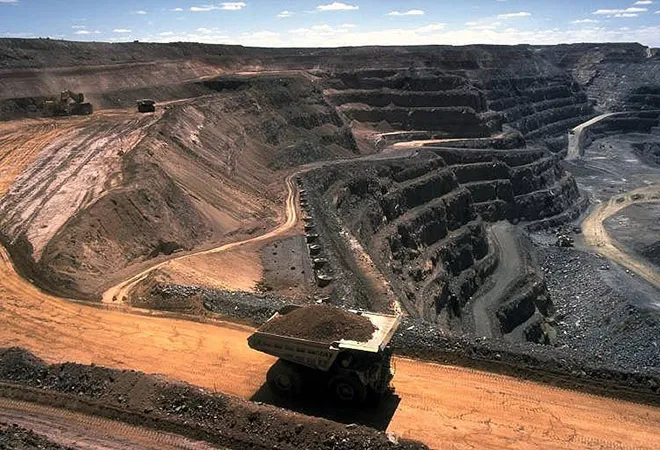
As the global demand for rare earth elements continues to rise—driven by green technologies, defense manufacturing, and digital transformation—India is accelerating its efforts to emerge as a major player in the sector. With an estimated 6.9 million tonnes of rare earth reserves, India ranks third globally, behind China and Vietnam, and is now forging strategic partnerships with Brazil and Australia to reduce dependency on China and strengthen its position in the global supply chain.
China’s Dominance in Rare Earths
In 2023, global rare earth production reached approximately 300,000 metric tonnes. China alone accounted for nearly 210,000 metric tonnes, controlling close to 70% of global output. This dominance has raised concerns among major economies over the security of supply chains, given the geopolitical and economic leverage China holds due to its monopoly in the rare earth sector.
India’s Modest Output, but Massive Potential
India’s annual production remains modest at just over 2,900 metric tonnes, yet the nation holds vast untapped reserves and is now charting a growth trajectory through policy reforms, private sector participation, and global collaborations.
Recognizing the strategic importance of rare earth elements—critical for producing electric vehicles, wind turbines, semiconductors, and defense equipment—India is focused on scaling up exploration, extraction, and value-added processing.
Forging Alliances: Brazil and Australia in Focus
To counterbalance China’s dominance, India is engaging with resource-rich nations like Brazil and Australia:
-
Australia, the second-largest producer of rare earths with around 40,000 metric tonnes in 2023, is a natural partner. It has well-established mining infrastructure and robust environmental and regulatory frameworks, making it an ideal collaborator in mineral exploration and technological exchange.
-
Brazil, with a production of around 3,000 metric tonnes, is fast emerging as a key supplier of critical minerals. India’s collaboration with Brazil is focused on joint ventures, geological cooperation, and strategic investments, especially under bilateral agreements and multilateral platforms like BRICS.
These partnerships aim to develop resilient and diversified rare earth supply chains, reduce global overreliance on China, and promote sustainable mining practices.
Policy and Industry Support
The Indian government, through entities like Indian Rare Earths Limited (IREL) and the Department of Atomic Energy, is supporting rare earth exploration and processing. Meanwhile, public-private partnerships are being encouraged to attract investment, introduce advanced mining technologies, and promote research in rare earth metallurgy and recycling.
India is also looking to leverage platforms like the India-Australia Critical Minerals Working Group and India-Brazil mineral cooperation frameworks to co-develop processing units and secure raw material access.
Toward a Rare Earth Renaissance
India’s entry into the rare earth race is a strategic move to secure its technological future, reduce import dependency, and assert its role in global supply chains. By combining geological potential, international partnerships, and policy momentum, India is poised to become a reliable and influential player in the rare earth ecosystem.
As global industries increasingly demand secure and ethical sources of critical minerals, India’s proactive stance and international outreach signal a new era of rare earth diplomacy and economic opportunity.