
India-Russia Mining Subgroup Meeting Strengthens Strategic Cooperation


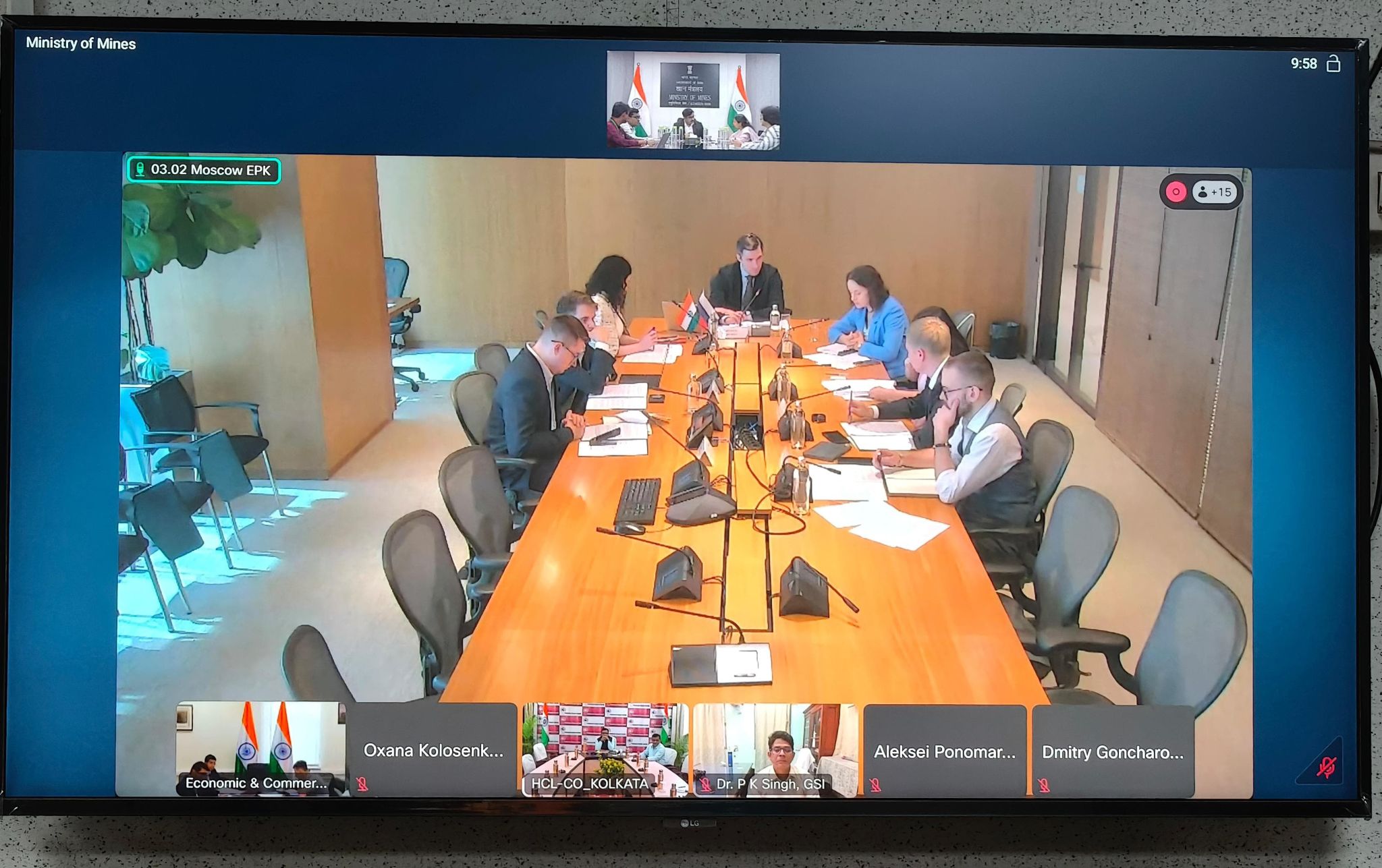
10th meeting of the India-Russia Subgroup on Mining, under the India-Russia Working Group on Modernization and Industrial Cooperation (IR WG-M&IC), convened to advance bilateral collaboration in the mining and mineral resources sector. Co-chaired by Shri Vivek Kumar Bajpai, Joint Secretary, Ministry of Mines, Government of India, and Mr. Konstantin Fedorov, Deputy Director, Department of Metallurgy and Materials, Ministry of Industry and Trade of the Russian Federation, the meeting marked a significant step in deepening ties between the two nations. Discussions focused on enhancing cooperation in the aluminium sector, sourcing rare earth and critical minerals from Russia, co-developing mining projects, and leveraging advanced technologies like artificial intelligence (AI) and unmanned aerial vehicles (UAVs) for geological exploration. Both sides expressed their intent to formalize this collaboration through a Memorandum of Understanding (MoU). This article explores the outcomes of the meeting, its context within India-Russia relations, and its implications for the global critical minerals landscape.
Background: India-Russia Strategic Partnership
India and Russia share a long-standing partnership, with economic and trade ties dating back to the Soviet era. Bilateral trade has grown significantly, reaching USD 68.7 billion in the Financial Year 2024-25, with a target of USD 100 billion by 2030 set during the 22nd India-Russia Annual Summit in July 2024. The mining sector, a critical component of this partnership, has gained prominence due to the global demand for rare earth elements (REEs) and critical minerals essential for electric vehicles (EVs), renewable energy, and advanced technologies. Russia, with the world’s fifth-largest rare earth reserves estimated at 3.8 million metric tons, is a key player in this domain, while India, with its own substantial reserves, seeks to bolster domestic production to reduce reliance on imports, particularly from China.
The India-Russia Working Group on Modernization and Industrial Cooperation, established under the India-Russia Intergovernmental Commission on Trade, Economic, Scientific, Technological, and Cultural Cooperation (IRIGC-TEC), provides a framework for advancing industrial collaboration. The Subgroup on Mining, now in its 10th session, has been instrumental in identifying and implementing joint projects in areas such as modernization, mining, and fertilizers. The July 2025 meeting builds on prior agreements, including a 2021 MoU between India’s Geological Survey of India (GSI) and Russia’s Rosgeologia (ROSGEO) for cooperation in geosciences, which emphasized technological collaboration in mineral exploration.
Key Outcomes of the 10th Meeting
The 10th meeting of the India-Russia Subgroup on Mining, held on July 14, 2025, resulted in productive discussions across several strategic areas:
-
Aluminium Sector Cooperation: Both nations explored opportunities to strengthen collaboration in the aluminium industry, a critical sector for both economies. Russia, a major global aluminium producer, previously supplied up to 15% of U.S. aluminium imports before 2023 tariffs and has expressed interest in expanding exports to markets like India. Discussions likely focused on supply agreements, joint ventures, or technology transfers to enhance India’s aluminium production capacity, which is vital for automotive, aerospace, and infrastructure sectors.
-
Sourcing Rare Earth and Critical Minerals: With China controlling 95% of global rare earth production, both India and Russia aim to reduce dependency on Chinese supplies. The meeting addressed sourcing rare earths and critical minerals like lithium, titanium, and uranium from Russia, which could support India’s growing EV and renewable energy industries. Russia’s vast reserves, including deposits in Siberia and Yakutia, were likely a focal point, with potential for India to secure long-term supply contracts.
-
Co-Development of Mining Projects: The two sides discussed co-developing mining projects, leveraging Russia’s expertise in geological exploration and India’s growing mining infrastructure. This could involve joint ventures in Russia’s Tomtor or Zashikhinskoye deposits or exploration of India’s untapped rare earth reserves. Such collaboration aligns with India’s push for self-reliance in critical minerals and Russia’s goal to boost domestic production.
-
Geological Exploration with AI and UAVs: A significant focus was on adopting advanced technologies for geological exploration. Both nations agreed to explore the use of AI for analyzing geophysical data and UAVs for aerial surveys, which could enhance the efficiency and accuracy of mineral exploration. This builds on the 2021 GSI-ROSGEO MoU, which emphasized technology exchange in drilling, sampling, and data analysis. These advancements could accelerate the identification of commercially viable deposits in both countries.
-
Commitment to an MoU: The meeting concluded with an agreement to work toward signing an MoU to formalize cooperation in mining and mineral resources. This MoU is expected to outline specific frameworks for joint projects, technology sharing, and capacity building, further solidifying the strategic partnership.
Context: Global Critical Minerals Race
The discussions come at a time when global competition for critical minerals is intensifying. China’s export restrictions on rare earths, announced in 2025, have underscored the need for alternative supply chains. The United States has pursued minerals deals with Ukraine and explored cooperation with Russia, while the G7 has prioritized critical minerals security at its 2025 summit. India, with the world’s fifth-largest rare earth reserves, is actively seeking partnerships to develop its domestic capabilities. Russia, despite its vast reserves, faces challenges in processing capacity, producing only 2,500 tons of rare earth concentrate annually. Collaborative efforts with India could address these gaps, benefiting both nations.
The meeting also aligns with India’s broader strategy to localize EV supply chains, as evidenced by recent speculation (later denied) about Mahindra & Mahindra and Uno Minda exploring rare earth magnet production. The India-Russia partnership could provide a more robust framework for securing these materials, supporting India’s EV ambitions and Russia’s economic diversification goals.
Implications for India-Russia Relations
The outcomes of the 10th Subgroup meeting reinforce the strategic importance of India-Russia cooperation in the mining sector. For India, access to Russian rare earths and critical minerals could reduce reliance on Chinese imports, strengthening supply chain resilience. The adoption of AI and UAVs aligns with India’s focus on technological innovation, as seen in its participation in forums like the Saint Petersburg International Economic Forum (SPIEF) 2025, where AI and industrial cooperation were key themes.
For Russia, collaboration with India offers an opportunity to diversify its mineral export markets and leverage India’s growing industrial base. The proposed MoU could pave the way for joint ventures, technology transfers, and capacity building, building on the success of prior agreements like the 2021 GSI-ROSGEO MoU. Additionally, the focus on aluminium and critical minerals aligns with Russia’s efforts to boost domestic production and regain access to global markets, as highlighted by President Vladimir Putin’s recent offers to the U.S. for joint exploration.
Broader Industry and Market Context
The meeting occurred against a backdrop of global economic and geopolitical shifts. India’s Sensex and Nifty indices experienced declines on July 11, 2025, reflecting market volatility, yet sectors like electronics manufacturing and EVs remain poised for growth in FY26. The global push for critical minerals has intensified, with countries like Uzbekistan and Namibia also emerging as potential partners for India and other nations. The India-Russia collaboration could position both countries as key players in this race, particularly if the proposed MoU leads to concrete projects.
The 10th meeting of the India-Russia Subgroup on Mining, held on July 14, 2025, marks a pivotal moment in bilateral cooperation, with discussions on aluminium, rare earths, critical minerals, and advanced exploration technologies signaling a shared commitment to addressing global supply chain challenges. The agreement to work toward an MoU underscores the strategic importance of this partnership, which could enhance India’s EV and industrial ambitions while supporting Russia’s economic goals. As both nations navigate a complex global landscape, their collaboration in mining and mineral resources is poised to play a critical role in shaping a resilient and sustainable future for their economies.