
India Launches Pioneering e-Truck Incentive Scheme to Drive Green Freight Revolution

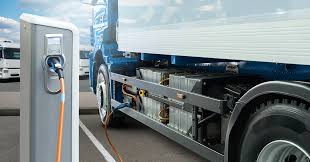
India took a historic step toward sustainable freight transport with the launch of its first-ever electric truck (e-truck) incentive scheme under the PM Electric Drive Revolution in Innovative Vehicle Enhancement (PM E-DRIVE) initiative. Announced by Union Minister for Heavy Industries and Steel, H.D. Kumaraswamy, the scheme offers financial incentives of up to ₹9.6 lakh per vehicle to promote the adoption of electric trucks, targeting the deployment of approximately 5,600 e-trucks nationwide. This groundbreaking initiative, aligned with Prime Minister Narendra Modi’s vision for green mobility, aims to curb freight-related emissions, enhance air quality, and bolster domestic manufacturing under the Atmanirbhar Bharat framework. This article explores the details of the scheme, its environmental and economic implications, and its role in advancing India’s net-zero emissions goal by 2070.
Background: The Need for Green Freight Mobility
India’s freight sector, heavily reliant on diesel trucks, is a significant contributor to the country’s environmental challenges. Despite constituting only 3% of the total vehicle population, diesel trucks account for 42% of transport-related greenhouse gas emissions, significantly worsening air pollution in urban and industrial areas, according to the Ministry of Heavy Industries. With India’s logistics sector moving approximately 70% of freight by road, the sector’s high fuel consumption contributes to elevated logistics costs, estimated at 14% of GDP, compared to the global average of 8-10%. The government’s commitment to achieving net-zero emissions by 2070, as part of the Viksit Bharat 2047 vision, necessitates a rapid transition to cleaner alternatives in the heavy vehicle segment.
The PM E-DRIVE scheme, approved by the Union Cabinet on September 11, 2024, with a financial outlay of ₹10,900 crore over two years, is a cornerstone of India’s electric mobility strategy. While earlier phases of the Faster Adoption and Manufacturing of Electric Vehicles (FAME) scheme focused on electric two-wheelers, three-wheelers, and buses, the e-truck incentive scheme marks the first customer-facing support for electric trucks, addressing a critical gap in the decarbonization of freight transport.
Details of the e-Truck Incentive Scheme
The e-truck incentive scheme, launched under the PM E-DRIVE initiative, is designed to make electric trucks more affordable and accelerate their adoption across key industries. Key features of the scheme include:
-
Financial Incentives: Incentives of up to ₹9.6 lakh per vehicle are provided as an upfront reduction in the purchase price, reimbursed to original equipment manufacturers (OEMs) via the PM E-DRIVE portal on a first-come, first-served basis. The incentive amount is calculated based on the gross vehicle weight (GVW) of the truck, ranging from ₹2.7 lakh to ₹9.3 lakh, or ₹5,000 per kWh of battery capacity, whichever is lower. The scheme applies to N2 (GVW 3.5-12 tonnes) and N3 (GVW 12-55 tonnes) category trucks, with incentives for articulated vehicles limited to the puller tractor in the N3 category.
-
Deployment Goals: The scheme aims to support the deployment of approximately 5,600 e-trucks across India, with a dedicated allocation of ₹100 crore for 1,100 e-trucks registered in Delhi to address the capital’s severe air quality issues. The total budget for e-truck incentives is ₹500 crore, part of the broader PM E-DRIVE outlay.
-
Mandatory Scrapping: To qualify for incentives, owners must scrap old, polluting diesel trucks at Ministry of Road Transport and Highways (MoRTH)-approved vehicle scrapping centers, ensuring fleet modernization and emissions reduction.
-
Warranty Requirements: To ensure reliability, manufacturers must provide a five-year or 5 lakh kilometer warranty for batteries and a five-year or 2.5 lakh kilometer warranty for vehicles and motors, whichever comes first.
-
Targeted Sectors: The scheme is expected to benefit industries such as cement, steel, ports, and logistics, which rely heavily on medium- and heavy-duty trucks (MHDTs). Companies like JK Lakshmi Cement, UltraTech Cement, JSW Cement, Tata Steel, and Jawaharlal Nehru Port Trust have already begun piloting e-truck deployments, demonstrating operational viability.
-
Domestic Manufacturing: The scheme aligns with the Atmanirbhar Bharat vision by requiring e-trucks to meet phased manufacturing program (PMP) guidelines, promoting indigenous production of components like battery packs, motors, and controllers. Leading OEMs, including Tata Motors, Ashok Leyland, and Volvo Eicher, are already manufacturing e-trucks in India, strengthening the domestic EV ecosystem.
Industry and Public Sector Commitment
The scheme has garnered significant support from both industry and public sector undertakings. The Steel Authority of India Limited (SAIL) has committed to procuring 150 e-trucks over the next two years and aims to ensure that at least 15% of its hired fleet is electric, setting a strong example for other central public sector enterprises (CPSEs). This commitment is expected to drive demand for e-trucks in the steel industry, a key freight-intensive sector.
Major OEMs like Tata Motors, Ashok Leyland, and Volvo Eicher are expanding their e-truck production capabilities, supported by the Production-Linked Incentive (PLI) schemes for automotive components and advanced battery cells launched in 2021. These efforts are poised to enhance India’s position as the world’s third-largest trucking market and seventh-largest truck exporter, fostering green job creation and economic competitiveness.
Environmental and Economic Impacts
The e-truck incentive scheme is a game-changer for India’s economy and environment. According to life-cycle assessments, e-trucks emit 17-37% fewer greenhouse gases than diesel trucks, with potential reductions of up to 85-88% when powered by renewable energy. By targeting MHDTs, which account for 40% of transport-related emissions, the scheme addresses a critical environmental challenge. The focus on Delhi, with its chronic air pollution, underscores the scheme’s potential to improve urban air quality.
Economically, e-trucks can reduce logistics costs by lowering fuel expenses, a significant burden for transporters. The International Council on Clean Transportation (ICCT) projects that 100% zero-emission truck sales will be necessary by mid-century to meet India’s net-zero 2070 goal, making early adoption critical. The scheme also supports energy security by reducing reliance on imported fossil fuels, aligning with India’s broader goal of cutting fuel import dependency.
Broader Context: PM E-DRIVE and Green Mobility
The e-truck scheme is part of the broader PM E-DRIVE initiative, which allocates ₹3,679 crore for electric two-wheelers, three-wheelers, ambulances, and trucks, and ₹7,171 crore for electric buses, public charging infrastructure, and testing upgrades. The scheme has already surpassed targets for two-wheelers (12 lakh supported out of 24.79 lakh) and three-wheelers (1.6 lakh supported out of 3.16 lakh), with a tender for 10,900 e-buses across major cities marking India’s largest e-bus initiative. Additionally, ₹500 crore is allocated for e-ambulances, with safety standards being developed in collaboration with the Ministries of Health and Transport.
The scheme’s emphasis on charging infrastructure, with plans for 22,100 fast chargers for four-wheelers, 1,800 for e-buses, and 48,400 for two- and three-wheelers, addresses range anxiety and supports e-truck adoption. Posts on X highlight public enthusiasm, with users noting the scheme’s potential to cut logistics costs, boost green jobs, and advance India’s EV ecosystem, though some posts inaccurately cite higher deployment targets (e.g., 7,200 e-trucks), which official sources clarify as 5,600.
Challenges and Future Outlook
While the scheme is a significant step forward, challenges remain. The high upfront cost of e-trucks, limited charging infrastructure in rural and highway areas, and the need for skilled maintenance for electric fleets could hinder adoption. The mandatory scrapping requirement, while environmentally beneficial, may face resistance from small fleet operators with limited capital. Additionally, ensuring a stable supply of critical minerals like lithium and copper, as highlighted by recent concerns over copper import rules, will be crucial for scaling e-truck production.
Looking ahead, the scheme’s success will depend on robust implementation, stakeholder collaboration, and complementary investments in charging networks and renewable energy integration. The government’s plans to modernize testing facilities and support domestic battery production under the PLI scheme will further strengthen the EV ecosystem. As global markets transition to electric freight, India’s proactive approach positions it as a leader in sustainable mobility.
India’s first-ever e-truck incentive scheme, launched on July 11, 2025, under the PM E-DRIVE initiative, marks a transformative step toward decarbonizing the freight sector. By offering up to ₹9.6 lakh per vehicle, targeting 5,600 e-trucks, and mandating the scrapping of old diesel trucks, the scheme addresses environmental, economic, and industrial priorities. With strong support from OEMs and CPSEs like SAIL, and alignment with the Atmanirbhar Bharat and Viksit Bharat visions, the initiative is poised to reduce emissions, lower logistics costs, and enhance India’s global competitiveness in electric mobility. As the country navigates challenges and builds a self-reliant EV ecosystem, this scheme sets a bold precedent for a cleaner, greener future.