
India’s Environment Ministry Defends New Coal Plant Norms as ‘Cost Effective, Climate Coherent’ in 2025

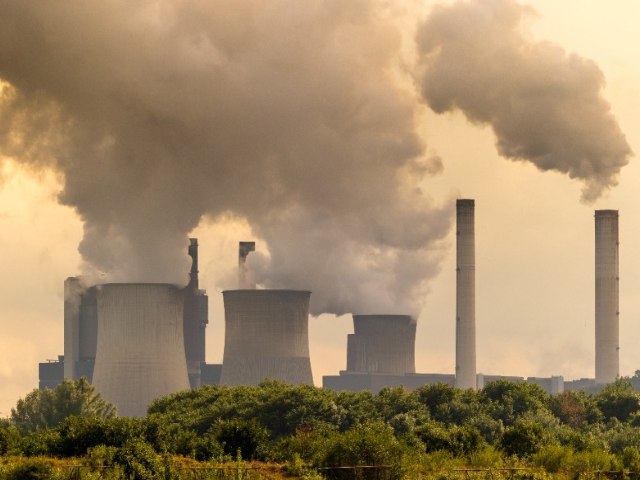
India’s Ministry of Environment, Forest and Climate Change (MoEF&CC) defended its revised sulphur dioxide (SO₂) emission norms for coal- and lignite-based thermal power plants (TPPs), describing them as a “scientifically justified shift towards more targeted, cost-effective, and climate-coherent regulation.” This follows the July 11, 2025, order exempting 78% of TPPs (Category C) from installing flue gas desulphurisation (FGD) systems, with 11% (Category B) subject to case-by-case evaluation by an Expert Appraisal Committee (E MusEAC) by December 30, 2028, and only 11% (Category A, located within 10 km of the Delhi-NCR or cities with over 1 million population) mandated to comply by 2027. The decision has sparked debate, with environmentalists criticizing it as a rollback of safeguards, while the Ministry argues it aligns with India’s low SO₂ levels and high FGD costs. This article examines the new norms, their implications for coal transport initiatives like Coal India’s rail expansion, and the broader environmental and energy landscape in India.
Background: The Evolution of SO₂ Emission Norms
In 2015, following India’s commitment to the Paris Agreement and amid severe air pollution in cities like Delhi, the MoEF&CC mandated FGD systems for all TPPs to reduce SO₂ emissions, a byproduct of coal combustion contributing to smog and health issues. FGD systems remove SO₂ from flue gas, but by 2025, only 8% of India’s approximately 180 coal plants had installed them, due to high costs (₹1.2 crore per MW, totaling ₹2.54 lakh crore nationwide) and limited availability. Multiple extensions were granted, with deadlines initially set for 2017, then phased to 2022–2024 under a 2021 categorization (A, B, C) based on plant location. The 2021 amendment introduced penalties for non-compliance, but the July 2025 order further relaxed requirements, exempting most plants and prompting environmental concerns.
The Ministry’s Defense of the New Norms
The MoEF&CC justifies the revised norms with several arguments:
-
Low SO₂ Levels: The Ministry cites ambient SO₂ concentrations of 10–20 micrograms/cubic meter, well below India’s 80 microgram/cubic meter standard, and notes that Indian coal has low sulphur content (0.3–0.5% by weight), resulting in minimal SO₂ emissions compared to high ash content. A 2023 study across 492 cities found all but two (Dehradun and Kolar) compliant with India’s stricter-than-global SO₂ standards (Japan: 66, EU: 52.4, Australia: 66 micrograms/cubic meter).
-
Negligible Impact of FGD: The Ministry references an IIT Delhi study showing no significant difference in SO₂ levels between cities with and without FGD-equipped plants. It also claims sulphate aerosols from SO₂ contribute only 0.96–5.21% to PM2.5 and 0.57–3.67% to PM10, suggesting FGD’s marginal benefit to particulate matter reduction does not justify the cost.
-
Cost vs. Benefit: The estimated ₹2.54 lakh crore for nationwide FGD retrofitting is deemed disproportionate to the “marginal” air quality improvement. The Ministry argues that focusing on SO₂ is less critical than addressing PM2.5, which dominates India’s air pollution crisis.
-
Climate Coherence: A National Institute of Advanced Studies (NIAS) study, cited by the Ministry, notes that FGD systems increase power and freshwater consumption, adding 69 million tonnes of CO₂ emissions from 2025–2030 while reducing SO₂ by 17 million tonnes. The Ministry claims the new norms align with sustainability by avoiding resource-intensive retrofits.
-
Targeted Regulation: Only Category A plants (11%) must install FGD by 2027, while Category B plants (11%) face case-by-case decisions, and Category C plants (78%) are exempt, prioritizing regions with poor air quality like Delhi-NCR and non-attainment cities (NACs).
The Ministry emphasizes that the policy is based on consultations with stakeholders and research institutions, calling it a “pragmatic, evidence-based recalibration” rather than a dilution of environmental safeguards.
Environmental and Health Concerns
Critics, including the Centre for Science and Environment (CSE), argue the exemption undermines India’s clean air goals. SO₂ contributes to PM2.5 formation, a major public health concern linked to respiratory and cardiovascular diseases. In 2015, an IIT Kanpur report highlighted SO₂’s role in smog, prompting the original FGD mandate. The CSE notes that only 11% of TPP capacity is now mandated to comply, weakening regulatory intent and delaying pollution control. The relaxed norms, coupled with a penalty mechanism (10–20 paisa per unit for non-compliance), may incentivize Category C plants to pay fines rather than invest in FGD, which costs ₹45 lakh per MW. Environmentalists argue that India’s coal plants, contributing over 50% of ambient SO₂, 30% of NOx, and 20% of PM, require uniform standards to address the public health crisis.
The MoEF&CC counters that acid rain, a key SO₂-related issue, is not significant in India due to low sulphur coal and tall stack heights (220 meters minimum), which disperse emissions. A 2024 IIT Delhi study supports this, finding no notable acid rain impact. However, non-compliance issues persist, as seen in the Khadia Opencast Coal Mine Expansion Project, where environmental clearance conditions, including dust control and waste management, were only partially met by May 2025.
Synergy with Coal India’s Rail Infrastructure Expansion
The revised norms intersect with Coal India Limited’s (CIL) efforts to boost rail infrastructure for coal transport, as outlined in the previous article. CIL’s June 5, 2025, MoU with Indian Port Rail & Ropeway Corporation Ltd (IPRCL) and its First Mile Connectivity (FMC) projects aim to transport 875 million tonnes (MT) of coal in FY26, up from 781.1 MT in FY25, with a goal of 1 billion tonnes by FY29. These initiatives, including mechanized loading systems and rail corridors like Tori-Shivpur and Jharsuguda–Barpali–Sardega, reduce dust emissions and road congestion, aligning with environmental goals despite the FGD exemptions.
The rail expansion supports India’s energy security by ensuring efficient coal delivery to TPPs, which account for 46.88% of power generation capacity as of November 2024. However, the relaxed SO₂ norms could increase emissions from Category C plants, potentially offsetting some environmental benefits of FMC’s dust reduction. For instance, CIL’s 34% increase in eco-friendly transport (102.5 MT in FY25) via conveyor belts and silos reduces particulate matter, but SO₂ emissions from non-FGD plants could undermine air quality gains in regions not classified as critically polluted. The rail projects also facilitate coking coal transport for India’s steel industry, which consumes 160 MT annually, supporting the country’s ambition to triple iron ore production to over 950 MT, as noted in the earlier iron ore article.
Implications for India’s Energy and Climate Goals
India’s coal reliance, critical for meeting a projected 270-gigawatt peak power demand in 2025, conflicts with its Paris Agreement commitments to reduce carbon intensity and achieve net-zero emissions by 2070. The International Energy Agency (IEA) predicts India’s electricity demand will triple by 2050, driven by economic growth and electrification. While coal imports dropped 8.4% from April–December 2024, saving foreign exchange, the FGD exemptions may complicate India’s climate narrative, especially as developed nations like the UK (coal phase-out by 2024) and Germany (by 2030) push for faster transitions. The Just Energy Transition Partnership (JETP), launched at COP26, has allocated billions for coal phase-downs in countries like South Africa and Indonesia, but India has no plans to retire coal plants before 2030, emphasizing coal’s role in economic growth.
The Ministry’s focus on cost-effectiveness aligns with industry interests, with posts on X noting savings of ₹16,000 crore for Adani Power and ₹4,500 crore for Jindal Power due to FGD exemptions. However, this raises concerns about prioritizing economic benefits over long-term health and environmental impacts, particularly in non-attainment cities where air quality remains poor.
Challenges and Opportunities
Challenges:
-
Public Health Risks: Relaxed norms may exacerbate PM2.5-related health issues, especially in the 131 non-attainment cities failing National Ambient Air Quality Standards (NAAQS) for five years.
-
Regulatory Dilution: The case-by-case approach for Category B and exemptions for Category C could delay pollution control, with penalties potentially cheaper than FGD installation.
-
Global Scrutiny: India’s coal expansion, including new mines and plants, risks stranded assets as global decarbonization accelerates, per the IEA’s Net Zero Scenario.
-
Non-Compliance: Ongoing issues, like those at the Khadia mine, suggest broader enforcement challenges for environmental norms.
Opportunities:
-
Rail Synergies: CIL’s FMC projects and rail corridors reduce dust and emissions, offering a model for cleaner coal transport that could extend to iron ore logistics.
-
Renewable Integration: India’s solar and wind growth, supported by CIL’s 1,190 MW solar project MoU with Rajasthan, could offset coal’s environmental impact long-term.
-
Targeted Regulation: Focusing FGD on high-pollution areas like Delhi-NCR optimizes resources, potentially freeing funds for renewable investments.
-
Carbon Capture: Exploring carbon capture and storage (CCS), as seen in global pilots, could mitigate coal plant emissions without FGD’s water and energy demands.
Future Outlook
The MoEF&CC’s revised norms reflect a balancing act between energy demands and environmental goals. Coal India’s rail expansion supports coal supply reliability, critical for India’s 46.88% coal-based power capacity, but the FGD exemptions could undermine air quality progress in less-regulated regions. By 2030, India’s coal reliance will likely persist, with no phase-out plans before then, unlike Chile (targeting 2030) or the UK (2024). The Ministry’s cost-focused approach may save ₹2.54 lakh crore but risks long-term health costs unless paired with robust renewable and CCS investments. Aligning rail infrastructure’s environmental benefits with stricter emission controls could position India as a leader in sustainable resource transport.
India’s Environment Ministry’s defense of the 2025 coal plant norms as “cost-effective and climate-coherent” prioritizes economic pragmatism, leveraging low SO₂ levels and high FGD costs to justify exemptions for 78% of TPPs. While Coal India’s rail revolution enhances coal transport efficiency and reduces dust, the relaxed norms may increase SO₂ emissions in exempt regions, challenging India’s clean air goals. Balancing energy security, economic growth, and environmental health will require integrating rail infrastructure gains with renewable energy and advanced emission controls to ensure a sustainable future.