
Coal India’s Rail Upgrades Bolster Energy Supply Amid Relaxed Coal Plant Norms in 2025

India’s Ministry of Environment, Forest and Climate Change (MoEF&CC) defended its revised sulphur dioxide (SO₂) emission norms for coal-based thermal power plants (TPPs), calling them a “cost-effective and climate-coherent” approach, sparking debate over air quality implications. Concurrently, Coal India Limited (CIL) continues to advance its rail infrastructure expansion, highlighted by a June 2025 MoU with Indian Port Rail & Ropeway Corporation Ltd (IPRCL), to streamline coal transport and meet a 2026 production target of 875 million tonnes (MT). This article explores how CIL’s rail upgrades support India’s energy demands in the context of the relaxed emission norms, announced between July 11–14, 2025, and their combined impact on the nation’s energy and environmental landscape.
Revised SO₂ Norms: A Controversial Shift
On July 11, 2025, the MoEF&CC issued a notification exempting 78% of coal-based TPPs (Category C) from installing flue gas desulphurisation (FGD) systems, extending the compliance deadline for Category A plants (within 10 km of Delhi-NCR or cities with over 1 million population) to December 2027, and subjecting Category B plants (near critically polluted areas) to case-by-case evaluation by 2028. The Ministry argues that India’s low-sulphur coal (0.3–0.5%) and ambient SO₂ levels (10–20 micrograms/cubic meter, below the 80 microgram standard) justify the exemptions, citing a ₹2.54 lakh crore FGD retrofit cost and a National Institute of Advanced Studies (NIAS) study estimating 69 million tonnes of additional CO₂ emissions from FGD operations by 2030.
Critics, including the Centre for Science and Environment (CSE), warn that SO₂ contributes to PM2.5, linked to respiratory and cardiovascular diseases, with coal plants responsible for up to 12% of PM2.5 in winter. The relaxed norms may save costs—₹16,000 crore for Adani Power and ₹4,500 crore for Jindal Power—but risk undermining India’s clean air goals, especially in 131 non-attainment cities.
Coal India’s Rail Infrastructure Expansion
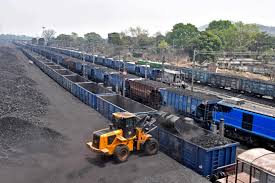
Amid this policy shift, CIL is enhancing coal transport efficiency through its rail infrastructure initiatives. The June 5, 2025, MoU with IPRCL aims to modernize rail connectivity, focusing on sidings and port linkages to evacuate 875 MT of coal in FY26, up from 781.1 MT in FY25. CIL’s First Mile Connectivity (FMC) projects, using mechanized loading and conveyor belts, transported 102.5 MT in FY25, a 34% increase from FY24, reducing dust and emissions. Plans for 19 new FMC projects in FY26 will add 150 MT of capacity, supporting subsidiaries in Jharkhand, Odisha, and Chhattisgarh.
Key rail projects include the Tori-Shivpur line (65 MT per annum, expanding to 100 MT by 2024) and the Jharsuguda–Barpali–Sardega line (doubling to 65 MT by 2023). These efforts, backed by ₹19,650 crore in investments, align with the Eastern Dedicated Freight Corridor (EDFC), handling 65–70 coal rakes daily. By FY29, CIL aims for 1 billion tonnes of production, with rail-based transport minimizing environmental impact.
Interplay of Norms and Rail Upgrades
The relaxed SO₂ norms and CIL’s rail upgrades reflect India’s dual focus on energy security and cost management. The rail expansion ensures reliable coal supply to TPPs, which generate 46.88% of India’s power, supporting a 270-gigawatt peak demand in 2025. However, exempting Category C plants from FGD may increase SO₂ emissions, potentially offsetting FMC’s dust reduction benefits. For example, while FMC systems cut particulate matter, non-FGD plants could elevate PM2.5 via SO₂ conversion, especially in rural areas.
CIL’s rail initiatives also bolster India’s steel industry, which relies on coking coal and iron ore. Enhanced rail connectivity in Chhattisgarh and Odisha supports iron ore transport from NMDC’s Bailadila mines, aligning with India’s goal to triple iron ore output to 950 MT annually. The Ministry’s cost-saving rationale complements CIL’s logistics efficiency, but environmentalists argue for stricter enforcement to balance economic and health priorities.
Challenges and Opportunities
Challenges:
-
Air Quality Risks: Exempting 78% of TPPs may worsen PM2.5 levels, with coal plants contributing 15% of India’s PM2.5 pollution.
-
Rail Congestion: India’s strained railway network faces freight-passenger conflicts, with coal rake shortages during monsoons and summer.
-
Policy Backlash: The FGD rollback faces criticism for prioritizing industry savings over public health, risking India’s global climate commitments.
-
Compliance Gaps: Ongoing issues, like partial adherence at CIL’s Khadia mine, highlight enforcement challenges.
Opportunities:
-
Sustainable Transport: FMC’s conveyor belts and silos set a model for eco-friendly coal and iron ore logistics.
-
Cost Savings: Relaxed norms could lower power tariffs by 25–30 paise per unit, easing consumer burdens.
-
Renewable Synergy: CIL’s 1,190 MW solar project MoU with Rajasthan complements coal reliance, supporting India’s 50% non-fossil fuel capacity target achieved in 2025.
-
Global Leadership: Efficient rail logistics and targeted emission controls could position India as a leader in sustainable resource transport.
Coal India’s rail upgrades, paired with the Environment Ministry’s relaxed SO₂ norms announced on July 11, 2025, highlight India’s pragmatic approach to balancing energy demands and environmental concerns. While rail modernization ensures efficient coal supply, the FGD exemptions risk air quality setbacks. Integrating sustainable transport with stricter emission controls and renewable investments will be key to aligning India’s energy security with its clean air and climate goals.