
India’s Coal Policy Shift and Rail Expansion: Balancing Energy and Environment in 2025

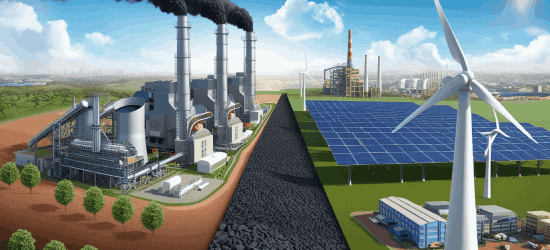
India’s Ministry of Environment, Forest and Climate Change (MoEF&CC) defended its July 11 decision to relax sulphur dioxide (SO₂) emission norms for coal-based thermal power plants (TPPs), calling it a “pragmatic shift” to avoid ₹2.54 lakh crore in flue gas desulphurisation (FGD) costs. Meanwhile, Coal India Limited (CIL) is advancing its rail infrastructure expansion, including a June 2025 MoU with Indian Port Rail & Ropeway Corporation Ltd (IPRCL), to enhance coal transport efficiency for its 875 million tonne (MT) FY26 target. This article examines the interplay between the relaxed emission norms and CIL’s rail initiatives, announced between July 11–14, 2025, and their implications for India’s energy and environmental priorities.
The New SO₂ Emission Norms
The MoEF&CC’s July 11, 2025, notification exempts 78% of TPPs (Category C) from FGD installation, extends Category A compliance (plants near Delhi-NCR or million-plus cities) to December 2027, and subjects Category B plants (near polluted areas) to Expert Appraisal Committee (EAC) review by 2028. The Ministry cites low SO₂ levels (10–20 micrograms/cubic meter vs. an 80 microgram standard), low-sulphur Indian coal (0.3–0.5%), and an IIT Delhi study showing minimal SO₂ differences between FGD and non-FGD plants. The NIAS estimates FGD would add 69 million tonnes of CO₂ by 2030, outweighing the 17 million tonnes of SO₂ reduction.
Environmentalists, including CSE, argue that SO₂ contributes to PM2.5, which coal plants generate 15% of, posing health risks. The exemptions, saving ₹16,000 crore for Adani Power, may prioritize industry over public health, with only 8% of 180 coal plants FGD-equipped. A penalty of ₹0.40 per unit for non-compliant plants retiring post-2030 is seen as insufficient.
Coal India’s Rail Infrastructure Drive
CIL’s rail expansion, bolstered by the June 5, 2025, IPRCL MoU, aims to streamline coal evacuation to meet rising energy demands. In FY25, CIL transported 102.5 MT via 20 First Mile Connectivity (FMC) projects, up 34% from 76.5 MT in FY24, using mechanized systems to reduce dust and emissions. Plans for 19 new FMC projects in FY26 will add 150 MT capacity, targeting 1 billion tonnes by FY29. Key rail corridors include the Tori-Shivpur line (100 MT by 2024) and Kharsia–Dharamjaigarh (160 MT per annum), supported by ₹19,650 crore in investments. The Eastern Dedicated Freight Corridor (EDFC) handles 65–70 coal rakes daily, easing network strain.
Energy and Environmental Implications
The relaxed SO₂ norms reduce power tariffs by 25–30 paise per unit, supporting consumers, but may increase PM2.5 in Category C regions, countering FMC’s environmental benefits. CIL’s rail upgrades ensure coal supply for TPPs (46.88% of power capacity), critical for a 270-gigawatt peak demand in 2025. Enhanced rail connectivity also supports iron ore transport, aligning with India’s goal to triple output to 950 MT, as rail corridors in Chhattisgarh and Odisha serve both coal and iron ore mines.
Challenges and Opportunities
Challenges:
-
Health Impacts: Exempting 78% of TPPs risks PM2.5-related diseases, with coal plants contributing 12–16% of urban pollution.
-
Rail Network Strain: Freight-passenger competition and monsoon disruptions challenge coal transport reliability.
-
Global Criticism: The FGD rollback may draw scrutiny as India balances coal reliance with net-zero 2070 goals.
-
Enforcement Issues: Non-compliance, as seen in CIL’s Khadia mine, underscores regulatory gaps.
Opportunities:
-
Eco-Friendly Logistics: FMC’s conveyor systems could model sustainable transport for coal and iron ore.
-
Economic Relief: Norm relaxations lower electricity costs, benefiting consumers and industry.
-
Renewable Growth: CIL’s solar initiatives and India’s 50% non-fossil fuel capacity (2025) balance coal use.
-
Carbon Capture: Exploring CCS could mitigate coal plant emissions without FGD’s resource demands.
India’s relaxed SO₂ norms and Coal India’s rail expansion, highlighted from July 11–14, 2025, reflect a strategic focus on energy affordability and supply reliability. While rail upgrades enhance coal and iron ore logistics, the FGD exemptions risk air quality setbacks. Integrating sustainable transport, renewable energy, and advanced emission technologies will be crucial for India to meet its energy and climate commitments.