
Rare Earth Elements Discovered in Singrauli Coalfields: A Strategic Boost for India’s Critical Mineral Ambitions

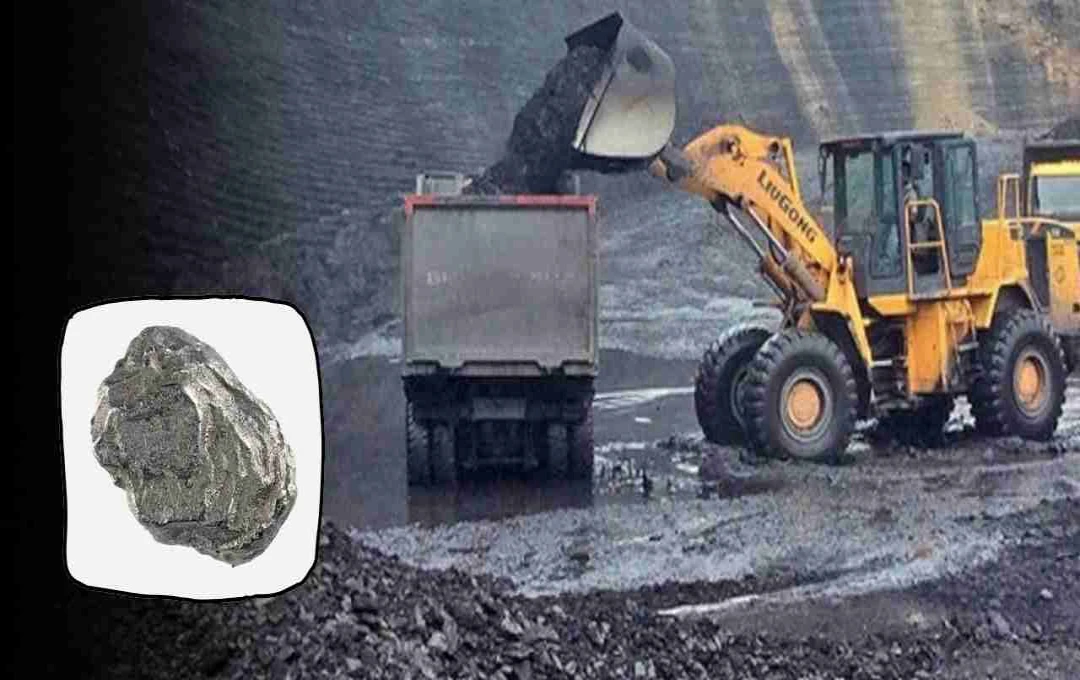
The Indian government has confirmed the discovery of significant deposits of rare earth elements (REEs) in coal and associated sediments from the Singrauli coalfields in Madhya Pradesh. Coal and Mines Minister G Kishan Reddy revealed in Parliament that Coal India Ltd (CIL) has found promising REE enrichment in recent sediment appraisals, positioning the nation for deeper engagement in the high-tech and clean-energy mineral domain.
What Was Found in Singrauli
Detailed analysis of Gondwana sediments—comprising coal, clay, shale, and sandstone—revealed average REE concentrations of approximately 250 ppm in coal samples and 400 ppm in non-coal sediments. These figures are considered promising, especially given the critical role that elements like scandium and yttrium play in electric vehicles, renewable energy systems, defence applications, and advanced electronics.
Why the Finding Matters
India’s dependence on China’s REE supply has been a strategic vulnerability, especially after Beijing imposed export restrictions. By tapping its own coalfield REE reserves, India can bolster its position in global supply chains and enhance resource security in high-tech sectors.
As part of the newly launched National Critical Mineral Mission (NCMM), the government has allocated ₹100 crore for pilot projects that aim to recover REEs from industrial waste such as overburden and fly ash—extending beyond Singrauli to other coalfields and sectors.
R&D and Technology Partnerships
CIL and associated state collieries are exploring indigenous REE extraction processes, supported by collaborations with research institutions including:
-
Institute of Minerals and Materials Technology (IMMT), Bhubaneswar
-
NFTDC, Hyderabad
-
IIT Hyderabad
These partnerships focus on refining extraction methods, exploring acid mine drainage recovery, and utilising physical separation and ion‑exchange resin technologies for enrichment.
Challenges Ahead
Despite strong geochemical promise, commercial extraction of REEs from coal byproducts remains challenging. Viability depends on:
-
Technological breakthroughs for efficient and scalable extraction
-
Establishment of cost-effective processing infrastructure
-
Environmental safeguards for waste handling and emissions control
-
Competitive economics compared to traditional REE sourcing routes
Wider Strategic Context
The broader NCMM initiative is India’s core strategic effort, with a seven-year roadmap targeting domestic development across the critical mineral spectrum—including lithium, cobalt, nickel, and rare earths. The mission aims to reduce import dependence and forge global partnerships for mineral security.
Singrauli’s REE findings could serve as a template for repurposing mining waste into high-value material streams, aligning with India’s goals for sustainable resource utilization and industrial autonomy.
Outlook and Opportunities
-
Pilot extraction could begin as early as late 2025, based on NCMM timelines and technology readiness.
-
Successful deployment could transform India into a regional player and exporter of REEs, enhancing both economic and national security.
-
Long-term impact includes diversification of mining operations, green-tech supply chains, and potential revenue from previously underutilized waste streams.
The discovery of rare earth element enrichment in Singrauli coalfields marks a pivotal moment for India’s mineral strategy. While challenges remain—especially in extraction technology and cost-efficiency—the development fits within a broader national push toward critical mineral self-reliance. With concerted R&D, pilot testing, and scaling efforts, India may be on track to convert coal and mining waste into strategic assets of the 21st-century economy.