

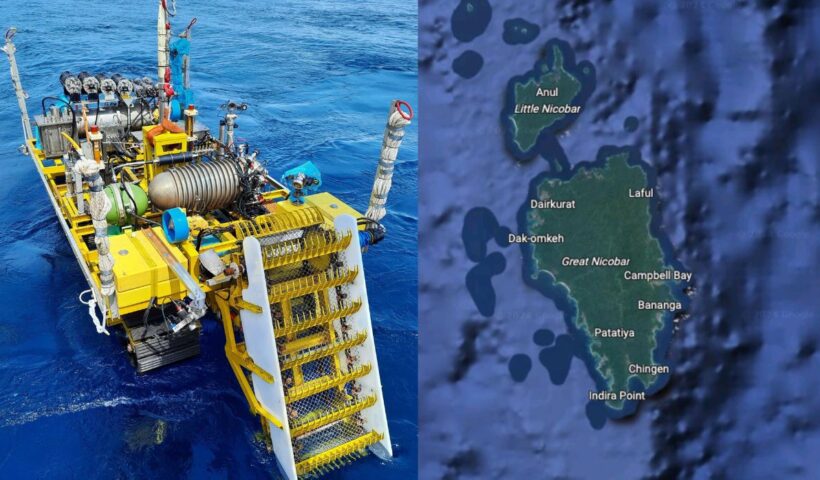
The Andaman and Nicobar region, long known for its strategic location in the Bay of Bengal and its pristine biodiversity, is now emerging as one of India’s most promising frontiers for oil and gas exploration. The region’s tectonic setting, coupled with its proximity to proven petroleum systems in Myanmar and North Sumatra, has drawn growing interest from global energy players and domestic exploration agencies.
Geological Potential and Tectonic Advantage
The Andaman Basin lies at the junction of the Indian, Eurasian, and Burmese tectonic plates, a setting that is often conducive to hydrocarbon accumulation. This active subduction zone is geologically similar to highly productive petroleum basins in Southeast Asia, particularly the nearby Myanmar Basin and North Sumatra Basin. Both regions have a track record of substantial oil and natural gas discoveries, increasing confidence that the Andaman Basin could host significant reserves.
Seismic surveys indicate the presence of thick sedimentary sequences, structural traps, and fault-bound reservoirs — all critical factors for hydrocarbon generation and accumulation. The area also benefits from offshore geological features such as anticlines, synclines, and deepwater channels that may serve as prime exploration targets.
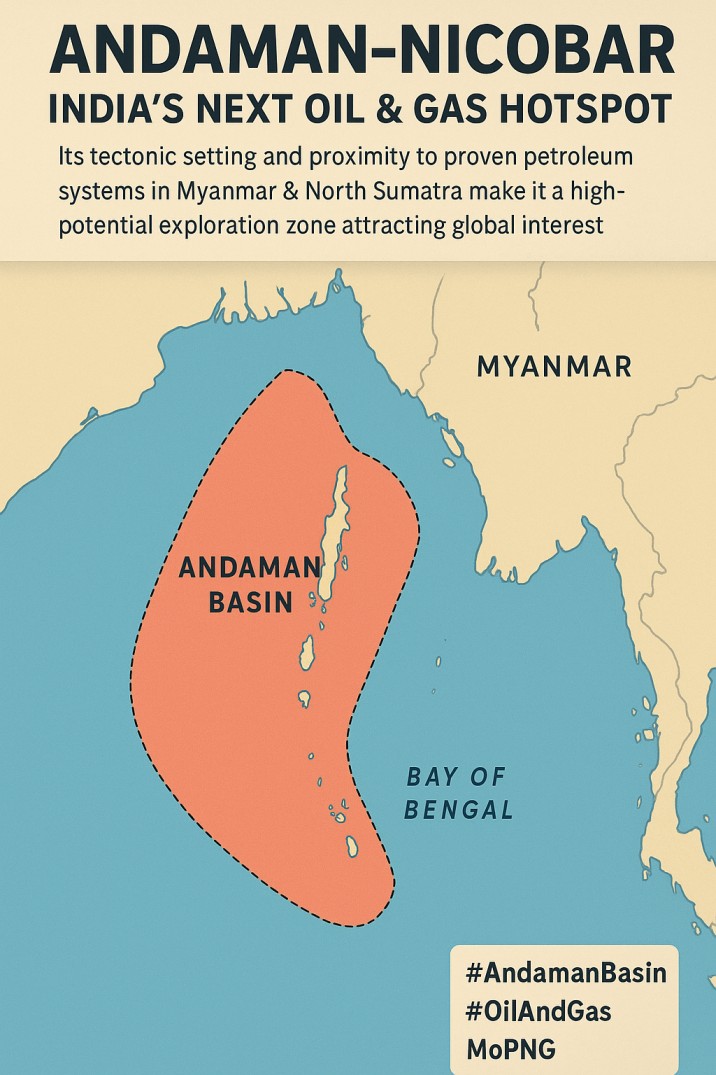
Strategic Location and Regional Synergy
The islands’ proximity to Southeast Asian energy hubs makes the Andaman Basin a strategic link in the regional oil and gas value chain. Located close to international shipping routes, any future production could be easily transported to domestic markets and export destinations. The geographical advantage also means that existing infrastructure and technology from Myanmar and Indonesia can be adapted for operations here, potentially reducing exploration and production costs.
Policy Push and Industry Interest
The Ministry of Petroleum and Natural Gas (MoPNG) has identified the Andaman Basin as a key exploration zone under its Hydrocarbon Exploration and Licensing Policy (HELP). Recent bidding rounds have seen growing participation from both public sector companies such as ONGC and Oil India Limited, and private sector and foreign firms. The government’s emphasis on ease of doing business, transparent licensing, and fiscal incentives for deepwater exploration further strengthens the basin’s attractiveness.
International oil majors have reportedly shown interest in joint ventures and data-sharing agreements for the region. Advances in deepwater drilling technology and seismic imaging are making it feasible to explore previously inaccessible areas, enhancing the basin’s development prospects.
Economic and Strategic Implications
If substantial reserves are discovered, the Andaman and Nicobar region could become a vital contributor to India’s energy security. Domestic production from the basin would help reduce dependence on imports, support industrial growth, and generate revenue through exports. Moreover, developing the basin aligns with India’s Act East Policy, fostering deeper energy cooperation with Southeast Asian nations.
From a strategic standpoint, establishing energy infrastructure in the islands could bolster India’s maritime security posture in the Indo-Pacific. Offshore rigs, pipelines, and related facilities would not only serve commercial purposes but also strengthen India’s presence in a geopolitically sensitive region.
Challenges Ahead
Despite the potential, exploration in the Andaman Basin poses challenges. Deepwater operations are capital-intensive and technically demanding, requiring advanced drilling rigs and specialized expertise. Environmental concerns are also significant, given the ecological sensitivity of the islands and their marine ecosystems. Balancing exploration with sustainability will be crucial to avoid ecological damage and ensure community support.
Outlook
With favorable geology, a strategic location, and strong policy support, the Andaman and Nicobar region is on track to become India’s next oil and gas hotspot. As seismic studies progress and exploratory drilling intensifies, the coming decade could reveal the true potential of this frontier basin — possibly placing it alongside the most productive petroleum provinces of the Indo-Pacific.