
Jabalpur’s Gold Rush: GSI’s Massive Discovery Sparks Economic and Tech Revolution in India

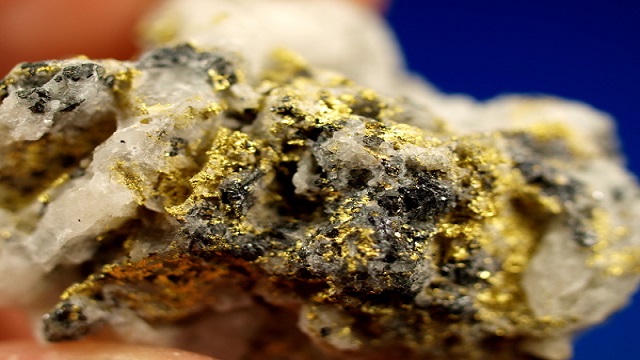
In a historic breakthrough, the Geological Survey of India (GSI) has confirmed the discovery of massive gold reserves in the Mahgawan-Keolari area of Sihora tehsil, Jabalpur district, Madhya Pradesh. Spanning approximately 100 hectares, this find contains an estimated 35 million tonnes of gold-bearing ore, with a potential market value exceeding ₹1.5 lakh crore at current prices. Announced in August 2025, this discovery is poised to transform India’s economic landscape by reducing its reliance on gold imports, strengthening foreign exchange reserves, and creating thousands of jobs. Beyond its economic impact, the find is sparking a modern-day tech rush, opening opportunities for Indian startups in drone-based surveying, AI-powered mineral exploration, IoT for mine safety, and sustainable extraction technologies. This article explores the significance of Jabalpur’s gold reserves, their economic and technological implications, and their alignment with India’s Atmanirbhar Bharat vision.
The Jabalpur Gold Discovery: Scale and Significance
The GSI’s discovery in Jabalpur’s Mahgawan-Keolari region, confirmed through years of soil sampling and chemical analysis, marks one of Central India’s most significant mineral finds in recent decades. The estimated 35 million tonnes of gold-bearing ore, spread across 100 hectares, is valued at over ₹1.5 lakh crore (approximately $18 billion USD) based on current global gold prices, which hover around ₹7,000 per gram. The region, already known for its iron and manganese deposits, also contains traces of copper and other precious metals, enhancing its economic potential.
This find is a game-changer for India, the world’s second-largest gold importer, with annual imports worth $60–70 billion. In 2024, India imported 750 tonnes of gold, contributing to a $45.7 billion trade deficit with the US alone and a monthly trade gap of $18.8 billion as of June 2025. The Jabalpur reserves could reduce this import bill by boosting domestic production, potentially saving billions in foreign exchange and generating substantial royalty revenue for the Madhya Pradesh government.
The project is expected to create thousands of jobs across mining, logistics, refining, and export sectors. Jabalpur, already home to 42 operational mines extracting iron, manganese, limestone, and silica sand, has robust infrastructure, making commercial extraction viable with relatively low initial investment. The Mohan Yadav government’s mining-focused policies, including a 2024 conclave to attract investment, further support this development, positioning Jabalpur as a mineral-rich hub alongside Karnataka and Rajasthan.
Economic Impacts: Reducing Imports and Boosting Resilience
India’s heavy reliance on gold imports strains its foreign exchange reserves and exposes the economy to global price volatility. The Jabalpur discovery offers a strategic opportunity to address these challenges:
-
Reduced Import Dependency: Domestic gold production could cut India’s import bill by 20–30%, saving $12–20 billion annually, strengthening the rupee, and reducing imported inflation, especially as the currency weakens in offshore markets.
-
Royalty Revenue: The Madhya Pradesh government could earn billions in royalties, funding infrastructure, education, and healthcare, while contributing to India’s fiscal stability.
-
Job Creation: The project is projected to generate 10,000–15,000 direct and indirect jobs, from skilled mining roles to ancillary services like transportation and processing, boosting local economies in Jabalpur and surrounding areas.
-
Trade Deficit Reduction: By enhancing domestic supply, India can narrow its trade deficit, particularly with the US, where recent 50% tariff hikes threaten $87 billion in exports. This aligns with Atmanirbhar Bharat’s goal of economic self-reliance.
The discovery also strengthens India’s position in global gold markets, potentially attracting foreign investment and fostering partnerships in refining and export. Posts on X highlight public excitement, with users noting the find’s potential to “transform Jabalpur into India’s mineral capital” and “boost national gold reserves.”
A Tech Rush: Opportunities for Indian Startups
Beyond its economic benefits, the Jabalpur gold discovery is igniting a modern-day tech rush, creating opportunities for India’s startup ecosystem in mining-related technologies. The GSI’s use of advanced surveying techniques in Jabalpur sets a precedent for tech-driven exploration, and startups can capitalize on this momentum:
-
Drone-Based Surveying: Drones equipped with LiDAR and hyperspectral imaging can enhance mineral mapping, reducing exploration costs and improving accuracy. Startups like Skylark Drones and ideaForge are well-positioned to lead in this space.
-
AI-Powered Mineral Exploration: Artificial intelligence can analyze geological data to predict high-yield zones, streamlining exploration. Companies like Tathastu AI and GeoSpark Analytics could develop tailored solutions for gold mining.
-
IoT for Mine Safety: Internet of Things (IoT) devices can monitor mine conditions, ensuring worker safety and operational efficiency. Startups like SenseHawk and Detect Technologies are already innovating in industrial IoT.
-
Sustainable Extraction Technologies: Green mining solutions, such as bioleaching and water-efficient processing, align with India’s environmental goals. Startups like Graviky Labs could adapt their eco-tech expertise to mining.
The Ministry of Mines has initiated pilot projects using drones and AI in states like Odisha, and Jabalpur’s discovery could accelerate these efforts. Investments in mining-tech startups, potentially through Production Linked Incentive (PLI) schemes, could create a $1–2 billion market by 2030, fostering innovation and supporting Atmanirbhar Bharat’s focus on indigenous technology.
Environmental and Social Considerations
While the discovery promises economic gains, it raises environmental concerns. Jabalpur’s Mahakoshal region is rich in flora and fauna, and mining could impact local ecosystems. Environmentalists advocate for sustainable practices, such as low-impact extraction and reforestation, to mitigate damage. The GSI has committed to detailed feasibility studies and compliance with environmental regulations before extraction begins, ensuring a balance between development and conservation.
Socially, the project offers opportunities to uplift local communities through job creation and infrastructure development. However, it must address potential displacement and ensure fair compensation for affected residents. Community engagement, as seen in the Mohan Yadav government’s mining conclave, will be critical to ensuring inclusive growth.
Challenges and Opportunities
Challenges
-
Environmental Impact: Large-scale mining risks deforestation and biodiversity loss, requiring robust mitigation strategies.
-
Geopolitical Tensions: US tariffs of 50% on Indian exports, including minerals, could limit export potential, necessitating diversified markets like the EU and ASEAN.
-
Technical Feasibility: Extracting gold from 35 million tonnes of ore requires advanced refining capabilities, which may demand significant upfront investment.
-
Supply Chain Constraints: Global supply chain disruptions, as seen in Shandong’s iron ore industry, could affect equipment and technology imports for mining operations.
Opportunities
-
Economic Transformation: The ₹1.5 lakh crore valuation could position Jabalpur as a global mining hub, attracting FDI and boosting regional development.
-
Tech Ecosystem Growth: The mining-tech rush offers startups a chance to innovate, creating a new industry vertical and supporting India’s $5 trillion economy goal by 2027.
-
Market Diversification: Leveraging FTAs with the UK, UAE, and Australia can offset US tariff impacts, ensuring stable export channels.
-
Strategic Reserves: Increased domestic gold production strengthens India’s strategic reserves, enhancing economic stability in a volatile geopolitical climate.