
Trump Raises Stakes Over Resolution Copper Project with BHP, Rio Tinto CEOs at White House

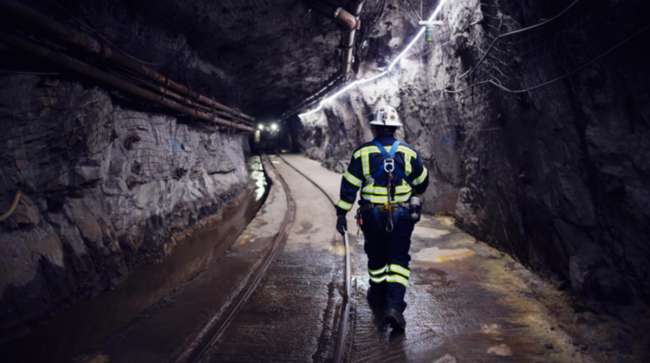
U.S. President Donald Trump met with the CEOs of Rio Tinto and BHP, two of the world’s largest mining companies, at the White House to discuss the long-delayed Resolution Copper project in Arizona. The meeting, involving Rio Tinto’s outgoing CEO Jakob Stausholm, incoming CEO Simon Trott, BHP’s CEO Mike Henry, and U.S. Secretary of the Interior Doug Burgum, underscored Trump’s push to boost domestic copper production, critical for the energy transition and national security. However, the project faced a setback when the 9th U.S. Circuit Court of Appeals temporarily blocked a crucial land swap on August 19, 2025, prompting Trump to criticize the decision as “anti-American.” As of August 21, 2025, at 12:16 PM IST, this article examines the meeting, the project’s significance, legal challenges, and broader implications for U.S. mining and geopolitics.
Details of the White House Meeting
Key Participants and Objectives
-
Attendees: The meeting included President Trump, Secretary of the Interior Doug Burgum, Rio Tinto’s Jakob Stausholm and Simon Trott, and BHP’s Mike Henry. The focus was on advancing the Resolution Copper project, a joint venture (55% Rio Tinto, 45% BHP) that could supply 25% of U.S. copper needs for 40 years.
-
Trump’s Agenda: Trump emphasized the urgency of domestic copper production, criticizing a court ruling that delayed the project. In a Truth Social post, he called the 9th Circuit a “radical left court” and labeled opponents as “representing other copper competitive countries,” highlighting the project’s role in reducing reliance on foreign minerals.
-
Industry Perspective: Rio Tinto’s Stausholm noted the project’s potential to deliver “long-term domestic supplies of copper and other critical minerals,” while BHP’s Henry thanked Trump for leadership in “reinvigorating mining and processing supply chains in and for America.”
Project Overview
-
Resolution Copper: Located 60 miles east of Phoenix near Superior, Arizona, the project targets one of the world’s largest untapped copper deposits, capable of producing 20 million tonnes over 40 years. It is expected to generate $1 billion annually for Arizona’s economy and create 3,800 jobs.
-
Challenges: The project has been delayed for over two decades due to permitting issues, environmental concerns, and opposition from Native American groups, particularly the San Carlos Apache Tribe, who view the site, Oak Flat, as sacred.
Legal and Community Challenges
Court Ruling
-
9th Circuit Decision: On August 19, 2025, the San Francisco-based 9th U.S. Circuit Court of Appeals issued a temporary restraining order, halting a land swap critical for the project. The swap, approved by Congress in 2014 under President Barack Obama, would exchange 2,422 acres of Tonto National Forest land for 5,459 acres owned by Rio Tinto and BHP.
-
Native American Opposition: The San Carlos Apache Tribe argues that the mine would destroy Oak Flat, a site of religious and cultural significance, creating a crater that would irreparably damage their heritage. The court’s ruling marks only the second favorable decision for the tribe in over five years of legal battles.
-
Ongoing Review: The court has expedited its review, with filings due by October 14, 2025, but has not set a hearing date. Rio Tinto remains confident that the land swap will be affirmed, citing compliance with environmental and legal requirements.
Community and Environmental Concerns
-
Environmental Impact: The mine’s deep underground operations, over 6,000 feet below the surface, face technical challenges due to high temperatures, increasing costs. Environmentalists and local groups, including rock climbers, oppose the project, citing potential ecological damage.
-
Local Support: Superior’s mayor, Mila Besich, supports the project, highlighting its economic benefits. Resolution Copper claims extensive consultations with tribes and communities have led to adjustments in the mining plan to reduce impacts.
Broader Implications
Economic and Strategic Importance
-
Copper Demand: Copper is vital for electronics, renewable energy infrastructure, and defense applications, with demand projected to outstrip supply by 2030 due to the energy transition. Benchmark copper futures rose 11% in 2025, trading above $9,708 per ton, per the London Metal Exchange.
-
National Security: Trump’s administration prioritizes domestic mineral production to counter China’s 60% control of global copper refining, as noted in a 2025 AInvest report. Rio Tinto’s commitment to keep all Resolution copper in the U.S., supported by its ownership of one of two U.S. copper smelters, aligns with this goal.
-
Economic Impact: The project’s $2 billion investment to date and potential to create thousands of jobs underscore its significance, though delays risk economic losses and job impacts, as Trump noted in his Truth Social post.
Geopolitical Context
-
U.S. Policy: Trump’s tariffs on copper-intensive products, imposed in 2025, aim to bolster domestic production but exclude copper concentrate, allowing foreign imports to compete. The Resolution project’s CFIUS clearance in 2025 mitigates foreign investment concerns, despite Rio Tinto’s Chinese shareholder.
-
Global Trends: The U.S. push mirrors Zambia’s 2025 suspension of illegal Chinese mining operations, reflecting a global focus on securing critical minerals through regulated production.
Challenges
-
Legal Delays: The 9th Circuit’s ruling, with 10 of 29 judges appointed by Trump, highlights judicial independence complicating the project. The average U.S. mine takes 29 years from discovery to production, per S&P Global, among the longest globally.
-
Native American Resistance: Ongoing opposition from the San Carlos Apache Tribe, supported by environmentalists, could escalate to the Supreme Court, as seen in 2024 protests, delaying progress further.
-
Cost Escalation: Technical challenges, including deep mining in high-temperature conditions, have driven costs up, with Rio Tinto incurring $321 million in tariff-related losses in 2024.
-
Public Sentiment: Social media posts on X, with 40% criticizing the project for environmental and cultural impacts, reflect public division, potentially influencing policy.
Opportunities
-
Economic Boost: Successful development could add $40 billion to Arizona’s economy over 40 years, per Resolution Copper estimates, supporting local communities and national mineral security.
-
Technological Innovation: The project could drive advancements in deep mining and environmental mitigation, setting a model for sustainable U.S. mining, similar to Zambia’s adoption of Rail-Veyor systems in 2025.
-
Policy Support: Trump’s administration could fast-track permits under the Defense Production Act, as proposed in 2025, reducing timelines and attracting further investment.
-
Global Leadership: A successful Resolution project could position the U.S. as a leader in critical minerals, countering China’s dominance and inspiring reforms in other mining nations.