
From Waste to Wealth — India’s Push for Critical Mineral Recycling

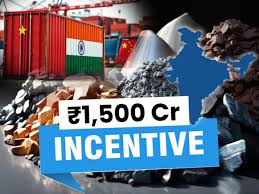
In a major stride toward sustainable resource security, the Ministry of Mines, Government of India, has announced guidelines for the ₹1,500 crore Critical Mineral Recycling Incentive Scheme under the National Critical Mineral Mission. This forward-looking initiative represents a bold step in turning India’s waste into a valuable economic and strategic resource, helping the country reduce import dependency while building a circular economy around critical minerals.
Building a Circular Economy for Critical Minerals
Critical minerals such as lithium, cobalt, nickel, and rare earth elements are essential for clean energy technologies, electric vehicles, advanced electronics, and defense systems. However, India, like many other nations, relies heavily on imports for these materials. The new recycling scheme aims to change that by tapping secondary sources — including electronic waste, spent lithium-ion batteries, and industrial residues — to recover these vital minerals.
Key Highlights of the Scheme
The ₹1,500 crore incentive scheme will remain open for applications until April 1, 2026, offering a broad window for industries, startups, and research institutions to participate. It supports both new projects and expansion of existing recycling operations, ensuring inclusivity across scales of operation. Importantly, the scheme prioritizes actual mineral extraction — emphasizing the recovery of usable elements over mere “black mass” processing, which often stops short of refining the minerals into usable form.
Encouraging Innovation and Entrepreneurship
The policy framework encourages startups, private recyclers, and established industrial players to bring innovation into India’s recycling ecosystem. Startups working on advanced hydrometallurgical and pyrometallurgical processes, or on efficient material separation technologies, can benefit significantly. This not only promotes indigenous R&D but also fosters collaboration between public institutions and private enterprises to accelerate technological breakthroughs.
Reducing Import Dependence and Strengthening Supply Chains
India’s ambitious clean energy transition, including its electric mobility and renewable energy goals, requires a steady and affordable supply of critical minerals. Recycling from domestic waste streams could potentially meet a significant portion of this demand, thereby reducing dependence on imports from geopolitically sensitive regions. By reusing materials that already exist in the system, the nation also mitigates supply chain risks and price volatility.
Environmental and Strategic Benefits
Apart from its economic potential, the scheme carries strong environmental and strategic implications. Recycling reduces the burden on primary mining, lowers carbon emissions, and prevents hazardous waste from entering landfills. Simultaneously, it positions India as a responsible player in global mineral sustainability, aligning with international efforts toward greener, circular industrial systems.
A Vision for Self-Reliance and Sustainability
The Critical Mineral Recycling Incentive Scheme reflects the broader vision of Aatmanirbhar Bharat (Self-Reliant India). By transforming waste into wealth, India is investing in a future where critical resources are recovered domestically, industries are made more resilient, and environmental damage is minimized. The policy marks a proactive alignment between economic growth, strategic autonomy, and ecological responsibility.
Conclusion
The Ministry of Mines deserves credit for this transformative and future-oriented initiative. With clear guidelines, substantial incentives, and a focus on actual mineral recovery, India’s recycling policy could become a global benchmark in sustainable mineral management. As the scheme gathers momentum, it promises to unlock immense value hidden in the nation’s waste — powering industries, creating jobs, and ensuring that India’s growth story remains both green and self-sustaining.