
Govt Working on Steps to Improve Supply of Rare Earth Minerals: Piyush Goyal

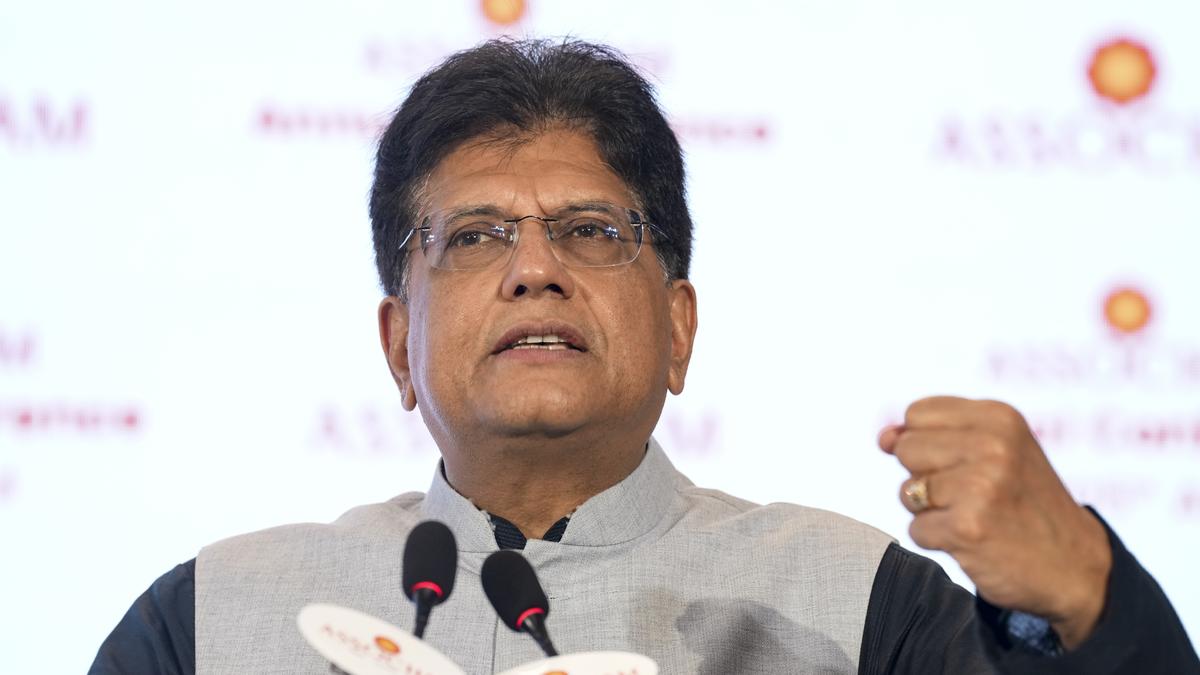
Union Commerce and Industry Minister Piyush Goyal has emphasized that the Indian government is taking proactive measures to enhance the availability and domestic production of rare earth minerals, a critical resource for the nation’s industrial, technological, and strategic ambitions. With the world increasingly dependent on these minerals for advanced manufacturing—from semiconductors and renewable energy systems to electric vehicles and defence equipment—India’s renewed focus marks a decisive step toward achieving self-reliance in critical mineral supply chains.
1. Strengthening India’s Strategic Resource Security
Addressing industry representatives and policymakers, Goyal underscored the importance of rare earth minerals as the “building blocks of the future economy.” He noted that these materials are indispensable to several high-growth sectors such as clean energy, electronics, and defence manufacturing. The government, he said, is actively working to create an enabling ecosystem that encourages exploration, extraction, and processing of rare earths within India’s borders.
This comes at a time when global supply chains are under pressure due to export restrictions imposed by major producers, particularly China, which currently dominates the global market. Goyal’s statement signals India’s determination to reduce import dependency and build a resilient domestic capability in line with the government’s Atmanirbhar Bharat (Self-Reliant India) vision.
2. Policy Framework for Critical Minerals
To accelerate this transformation, the government is finalizing a comprehensive policy framework for critical and strategic minerals, including rare earths such as neodymium, praseodymium, and dysprosium. These elements are essential for manufacturing permanent magnets used in wind turbines, electric vehicle motors, and precision-guided weapons.
The framework aims to simplify regulations for mining and processing, promote public-private partnerships, and attract both domestic and foreign investments. Additionally, the policy will prioritize sustainability and environmental safeguards, ensuring that mining activities align with green standards and responsible practices.
3. Empowering State-Run and Private Enterprises
The Minister highlighted that key public sector undertakings like Indian Rare Earths Limited (IREL) and Atomic Minerals Directorate for Exploration and Research (AMD) are being strengthened to expand their exploration and refining capacities. These entities are also expected to collaborate with private enterprises to accelerate capacity building.
Encouraging private sector participation, Goyal said the government is considering incentive schemes and fast-track approvals for companies investing in rare earth processing and technology development. The goal is to create a robust supply chain—from mineral exploration and extraction to purification and value-added manufacturing—that can meet the needs of India’s growing industrial base.
4. Building Global Partnerships and Supply Resilience
Recognizing that no country can entirely insulate itself from global resource dependencies, Goyal also stressed the importance of international cooperation. India is engaging with strategic partners such as Australia, Japan, and the United States to ensure diversified access to critical mineral resources and share best practices in exploration technologies.
Under initiatives like the Quad Critical Minerals Partnership and India–Australia Critical Minerals Investment Partnership, efforts are underway to co-develop mines, establish refining infrastructure, and promote technology transfer. These collaborations aim to integrate India into global supply networks while ensuring transparency and sustainability.
5. Focus on Research, Innovation, and Recycling
In addition to exploration, Goyal highlighted the role of research and technological innovation in securing the future of rare earth supply. The government is promoting research institutions and startups working on rare earth recycling, alternative materials, and efficient extraction technologies.
Recycling, in particular, holds immense promise. Extracting rare earths from discarded electronics, magnets, and industrial waste could significantly reduce India’s dependence on imports and minimize environmental impacts. The government plans to link these initiatives with its circular economy goals, ensuring long-term sustainability.
6. Aligning with the Clean Energy Transition
Rare earth minerals play a central role in the clean energy revolution, and Goyal reiterated that improving their supply is essential for achieving India’s net-zero emission targets. The expanding renewable energy sector—especially wind and solar—relies heavily on these materials for manufacturing high-performance magnets and components.
The Minister noted that as India scales up its production of electric vehicles, batteries, and green hydrogen technologies, securing rare earth supply chains will become even more critical. The government’s initiatives are therefore designed not only to meet current needs but to future-proof India’s industrial growth in a rapidly evolving global economy.
7. Encouraging Investments and Private Participation
Piyush Goyal also called upon domestic industry leaders and global investors to participate actively in India’s rare earth value chain. He assured them that the government would provide policy stability, infrastructure support, and ease of doing business to attract high-quality investments.
Through collaborations with global mining and technology companies, India aims to establish itself as a competitive player in the international rare earth market. The government is also exploring options for joint ventures and technology tie-ups to bring advanced refining processes and sustainable mining models to India.
8. A Vision for Self-Reliant Mineral Economy
Goyal’s statement aligns with India’s broader ambition to become a global hub for advanced manufacturing and green technologies. By building domestic capabilities in rare earth minerals, India seeks to ensure that its economic growth is not constrained by external dependencies.
This vision includes developing an integrated ecosystem—spanning exploration, refining, research, and product innovation—that not only supports domestic industries but also enables India to emerge as a reliable supplier of critical minerals to other countries.
Conclusion: Securing the Future of India’s Strategic Resources
Piyush Goyal’s assurance that the government is working to improve rare earth mineral supply marks a significant policy direction. In an era where access to critical minerals determines industrial and strategic strength, India’s push toward developing its own resources is both timely and necessary.
With strong policy support, technological innovation, and global partnerships, India is positioning itself to transform from a dependent consumer to a self-reliant producer in the global rare earth ecosystem. This move not only strengthens India’s industrial future but also reinforces its strategic autonomy in an increasingly competitive and resource-sensitive world.