
China’s Rare Earth Export Delays Offer US a Chance to Weaken Beijing’s Grip on Global Market

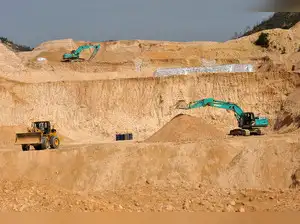
China’s recent delays in rare earth exports have opened a strategic window for the United States and its allies to reduce dependency on Beijing’s near-monopoly over the critical minerals market — essential for advanced technologies such as electric vehicles, semiconductors, and defense systems.
Background: China’s Dominance and Recent Disruptions
China currently controls over 70% of global rare earth production and an even larger share of refining capacity. In recent months, Beijing has restricted export permits and slowed shipments, citing environmental and supply chain reviews. These measures have disrupted global supply and triggered price volatility in several high-demand minerals, including neodymium, dysprosium, and terbium.
Analysts say the delays may be part of a strategic recalibration by China amid growing trade tensions and Western efforts to diversify supply chains.
A Strategic Opening for the US
The export bottlenecks have accelerated US efforts to develop alternative rare earth sources domestically and through international partnerships. The US Department of Energy and Pentagon have already announced new investments in mining and refining projects across the US, Canada, and Australia.
“China’s export slowdown may backfire,” said a senior US trade official. “It’s motivating global players to fast-track supply diversification and reduce Beijing’s leverage over critical materials.”
Allied Cooperation and Industry Response
Several countries, including Japan, South Korea, and Australia, are coordinating with the US to build resilient rare earth supply chains. Meanwhile, private companies such as MP Materials, Lynas Rare Earths, and Iluka Resources are ramping up production to meet rising demand.
Industry experts predict that if these initiatives succeed, China’s market share could decline significantly within the next decade.
Geopolitical Implications
The rare earth issue has become a central aspect of US-China strategic competition, intertwining with energy security and technological supremacy. Economists suggest that sustained Western collaboration could reshape global supply chains and reduce China’s long-standing dominance in critical minerals — a sector vital to the future of clean energy and defense innovation.