
India Strengthens Ties with Latin America to Secure Critical Minerals for Clean Energy Future

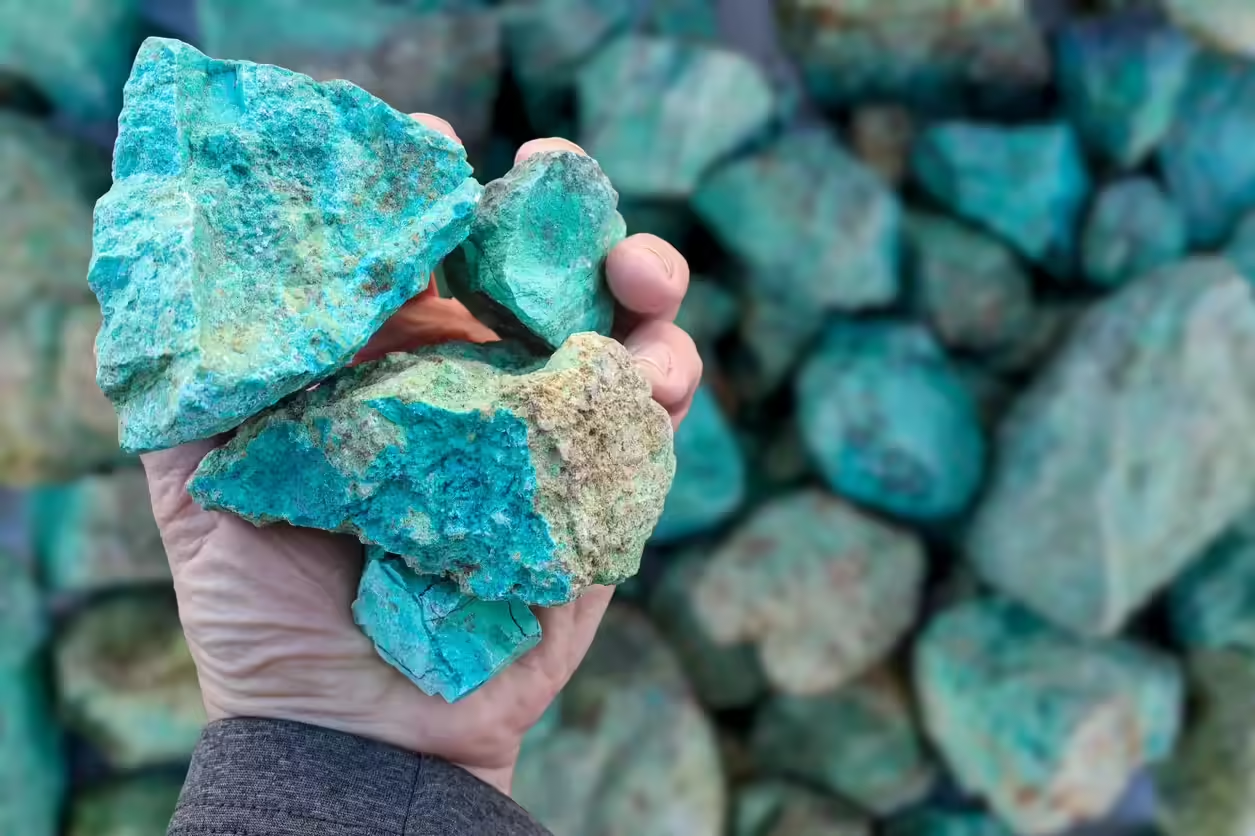
India is deepening its engagement with Latin American nations—Peru, Chile, and Argentina—to secure vital critical minerals such as lithium, copper, and rare earths, essential for powering the country’s rapidly growing electric vehicle (EV), renewable energy, and high-tech manufacturing sectors, according to The Economic Times.
Strategic Global Partnerships for Mineral Security
Recognizing the importance of diversifying its mineral supply chain, India has begun high-level diplomatic and trade discussions with these resource-rich nations. Negotiations include Free Trade Agreement (FTA) talks with Chile and focused bilateral discussions with Peru, aimed at establishing long-term mineral cooperation and investment frameworks.
Chile and Argentina are among the world’s largest producers of lithium, often referred to as the “white gold” of the green energy era, while Peru holds vast reserves of copper, a crucial metal for electric grids, wind turbines, and EV infrastructure. By partnering with these nations, India aims to reduce its dependence on imports from China, which currently dominates the global supply chain of many critical minerals.
Supporting India’s Clean Energy Transition
This initiative aligns closely with India’s ambitious energy transition and net-zero goals. As the demand for batteries, solar panels, and wind energy components rises, access to secure and diversified sources of raw materials has become a national priority.
The government’s focus on “metals and minerals for clean energy” reflects a broader strategy to integrate sustainability with industrial growth. Reliable access to lithium and copper will not only support India’s EV ecosystem but also enable large-scale domestic production of renewable technologies.
Economic and Strategic Implications
For India’s metal and mineral companies, this new international engagement opens major opportunities. Domestic players engaged in refining, processing, and manufacturing of battery materials could benefit from stable import channels and joint ventures with Latin American producers.
Moreover, the move will strengthen India’s supply-chain resilience, protect its industries from global price volatility, and foster technology transfer in the fields of mineral exploration, extraction, and processing.
The partnerships are also expected to encourage Indian investments abroad, with public and private sector companies exploring stakes in Latin American mining assets. The Ministry of Mines and Ministry of External Affairs are coordinating to facilitate these investments through the Critical Minerals Mission and diplomatic channels.
Reducing Strategic Dependence on China
One of the major motivations behind India’s Latin America outreach is to reduce strategic dependency on Chinese mineral exports. China has a near-monopoly in rare earth refining and lithium battery processing, which exposes other nations to potential supply disruptions. By securing new sources from Latin America, India aims to achieve greater autonomy in critical mineral supply and processing.
The Road Ahead
Experts suggest that alongside trade agreements, India must focus on building domestic processing and refining capacity, as simply importing raw ores will not ensure long-term security. The integration of AI-driven exploration technologies and sustainable mining practices will further strengthen India’s position in the global critical minerals landscape.
This multi-dimensional approach—combining diplomacy, technology, and sustainability—positions India to emerge as a key player in the global race for clean energy materials.