
India Offers Deep Collaboration on Critical Minerals and Processing to Canada: Piyush Goyal

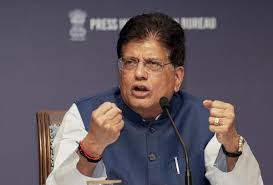
India has extended a strong pitch to Canada for collaboration in critical minerals and their processing, Union Minister of Commerce and Industry Piyush Goyal said during a high-level interaction on strengthening bilateral trade and strategic cooperation. The proposal comes as India accelerates efforts to secure reliable mineral supply chains essential for clean energy, semiconductors, electric mobility, and advanced manufacturing.
Goyal emphasised that India’s growing industrial and renewable-energy ecosystem presents significant opportunities for joint exploration, mining, and processing of critical minerals such as lithium, cobalt, nickel, and rare earth elements—resources in which Canada holds some of the world’s largest reserves.
Highlighting India’s capability in downstream processing and manufacturing, the minister noted that a partnership between the two countries could help build resilient, transparent, and diversified supply chains at a time when global dependence on a limited number of suppliers poses economic and geopolitical risks.
India’s proposal aligns with its broader critical minerals strategy, which aims to reduce import dependence while facilitating global partnerships through the Critical Minerals Mission and the recently formed India Critical Minerals Society (ICMS). Canada, meanwhile, has been actively seeking international partners as part of its Critical Minerals Strategy, aimed at reinforcing North American and Indo-Pacific supply security.
Officials familiar with the discussions said both countries are exploring avenues for:
-
Joint ventures in mineral exploration
-
Technology collaboration for processing and refining
-
Investment in value-added manufacturing
-
Long-term supply agreements to support India’s EV, battery, and electronics sectors
The renewed engagement also comes amid efforts to stabilise bilateral trade relations, which had experienced diplomatic turbulence in recent months. Analysts see the critical minerals partnership as a pragmatic step that serves mutual strategic and economic interests.
The next round of talks between the two governments is expected to outline a framework for cooperation, including potential industry tie-ups and state-supported mining agreements.