
India’s Renewable Energy Expansion Shifts Focus From Installation to Grid Integration

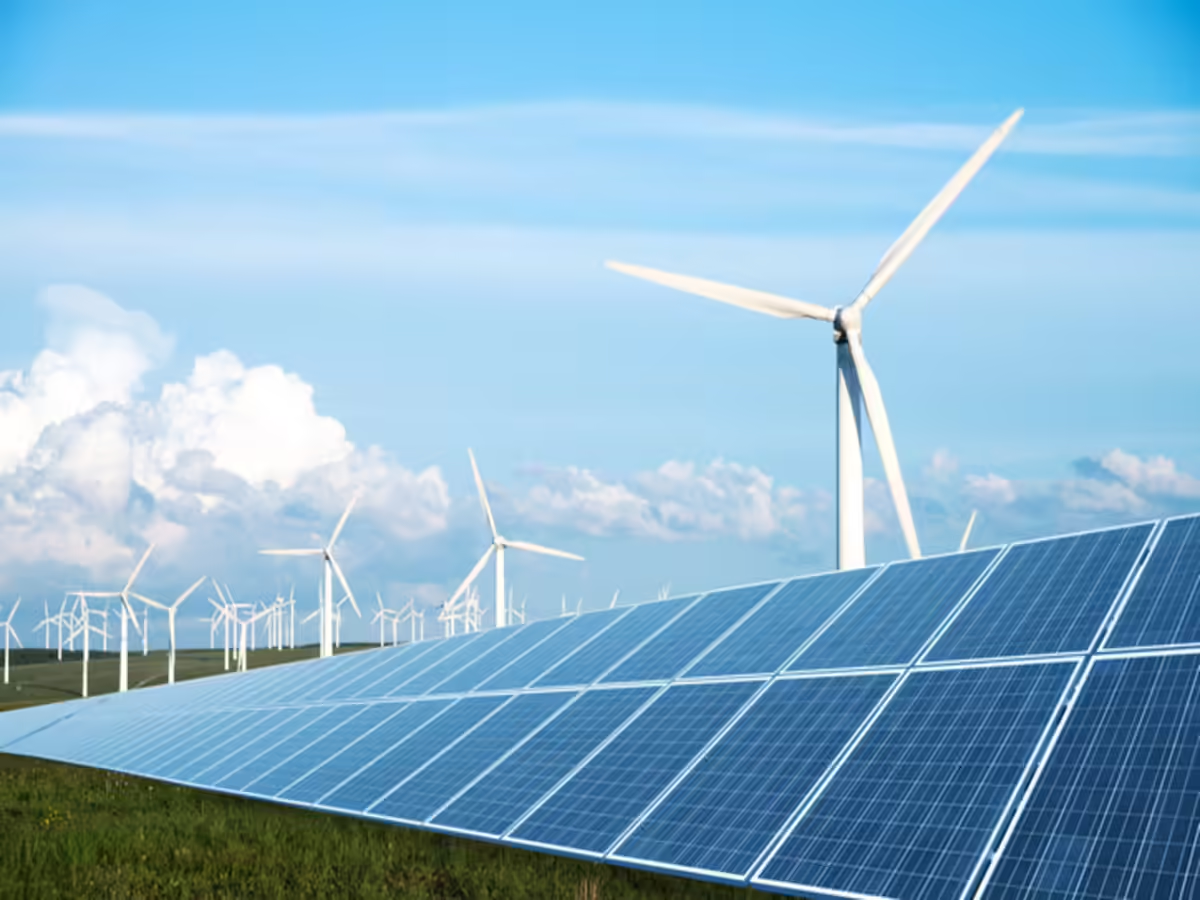
By 2025, India’s renewable energy journey reached a stage where integration rather than installation emerged as the central challenge. Rapid capacity addition over the past few years has significantly transformed the country’s power landscape, placing greater emphasis on grid stability, storage, and transmission readiness.
According to data released by the Ministry of New and Renewable Energy (MNRE), India crossed 180 GW of renewable energy capacity, excluding large hydro, during the year. When large hydro and nuclear power are included, the country’s total non-fossil fuel capacity exceeded 200 GW, marking a major milestone in its clean energy transition.
This achievement underscores the pace at which India has scaled up solar, wind, bioenergy, and small hydro installations. However, as renewable penetration increases, challenges related to variability, grid balancing, and transmission infrastructure have become more pronounced. Policymakers and system operators are now focusing on energy storage solutions, flexible generation, and advanced grid management systems to ensure reliable power supply.
The progress has firmly positioned India on track to meet its ambitious target of 500 GW of non-fossil fuel capacity by 2030, a cornerstone of the country’s climate commitments. Achieving this goal will require not only continued capacity additions but also large investments in transmission corridors, battery storage, pumped hydro, and digital grid technologies.
Experts note that the shift in focus reflects the maturing phase of India’s renewable energy programme, where the priority is evolving from rapid deployment to efficient integration, reliability, and long-term sustainability of the power system.