

Support CleanTechnica’s work through a Substack subscription or on Stripe.
We learned a lot in 2025 about how the way we eat affects our climate and environment. Many of us started to rethink our food choices in relation to a warming climate. A number of 2025 studies were released that chronicled the intersection of food and climate emissions, and, over and over, researchers concluded that it is time for us in the western world to rethink our diets.
This topic appealed to more of our readers than you might think — growing awareness of our individual ability to influence climate change through food choices inspired lots of close reading and comments. Let’s do a review of those food and climate stories that spoke to CleanTechnica readers in 2025.
Is The Plant-Based Food Sector Really Too Woke? In December we wrote about Impossible Foods CEO Peter McGuinness, who insists that the plant-based meat substitute industry was wrong to recommend its products as a climate solution. The approach severely restricted the company’s potential customer base early on, the CEO continues, and the approach may have contributed to an inevitable pattern of steadily falling US faux meat sales over the last several years. “It became woke and partisan and political and divisive,” McGuinness argues.
Won’t You Adopt A Planet-Healthy Diet? EAT-Lancet 2.0 May Persuade You: The 2025 EAT-Lancet 2.0 report not only had layers of new research, its update examined the need for justice across multiple dimensions: distributive fairness, the recognition of marginalized communities, and their representation in governance. It focused on modeling capacity — they incorporated ten agro-economic and environmental models to assess dietary shifts, productivity gains, and reductions in food loss and waste. They also proposed explicit food system boundaries for climate, biodiversity, land, water and nutrient cycles, directly linking diets to the Earth’s safe operating space.
The State Of Food At Climate Week NYC 2025: In late September Climate Week NYC convened. Several opportunities offered participants a chance to learn more about how food can work intersectionally with tech, energy, artificial intelligence, and/or business. A partnership with Tilt Collective demonstrated strengthening food resilience through practical partnerships with farmers, researchers, and local organizations. Many of the topics centered around large-scale production and consumption as opposed to local operations like backyard gardens, co-ops, and farmers’ markets.
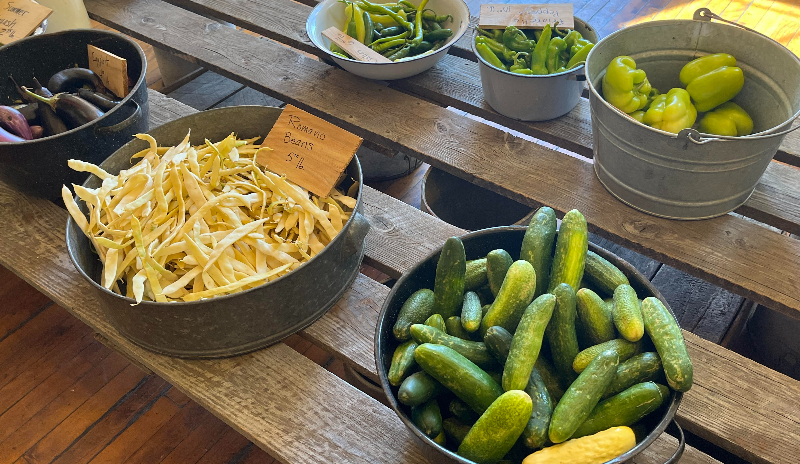
We Need To Consider Food Adaptations For Our Future Healthy Planet: August was the peak harvest month in New England, where I traveled, and the role that agriculture plays in reducing food and climate impacts on greenhouse gas emissions was on my mind. From climate-smart cultivation to breakthrough protein alternatives, the need to seek out ways to reduce the carbon footprint of agriculture seemed on the minds of people with whom I chatted. How would food value chains look different if we were to view them as an essential nutritional source rather than a profit-making venture?
The State Of The Food We Consume: With the late May backdrop of the Trump administration’s Big Beautiful Bill, lots of discussion centered around federal food policy and the broad support for policy and systematic change in public education and animal agriculture for the benefit of the environment, and there is only hesitancy regarding taxes and personal adoption of plant-based diets.
Why Can’t We Grow Healthy Food For A Sustainable World? We were acknowledging in early May that, to feed the expanding world population will require more than increasing food production. What’s needed is efficient distribution and viable sustainable growth goals. We’ve veered away from our roots — traditional, indigenous food growing practices . The need to preserve biodiversity, particularly in the case of plants, really needs a return to ethnobotanical knowledge.
We Need To Save Earth’s Soil — Changing Our Food Choices Can Help: April was the month in which the northern soils wake up and begin to ready for planting. Soil is not static: its composition is changeable, based on the weather, which organisms constitute it, which plants grow in it, and other variables. It’s a complex living ecosystem teeming with microbes, nutrients, and other organisms. Healthy soil, we discussed, contains everything necessary for plants to thrive. Sustainable and regenerative agriculture is a method to ameliorate soil health while also sequestering carbon, storing water, and building healthier ecosystems along the way.
Why You Should Embrace A Climate Diet — A Podcast Interview: As a February guest on the Climate Diet podcast, “Climate and Cuisine,” I discussed the powerful intersection of food choices, climate change, and societal shifts toward a net zero world. I argued that climate activists need to use language that speaks to everyday people — language that is local, accessible, and doesn’t include a lot of numbers and jargon. “We have to speak a language that people understand,” I continued, whether it is about the food they eat, the electricity that can power their lives, or why we advocate on a larger scale for systemic climate action. “We have to assuage concerns but also be active listeners.”
The Fate Of Our Food Systems Is Wrapped Up In Climate Change & Plant Nutrition: We learned that plant growth due to high CO2 conditions hides declining plant nutrition — they have significantly lower concentrations of essential nutrients. “Nutrient dilution” results in reduced levels of vital micronutrients such as iron, zinc, copper, and magnesium in major food crops. In essence, plants can’t absorb and concentrate nutrients while CO2 accelerates their growth. If plant nutrition declines significantly, it could trigger widespread food web disruption. The economic impacts of declining plant nutrition are vast, affecting everything from farm productivity to global trade.
“Is 2025 The Year Of Food Consumption Patterns That “Break the Rules?” As the new 2025 year rolled around, we wondered how the world could reconcile its environmental degradation with the enormous amounts of food industrial agriculture produces. Part of that effort reinforces place-based crops that have been grown for thousands of years. Agroecological farms and farmers, we mused, could be at the forefront of food system transitions. And, as it was January, we celebrated Veganuary — the month dedicated to trying plant-based eating. Post-Veganuary monthly data analysis indicated that over 80% of people who have joined in definitely reduce their everyday meat consumption afterward.
Final Thoughts about Food & Climate
Want to learn more? You can make decisions today that change your food footprint. Click here for eight ways you can reduce your food footprint so it’s more environmentally-friendly. It would be a good way to start off the new year — day by day, meal by meal. Happy New Year!
Sign up for CleanTechnica’s Weekly Substack for Zach and Scott’s in-depth analyses and high level summaries, sign up for our daily newsletter, and follow us on Google News!
Have a tip for CleanTechnica? Want to advertise? Want to suggest a guest for our CleanTech Talk podcast? Contact us here.
Sign up for our daily newsletter for 15 new cleantech stories a day. Or sign up for our weekly one on top stories of the week if daily is too frequent.
CleanTechnica uses affiliate links. See our policy here.
CleanTechnica’s Comment Policy