

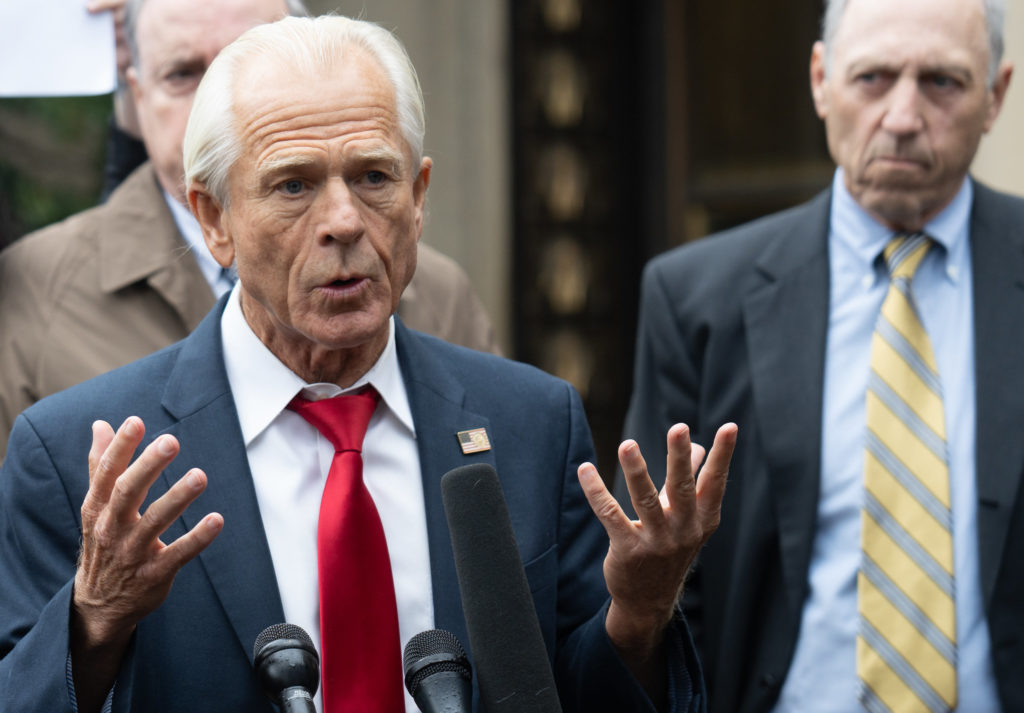
Peter Navarro, a former trade adviser to the White House, has asserted that the United States is moving decisively to end China’s long-standing dominance over critical minerals that are essential for advanced manufacturing, defence systems, and clean energy technologies.
Navarro said Washington’s renewed focus on supply chain resilience, domestic mining, and allied partnerships is aimed at reducing strategic vulnerabilities that have emerged due to China’s overwhelming control of minerals such as rare earth elements, lithium, cobalt, and graphite. These materials are vital for electric vehicles, semiconductors, renewable energy infrastructure, and military hardware.
According to Navarro, U.S. policymakers increasingly view China’s dominance as a national security concern rather than a purely economic issue. He argued that years of reliance on Chinese processing and refining capabilities exposed American industries to geopolitical pressure, export controls, and price manipulation.
The former adviser highlighted efforts to revive domestic mining projects, streamline environmental clearances, and invest in processing and refining capacity within the U.S. He also pointed to strategic cooperation with allies such as Australia, Canada, and other mineral-rich nations to build alternative supply chains that bypass China-centric networks.
Navarro noted that legislation supporting critical mineral production, incentives for private investment, and federal funding for research into mineral substitution and recycling are central to the strategy. He suggested that these measures would gradually weaken China’s leverage over global mineral markets.
While acknowledging that China’s existing infrastructure and scale cannot be replaced overnight, Navarro maintained that sustained policy focus and industrial investment would eventually rebalance the market. He said the long-term objective is not isolation, but supply security and fair competition.
Analysts observe that any significant shift away from China will take years and require coordinated action across mining, processing, manufacturing, and trade policy. However, Navarro’s comments reflect a broader bipartisan consensus in Washington that reducing dependence on Chinese critical minerals has become a strategic priority.