

Support CleanTechnica’s work through a Substack subscription or on Stripe.
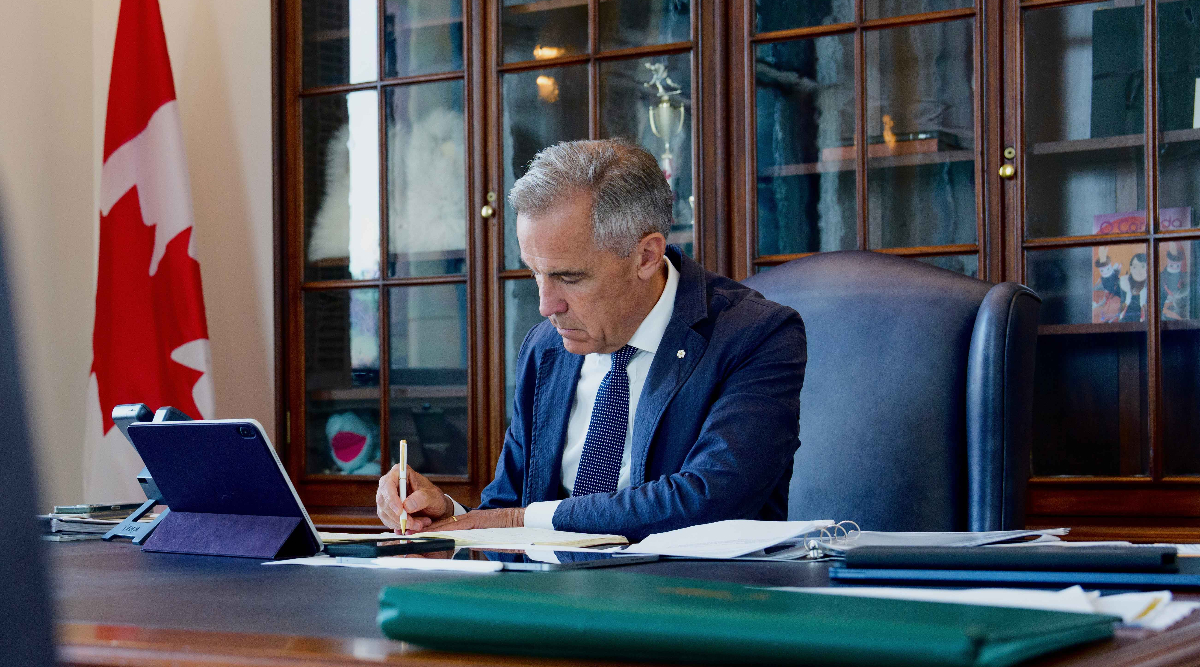
Mark Carney, the prime minister of Canada, went to Beijing this week to talk about trade issues. Currently, Canada imposes a 100 percent tariff on Chinese cars, but as a result of those talks, the rate will be reduced substantially. In a statement to the press, Carney said in a “preliminary but landmark” deal with China, Canada will allow up to 49,000 Chinese EVs into the country under the most-favored nation tariff rate of 6.1 percent. Under the agreement, the import limit will increase to 70,000 EVs by year five. In exchange, China will lower tariffs on Canadian canola products. [Note that CleanTechnica writer Raymond Tribdino accurately scooped this news, generally speaking, three days ago.]
According to Politico, Carney brushed aside concerns that the new Chinese EV quotas will pose an existential risk to the Canadian auto sector. “It’s still in low, single digit proportion of the size of the Canadian auto sector. Canadians buy about 1.8 million autos a year.” The new agreement is expected to see a significant increase in investments in Canada by Chinese automakers.
Ontario Premier Doug Ford disagrees. Ontario happens to be the province where most of the Canadian auto industry is located. “The federal government is inviting a flood of cheap made-in-China electric vehicles without any real guarantee of equal or immediate investments in Canada’s economy, auto sector or supply chain,” he said. It hardly seems like 49,000 cars equals a flood, but Ford is not known for making a lot of sense.
China Is A More Predictable Partner
The New York Times reports that Carney told the press that China had become a more “predictable” partner to deal with than the United States and that “you see results coming from that.”
Wu Xinbo, the dean at the Institute of International Studies at Fudan University in Shanghai, told the Times, “I think China not only views Canada as an important economic partner, but also as a useful diplomatic counterweight in dealing with the United States.”
Is the bombastic president of the United States upset by this turn of events? Apparently not, although that could change tomorrow. Perhaps he is too focused on Venezuela or Greenland to pay much attention to what is happening north of the border. “That’s OK, that’s what he should be doing,” he said after the new trade deal was announced. “It’s a good thing for him to sign a trade deal. If he can get a trade deal with China, he should do that.”
What Memo?
Apparently, not everyone in the administration got the memo, however. Secretary of Transportation Sean Duffy, who trained for his position by being a part time Faux News host, said, “I think they’ll look back at this decision and surely regret it to bring Chinese cars into their market.”
US trade representative Jamieson Greer at first said the limited number of vehicles would not impact US car companies exporting cars to Canada. “I don’t expect that to disrupt American supply into Canada,” he said. “Those cars are going to Canada, they’re not coming here.”
Later he told CNBC the new tariff plan was “problematic” and added, “There’s a reason why we don’t sell a lot of Chinese cars in the United States. It’s because we have tariffs to protect American auto workers and Americans from those vehicles. I think in the long run, they’re not going to like having made that deal,” he said.
Greer said rules adopted in January 2025 on vehicles that are connected to the internet and navigation systems are a significant impediment to Chinese vehicles in the US market. “I think it would be hard for them to operate here. There are rules and regulations in place in America about the cybersecurity of our vehicles and the systems that go into those, so I think it might be hard for the Chinese to comply with those kind of rules.”
Lawmakers from both political parties have expressed strong opposition to allowing Chinese vehicles to be imported en masse to the US. Ohio Senator Bernie Moreno, a Republican, summed it up best when he said, “As long as I have air in my body, there will not be Chinese vehicles sold in the United States of America — period.”
The European Union is also on the cusp of making it easier for Chinese companies to import cars to Europe. It recently imposed tariffs of up to 35 percent on Chinese BEVs, but those tariffs did not apply to plug-in hybrids. Now the European Commission is proposing a new framework that will lower the effective rate of those tariffs. If approved, it will apply to all Chinese made cars, but also (hopefully) act as an incentive for Chinese manufacturers to follow BYD’s example and establish factories in European countries.
Trading Partners
What to make of all this? It seems clear the antics of the current US administration are driving other nations — ones that used to be America’s primary trading partners — to seek new relationships. And China is smack dab in the middle of that realignment. Canada ratcheted tariffs on Chinese cars up to 100 percent at the behest of the Biden administration, but when the MAGAnistas rolled into Washington, they gave Ottawa the finger — a tactic that seldom wins friends, although it definitely influences people, but not in a good way.
During World War II, Australia thought they would be protected by the British and were shocked — SHOCKED! — to find that Britain had its hands full with Hitler and they were on their own. That forced Australians to change their world view — rapidly. A similar transformation took place in Ottawa when the Mouth That Roared started yapping about making Canada the 51st state.
“Trump’s bellicose approach to foreign affairs has forced Ottawa to look to China and the Middle East to grow trade and court foreign investment. The Carney government has set an ambitious goal to double non-U.S. trade in a decade to reduce reliance on the American market,” Politico says.
The Chinese Are Coming
There may be something to this tilt toward China. In an email today, Wired announced a new series that will focus on China. It reads, “China is rewriting the future for all of us. Whether you realize it or not, you’re already living in the Chinese century. From batteries to milk to electric vehicles, China is undoubtedly doing it better while the rest of us kick our feet up and watch. China is soaring ahead of the US in a space race called by Trump; China is putting up buildings in a day’s time; [and] China is light-years ahead of the rest of the world when it comes to solar energy.”
From the front porch of CleanTechnica’s global headquarters, we have a pretty good view of the future, and we see affordable EVs driving on the highways and byways of Canada as a definite concern to American car companies.
The Chinese are coming, and holding them back will be about as effective as King Canute sitting on the shore and commanding the tide not to rise. Ford better hope the new Universal EV Platform being developed by Doug Field and his band of merry pranksters in Southern California is everything they hoped for.
US carmakers will either find a way to compete with China or disappear. Those are the only possible ways this will end. As Wired says, China has a big head start and is going to move even faster in the future. There is a slugfest coming, and as usually happens in economic competition, the best cars at the lowest prices will win.
That should have the execs in the C suites in Detroit very nervous. The tariff wall will only protect them a little while longer. They need to figure this out, and pretty damn soon. The clock is definitely ticking.
Sign up for CleanTechnica’s Weekly Substack for Zach and Scott’s in-depth analyses and high level summaries, sign up for our daily newsletter, and follow us on Google News!
Have a tip for CleanTechnica? Want to advertise? Want to suggest a guest for our CleanTech Talk podcast? Contact us here.
Sign up for our daily newsletter for 15 new cleantech stories a day. Or sign up for our weekly one on top stories of the week if daily is too frequent.
CleanTechnica uses affiliate links. See our policy here.
CleanTechnica’s Comment Policy