

Support CleanTechnica’s work through a Substack subscription or on Stripe.
Or support our Kickstarter campaign!
VinFast is formally entering Indonesia’s electric scooter market through partnerships with seven national level dealers.
This is not a soft market test. It is a scale play aimed directly at a market long dominated by internal combustion engines. With its Subang manufacturing complex in West Java now operational, VinFast is clearly positioning Indonesia as its core ASEAN growth engine rather than a peripheral export destination.
Indonesia is probably the hardest electric two-wheeler market in Southeast Asia for one simple reason: Honda.
Through Astra Honda Motor, it controls roughly 70 to 75% of all motorcycle and scooter sales in the country, making Indonesia its single most important market globally. This dominance is not cosmetic. It is reinforced by unmatched dealer density, service coverage, supplier integration, and consumer financing embedded into daily life. For tens of millions of Indonesians, a Honda scooter is not a brand choice but basic household need. Any company entering this market is not competing against rivals, it is challenging a system. Roughly 6.4 million motorcycles annually in a market worth more than $10.5 billion.
For decades, Japanese incumbents such as Honda and Yamaha have controlled over 70% of volume, reinforced by dealer density, financing access, and supply chain lock in. That dominance is now structurally vulnerable. The Indonesian government target of 13 million electric motorcycles by 2030 creates a demand curve that smaller local players cannot serve alone. VinFast’s entry matters not because it brings another electric model, but because it brings manufacturing scale, capital, and an integrated energy strategy in a market that is ready for disruption.
That is what makes VinFast’s move structurally significant. The Indonesian government target of 13 million electric motorcycles on the road by 2030 creates a demand curve that legacy internal combustion platforms are poorly positioned to serve. Smaller domestic EV players like Gesits and Alva lack the manufacturing scale and capital depth to meet that transition alone. VinFast enters as one of the first players capable of matching the market’s size with industrial capacity.
Unlike domestic brands such as Gesits and Alva, which remain constrained by limited production capacity and fragmented supply chains, VinFast is deploying a vertically integrated model. Manufacturing, vehicles, batteries, charging, financing, and after-sales are being built in parallel. That is the difference between experimentation and transition.
Dealer Network As An Industrial Multiplier
VinFast has signed memoranda of understanding with K3, Citra Abadi Sedaya, PT Bevos Auto Mandiri, PT Sapta Jaya, MotorArt, PT Sinergies Dua Kawan, and PT HINU. These partners represent decades of automotive retail and service experience and will anchor VinFast’s national rollout beginning in Jabodetabek in the second quarter of 2026. This approach bypasses the slow organic dealer build that has limited other EV entrants and immediately places VinFast inside Indonesia’s existing retail muscle.
According to Kariyanto Hardjosoemarto, CEO of VinFast Indonesia, the company views Indonesia as a strategic base rather than a transactional market. That framing matters. It signals long term capital commitment and political alignment rather than opportunistic sales targeting.
Supporting that strategy is V Green, VinFast’s global charging and energy infrastructure arm. Under the leadership of Mai Truong Giang, CEO of V Green Indonesia, the company has begun coordination with Telkom Property to deploy charging and battery swapping stations across state-owned and commercial real estate. This addresses one of the core bottlenecks in electric two-wheeler adoption and shifts infrastructure risk away from consumers.
Product Strategy & Cost Engineering
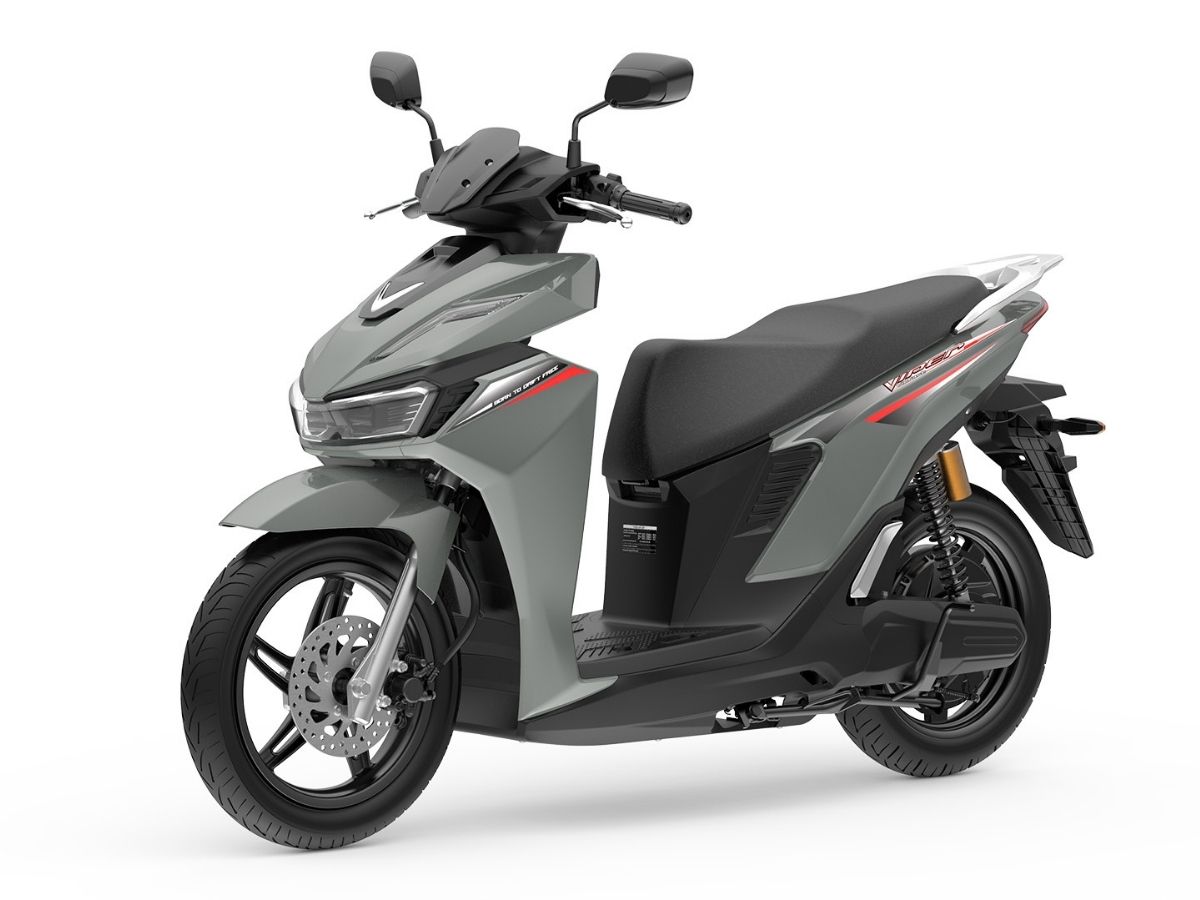
VinFast’s initial scooter lineup includes the Evo, Feliz II, Flazz, and Viper. These models are designed for tropical durability, heavy daily usage, and dense urban traffic conditions typical of Jakarta, Surabaya, and other major cities. More importantly, VinFast is deploying a battery subscription model that removes battery cost from the purchase price and converts it into a predictable monthly expense.
This model mirrors VinFast’s early success in Vietnam and directly attacks the affordability barrier that has slowed electric scooter adoption across Southeast Asia. Battery maintenance and performance risk remain with VinFast, not the rider. From a systems perspective, this transforms the scooter from a capital good into a mobility service.
Manufacturing Localization As Policy Alignment
The Subang manufacturing facility represents more than one billion dollars in committed investment. VinFast targets over 40% localization by the end of 2026, rising to 80% by 2030. That trajectory aligns closely with Indonesian industrial policy objectives around domestic value creation and skilled employment.
Pham Sanh Chau, General Director of VinFast Asia, has emphasized that localization is not a branding exercise but a structural requirement for long term competitiveness. Local suppliers, local labor, and local logistics reduce cost exposure while embedding VinFast into Indonesia political economy. This is how foreign manufacturers avoid being treated as temporary guests.
Regional Strategy & Financial Access
The entry into Indonesia fits into VinFast’s broader plan to lead electric two-wheeler adoption across five priority markets by 2026, including the Philippines, India, Thailand, and Malaysia. According to Vo Thi Cam Tu, Managing Director of VinFast E Scooters Overseas Market, the dealer partnerships reflect shared confidence in the transition timeline rather than speculative interest.
Equally critical is financing. VinFast has secured cooperation with PT Adira Dinamika Multi Finance, PT Bank Woori Saudara Indonesia, PT CIMB Niaga Auto Finance, PT Mandiri Tunas Finance, and PT Maybank Indonesia Finance. In Indonesia, access to credit often determines adoption more than sticker price. By integrating financing at launch, VinFast removes another friction point that has stalled competitors.

Support CleanTechnica via Kickstarter

Sign up for CleanTechnica’s Weekly Substack for Zach and Scott’s in-depth analyses and high level summaries, sign up for our daily newsletter, and follow us on Google News!
Have a tip for CleanTechnica? Want to advertise? Want to suggest a guest for our CleanTech Talk podcast? Contact us here.
Sign up for our daily newsletter for 15 new cleantech stories a day. Or sign up for our weekly one on top stories of the week if daily is too frequent.
CleanTechnica uses affiliate links. See our policy here.
CleanTechnica’s Comment Policy