


Support CleanTechnica’s work through a Substack subscription or on Stripe.
BYD can be hard to keep up with, but it is making product moves again. I recently mentioned the mainstream midsized Song Ultra, but there have been sales launches and multiple filings over the past 24 hours, particularly for compact SUVs/crossovers. While midsized vehicles tend to be the top sellers for BYD in China, compacts are not far behind, and often are the top selling models for the brand in export markets. The product changes are significant and represent the next phase of BYD’s second-generation Blade Battery and Flash Charging rollout in China.
Next-Generation Compact Vehicles
BYD officially launched the Fang Cheng Bao Ti3 (Titanium 3) for presale on March 13. We saw a preview of this model at the Flash Charging launch event. The older models offered 501 km of range and are selling between 133,800 and 149,800 ($19,479 and $21,808) for RWD, or between 153,800 and 177,800 RMB ($22,390 and $25,884) for AWD. Only one trim is available on the new model at launch. The RWD with 620 km of range is priced at 153,800 RMB ($22,390), while the AWD with 565 km comes in at 169,800 RMB ($24,719).
Of note, these are pre-sale prices and BYD has had the tendency to drop prices after sales begin. While some might be disappointed at the entry-level increase, these prices make sense from a brand portfolio perspective for a premium model in China (even though these prices would be very low in the US). Lower-spec Ti3 models tended to overlap in price with mainstream mid-spec Sealion 05 and Yuan Plus models. A low price limits the amount of the premium equipment that can be offered, making the brand seem less premium. This slight price increase helps to reduce internal competition and preserve brand reputation. The slightly higher price on the new model also helps to clear out older models that may still be on dealer lots. The simplified trim levels also help to speed up production rollout. We will have to wait to see if other trim levels appear in the future.
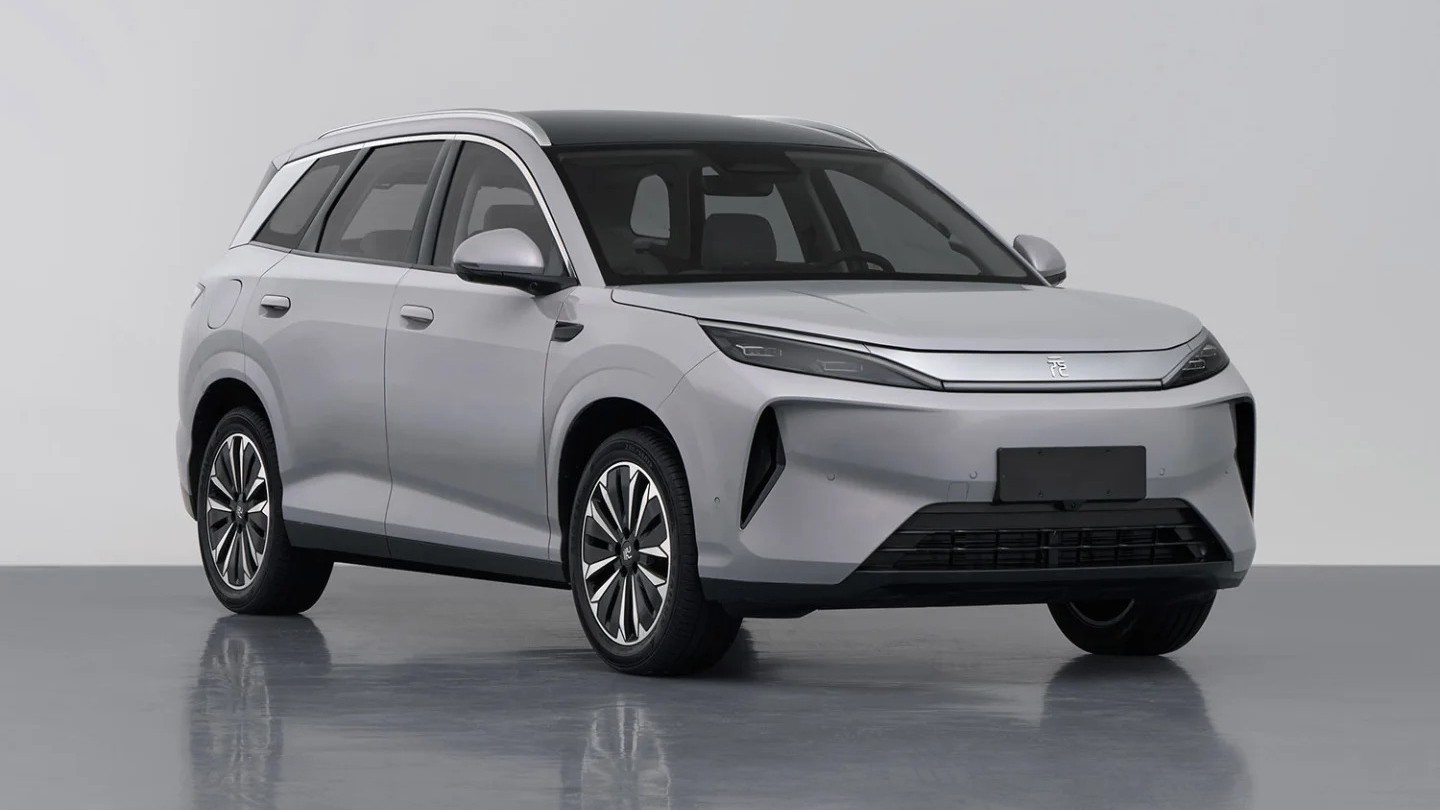
Meanwhile, the 405th batch of regulatory filings from MIIT were published, revealing that the Yuan Plus is also getting a new generation in China, switching from front-wheel drive to rear-wheel drive with a new body, platform, battery, motor, etc. Of note, this model is different from the RWD Yuan Plus that showed up in regulatory filings last year and just launched in Europe (Atto 3 Evo). Despite earlier filings, China seems to be skipping that model.
The styling is somewhat similar, but it is overall more refined and aligned with other models in the Dynasty series. Of note, a metal roof can be seen on the base model. LiDAR is shown in the filing, which is anticipated to be offered across BYD’s range of vehicles in China along with a more advanced intelligent driving system.
No interior details have been revealed yet, but I expect it to be more mature than the current model. There are also no details on pricing. Although, BYD models have tended to be priced in line with the previous generation, while being better equipped. I am guessing around 125,000 RMB (~$18,000) to start.
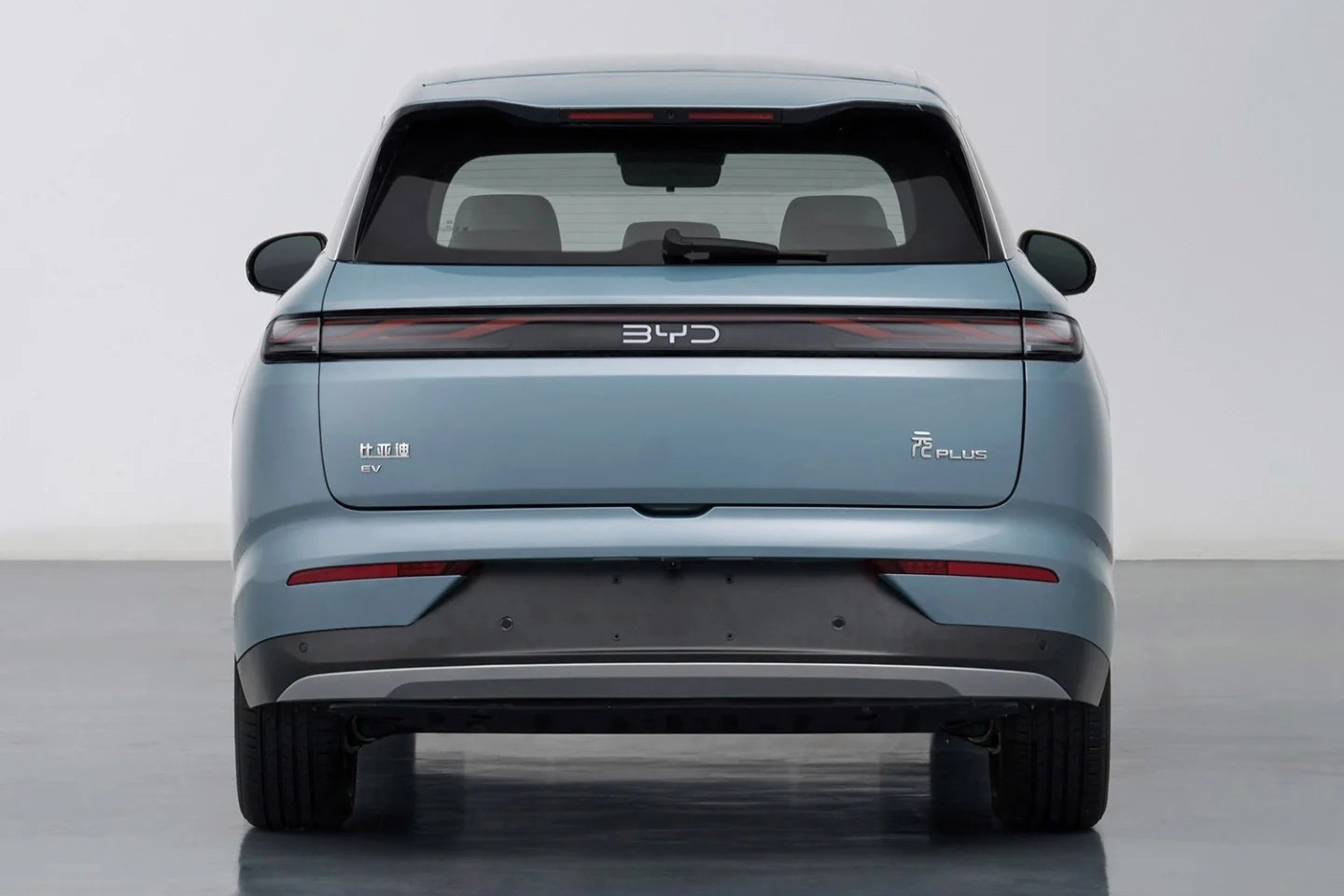
The new model will come with a 200 kW (268 hp) or a 240 kW (322 hp) motor driving the rear wheels. This is an increase over the 150 kW motor currently driving the front wheels in the Chinese Yuan Plus, and a slight increase in top spec over the 230 kW RWD European Atto 3 EVO model. No AWD version has shown up in the regulatory filings yet. Based on naming convention, these motors have an overall diameter of 180 mm (~7”), with TZ180XYJ offering 200 kW and TZ180XYD offering 240 kW. This makes them smaller than the 240 kW motor (TZ200XYAT) seen in recent mid-sized models and the Ti3, with an overall diameter of 200 mm. Flash Charging is anticipated, but we will have to wait for more details. We will also have to wait for more details on battery capacity, range, and any other new technology onboard.
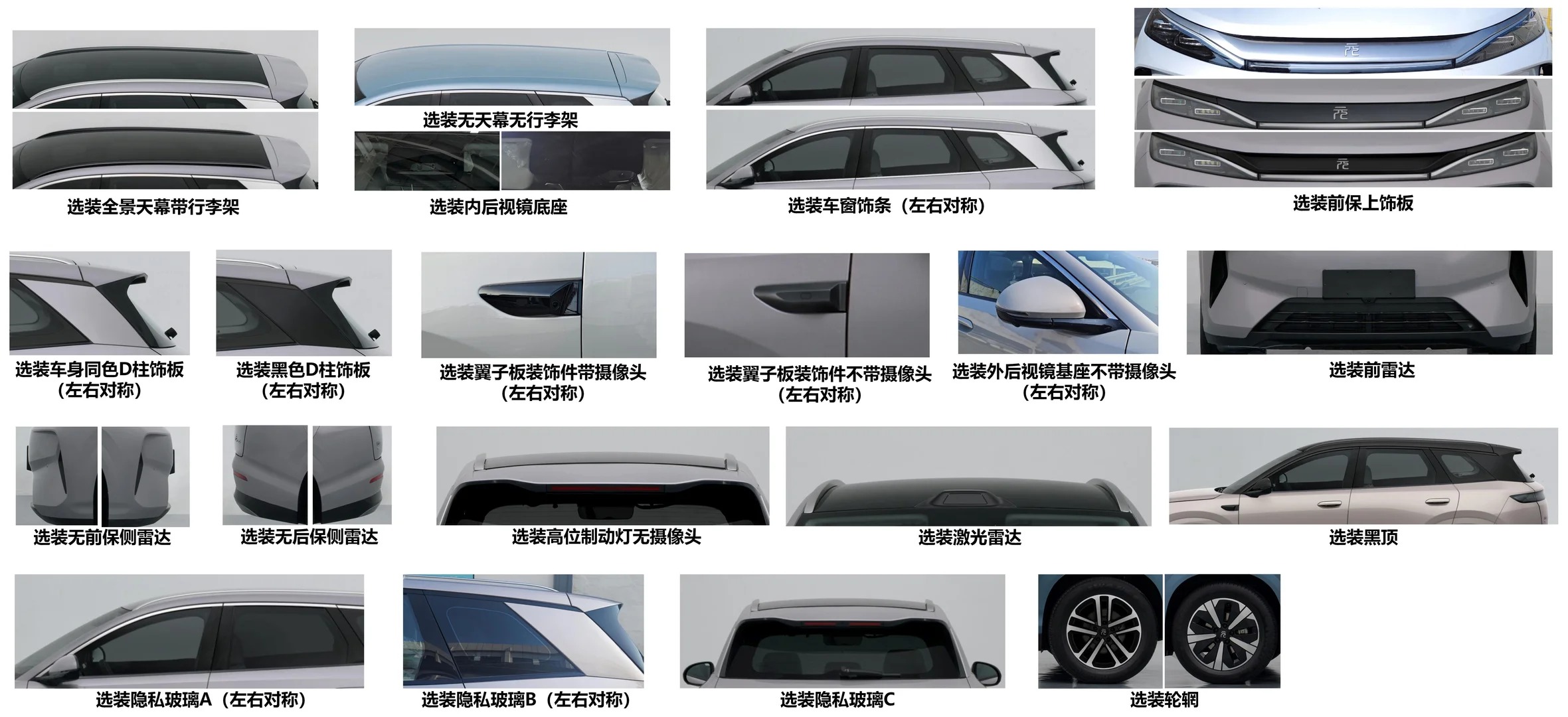
In terms of size, the new Yuan Plus is 4665 mm long on a 2770 mm wheelbase, up from 4455 mm on a 2720 mm wheelbase. That also makes the new model slightly longer than a RAV4. The new dimensions align with the upcoming new Sealion 05, which grew 100 mm longer with a 50 mm longer wheelbase compared to the older generation that was introduced last March. The new Sealion 05 was listed with a 240 kW motor in both 200 mm and 180 mm diameters, so it will be interesting to see what the production model ends up with. Due to the similarities between the models, they are likely built on the same underlying structure. This will undoubtedly reduce costs over a proliferation of similar models on different platforms. In addition, the Sealion 05 is adding a PHEV version, which could also appear on the Yuan Plus. We should know more in April.
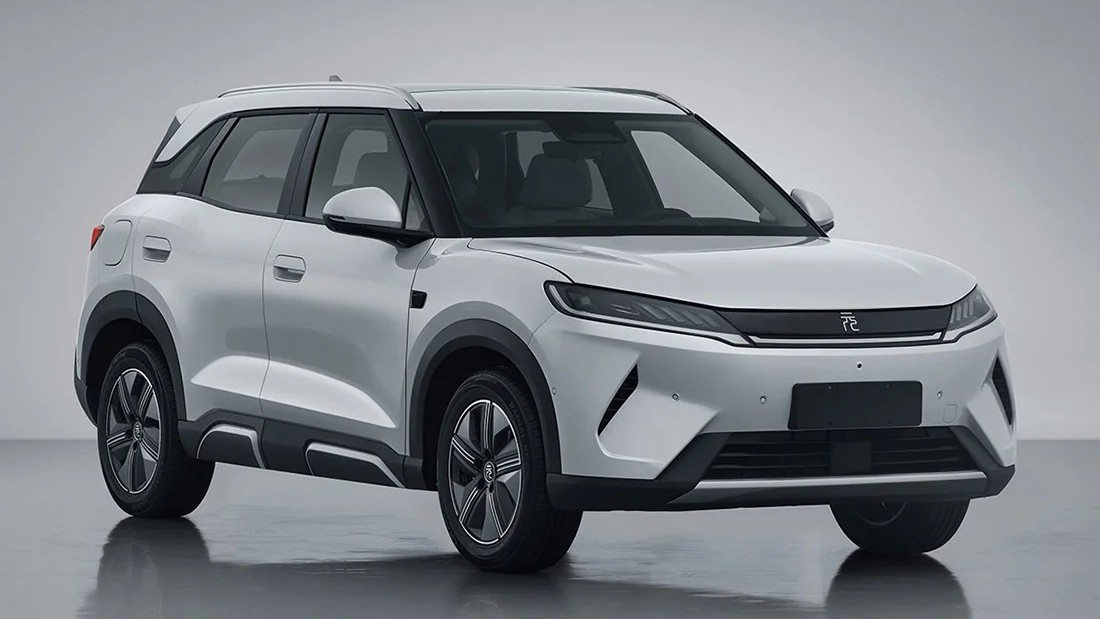
Meanwhile, the Yuan Up EV (Atto 2) is also getting a major update. That model is about an inch longer (4335 mm), with a 100 kW motor and a 120 kW (161 hp) TZ180XSAC (180 mm) motor listed. This is slightly more power for the base model and slightly less for the top model. The motor here also switches to the rear axle, with the suspensions switching from a torsion beam to a multi-link. Weight also seems to be going up, which could indicate a larger battery and more range. We don’t have a lot of details yet. Of note, the Atto 2 recently also launched a DM-i version in Europe.

BYD’s Massive, Rapid Product Shift
Overall, these models indicate a fundamental change. Flash Charging is proliferating. Powertrains and battery capacities are consolidating. That consolidation should reduce costs, even as capabilities increase. Saving on components under the skin lets BYD differentiate in areas that customers notice. It also reduces the quantity of parts that need to be kept in stock. With increasingly software-defined vehicles, there is a lot of potential to tune vehicles to different customer preferences, even if there are mechanical similarities.
In the past, the PHEV and BEV versions of the same nameplate were often completely different vehicles. Now, the vehicle bodies are largely becoming the same. BEVs seem to be all switching to RWD, adding frunks. Meanwhile, PHEVs stay primarily FWD. Of course, that vehicle flexibility makes powering both axles with AWD fairly simple, if customers want the option.
For mainstream midsized vehicles, a 200 mm diameter motor seems to be the norm, seeping into some premium compact vehicles. Seal 06 and Qin Max models should launch with that motor next month. For compact mainstream models, the 180 mm diameter motor and RWD seem to be the norm. I expect it to also appear on the Dolphin soon. I also have a feeling that the subcompact Seagull will end up sharing a rear motor with the Yuan Up.
While reducing the variations of similar components should make the model transition a little easier, this is a massive production shift. Batteries and motors are changing across every vehicle BYD makes in China. Some cars are completely new, and some are being fundamentally changed. I expect the 1st generation Blade Battery to persist in several local markets outside of China for a while, especially where there are technology sharing requirements for localized production and protectionist restrictions. However, the products launching in China now could make it out soon, particularly in premium vehicles like the Denza Z9GT.
BYD has already seen the months leading up to this point impacted by the transition, and they still have a lot of models yet to launch. Many vehicles do not even have regulatory filings out yet. Getting production fully ramped up for the dozens of vehicles across BYD’s brands by May seems unlikely. We may not see the sales potential of the Flash Charging generation vehicles until the 3rd quarter. BYD tends to move fast, but there is a lot of work to do.
Sign up for CleanTechnica’s Weekly Substack for Zach and Scott’s in-depth analyses and high level summaries, sign up for our daily newsletter, and follow us on Google News!
Have a tip for CleanTechnica? Want to advertise? Want to suggest a guest for our CleanTech Talk podcast? Contact us here.
Sign up for our daily newsletter for 15 new cleantech stories a day. Or sign up for our weekly one on top stories of the week if daily is too frequent.
CleanTechnica uses affiliate links. See our policy here.
CleanTechnica’s Comment Policy