
Volkswagen & XPENG Launch ID.UNYX 08 Production: The Fruition of Collaboration


Support CleanTechnica’s work through a Substack subscription or on Stripe.
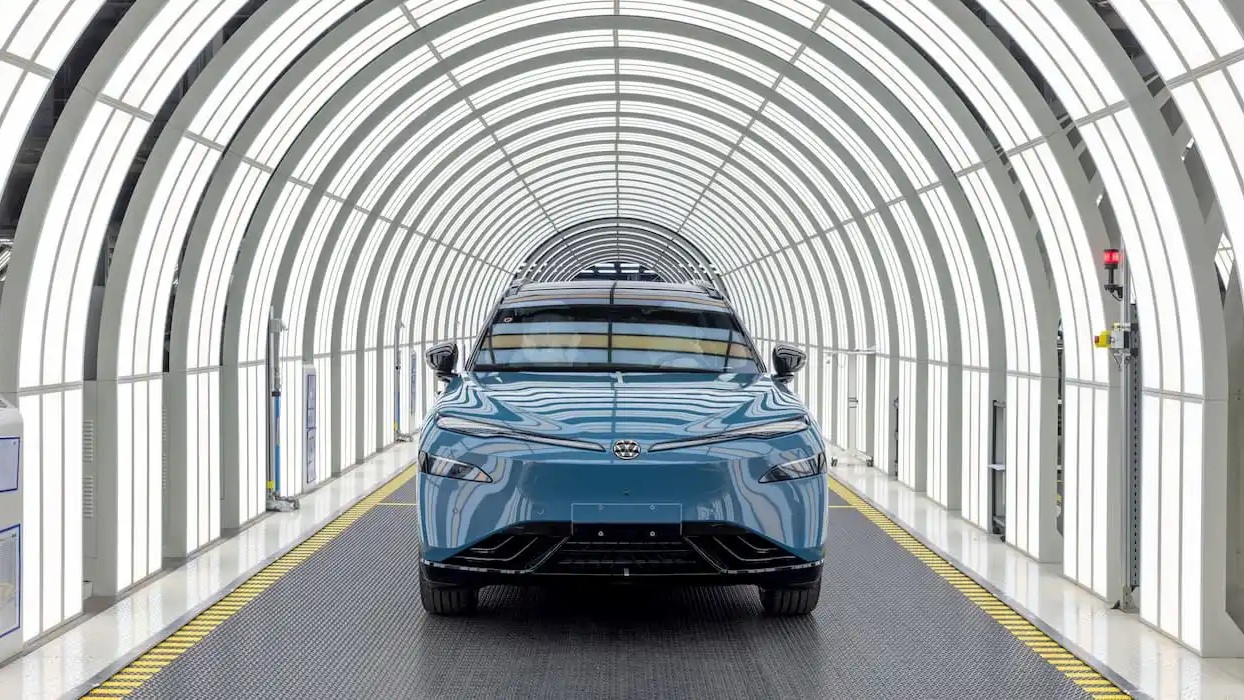
A few days ago, the first Volkswagen ID.UNYX 08 rolled off the assembly line. The vehicle was developed with XPENG and assembled at the Volkswagen Anhui plant, a JV with JAC. Built on an 800V platform, it shares XPENG’s 5C charging capability and impressive ADAS system (aka, intelligent driving). Technology is abundant, screens take up most of the dash, and the sunroof takes up most of the roof, as expected in this class of vehicle in China. The rear-wheel-drive model has 230 kW (308 hp) of power, while the AWD model takes the total to 370 kW (496 hp). The CATL-sourced LFP battery packs take the CLTC range up to 630 km or 730 km.
The model was previewed by the ID.EVO concept that I saw last fall. Seeing the concept in the flesh, it seems well proportioned and not as large as its 5 meter length would indicate. This puts the model on the large side for European roads, but roughly in line with the Xiaomi YU7, which also looks smaller than it actually is. The styling is a clear departure from other Volkswagens, but this isn’t just a rebadge of an XPENG model either, despite some shared components under the skin.
Volkswagen is planning to roll out 20 NEV models this year developed with Chinese partners. Many of those will be through established JVs with SAIC and FAW. Although, XPENG has another co-developed model on the way this year. But a rapidly developing partnerships with a technology-driven, EV-focused private sector company like XPENG shows the greatest promise.

When XPENG Chairman and Co-Founder He Xiaopeng congratulated the teams that worked on this car, the focus was on cooperation and partnership:
“Congratulations on the start of production for the all-new Volkswagen ID.UNYX 08 🎉 A huge thank you to my friend Ralf Brandstätter and all project members for the hard work and dedication. Built on a foundation of openness and mutual trust, it took only 24 months to reach this major milestone, moving from signing the technical cooperation agreement to the production of our first jointly developed model. We look forward to continuing our partnership and achieving even greater results in the future.”
His response reminded me of my visit to XPENG in November. I asked Vice Chairman and President Dr. Brian Gu about collaboration and developing ecosystems of innovation:
“I think openness and collaborative attitude is also part of the XPENG DNA. As I mentioned, we’re open to work with all these OEM brands. We are having a great relationship with our various supply chain partners. And also, during the Tech Day, when we actually announced our advancement in, for example, the large language model that powers our autonomous driving experience next year, we are welcoming OEMs to work with us. We will be open source with our collaborative partners.
“For example, Volkswagen will be using our chip. They’ll be using our own software for the autonomous driving approach in their models. We are open to working with others as well. So, we have very much an attitude of openness. Even in the Robotaxi area, we announced that we will be collaborating with operators or map providers to work with us. We provide the vehicle. We provide the technology. But we also could provide an open white box solution to potential partners to develop the operations together. So that’s another area. We can build an ecosystem around it. Human robot, that’s also an area everybody is interested in. And we have said very early, we are open to provide SDK access when we are ready to launch our production robots. And we are willing to work with our partners to provide the necessary tools and also software to allow them to customize the robots for their own using scenarios. We believe only in this matter you can build a rich, vibrant user ecosystem to allow the rapid adoption of these future mobility and physical AI solutions. So that is actually very much in our DNA.”
XPENG mentioned in presentations that they are more of a technology company than a car manufacturer. Many will dismiss such statements as seeking to attract capital beyond what a traditional automaker would get. However, having seen it firsthand, the “technology company” mindset runs deeper here. Emphasis was consistently on the technology. Discussions were surprisingly open for an industry that can be very secretive. While XPENG has impressive manufacturing facilities, a physical product is constrained to the physical world. Clearly, their technological development extends what they manufacture. And their implementation of technology increasingly extends beyond their brand.

In the context of the fiercely competitive Chinese market, XPENG’s growth is impressive. It has risen to the top tier of private sector EV makers leading the Chinese market forward. And the technology is not limited to electrification. Its XNGP intelligent driving system with VLA 2.0 was already impressive when I saw it last year and seems to have taken significant strides forward since then. Its IRON robot is surprisingly lifelike. And the ARIDGE Land Aircraft Carrier and Flying Car are starting production soon.
However, because XPENG is open to partnership, we could potentially see these technologies in markets that have often been excluded from much of the progress happening globally. We may not see XPENG-branded EVs driving down US streets any time soon, but cars containing their technology could be here before many realize it.
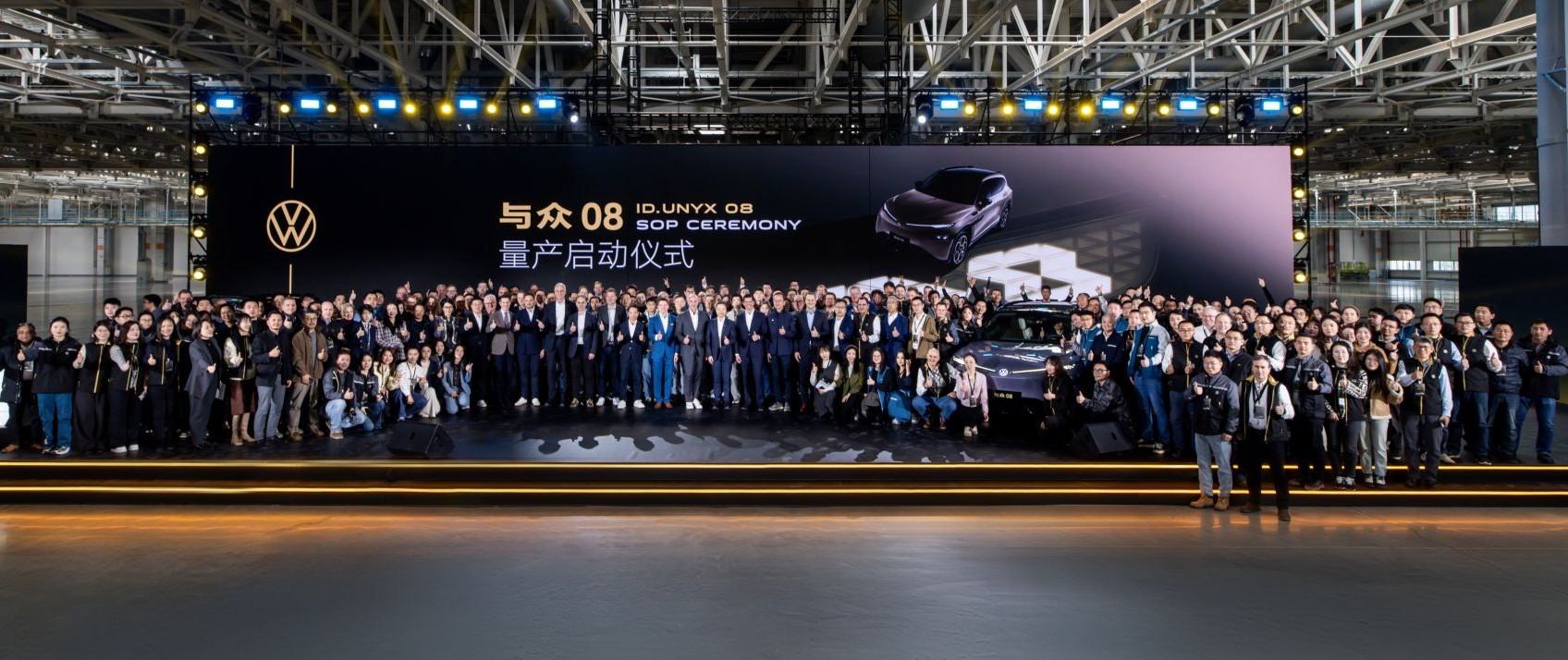
It is no wonder VW’s partnership has successfully produced a vehicle in such a short amount of time. And it is not surprising that Stellantis is also reportedly in partnership discussions. Especially after scaling back many of its in-house efforts.
While many of these collaborations may be positioned as being for the Chinese market, they could quickly spread. And while protectionists might actively try to block Chinese EVs, the technology within them becomes harder to contain. EU policy shifts to kill EV requirements and add battery domestic content restrictions are poised to slow EV market growth, but electrified vehicles should continue to grow based on the benefits of the technology. When EU EV market penetration gets close to where the Chinese market is now, the competition will intensify. Companies will need to move faster.
In the US, we are further behind — with all the cancellations from GM, Ford, Stellantis, Honda … farther behind than we were a year ago. However, US consumers may eventually tire of having a second-class EV country. They may realize they can have better and start demanding better. They may get tired of paying too much to burn gasoline. And if the world ever returns to rules-based trade, the market could transform rapidly.
If the EV market ever opens up, companies that have fallen behind in their own efforts will be scrambling to form partnerships. If they are wise, Western automakers will be building relationships now with collaborative, technology-focused partners like XPENG.
Sign up for CleanTechnica’s Weekly Substack for Zach and Scott’s in-depth analyses and high level summaries, sign up for our daily newsletter, and follow us on Google News!
Have a tip for CleanTechnica? Want to advertise? Want to suggest a guest for our CleanTech Talk podcast? Contact us here.
Sign up for our daily newsletter for 15 new cleantech stories a day. Or sign up for our weekly one on top stories of the week if daily is too frequent.
CleanTechnica uses affiliate links. See our policy here.
CleanTechnica’s Comment Policy