

Support CleanTechnica’s work through a Substack subscription or on Stripe.
US President Donald Trump’s habit of gleefully pouring hard-earned taxpayer resources down the drain has been on full display all throughout his second term in office. Nevertheless, he has just outdone himself. On March 23, the Interior Department announced a payday of almost $1 billion for TotalEnergies … for nothing. The money went to guarantee that TotalEnergies will not build offshore wind farms in the US, which they were not going to build anyways, at least not anytime soon.
TotalEnergies Takes The Offshore Wind Money & Runs
The Interior Department, of course, portrayed the billion-dollar waste of taxpayer money as a victory for common sense. “Today, the Department of the Interior announced a landmark agreement with TotalEnergies for the company to redirect capital from expensive, unreliable offshore wind leases toward affordable, reliable natural gas projects that will provide secure energy for hardworking Americans,” the agency explained, in keeping with US President Donald Trump’s fossil-friendly energy policy.
Aside from the counterfactual claim about wind power being expensive and unreliable, the announcement raises all sorts of questions — namely, exactly why did Trump pay a French energy company $1 billion to abandon two offshore wind projects in the US? Why didn’t Mr. Art-of-the-Deal simply let TotalEnergies walk away from the projects, as others have done?
Yes, other US offshore wind stakeholders have written off their projects without taking a payoff. For example, back in 2023, the leading offshore wind firm Ørsted decided not to pursue two projects in the New York Bight, Ocean Wind 1 and 2.
When Ørsted announced its decision, the company took note of “significant impacts from macroeconomic factors, including high inflation, rising interest rates and supply chain constraints, particularly a vessel delay on Ocean Wind 1 that considerably impacted project timing.” That was a full year before Trump won re-election in 2024.
The Bight Effect
The New York Bight is a corner of the ocean defined by the coast of New Jersey and the coast of Long Island in New York. The economic pressures cited by Ørsted were also in play when a third project in the Bight, Atlantic Shores, suspended itself last year. The project was a joint venture between Shell and a branch of the French firm EDF. In February of last year, the New Jersey Board of Public Utilities rejected the partners’ attempt to factor inflation into their contract, pretty much killing the project. Trump’s anti-wind maneuvering didn’t help, either. Shell officially withdrew from Atlantic Shores last October, leaving EDF to hold the bag.
The curse of the Bight is also at work upon TotalEnergies. The firm won an offshore lease in the Bight in 2022, when lease auction prices were high. The cost of the auction has been cited among the factors making the site uneconomical for development, at least for the time being.
Why Cancel An Offshore Wind Lease?
Neither Ørsted nor EDF have necessarily given up their leases. Both firms are in a holding pattern until Trump leaves office as scheduled on January 20, 2029 — peacefully this time, one hopes.
That raises the question why TotalEnergies went beyond the holding stage to walk away from its lease altogether. If and when (spoiler alert: when) US energy policy gets back on a normal track, TotalEnergies will have to start from scratch while other stakeholders can dust off their leases and get the wheels in motion.
As far as the New York Bight goes, TotalEnergies may have seen the writing on the wall. While Ørsted and EDF are laying low, the leading Netherlands-based firm Equinor has already staked out a pole position in the Bight.
Equinor won the lease for its 810-megawatt Empire Wind project in the Bight in 2017, somewhat ironically during Trump’s first term. Work on the wind farm is well underway and commissioning is expected in 2027, despite Trump’s ham-handed attempt to stop construction last year — not once, but twice.
Last year, Equinor also secured $3 billion in financing to establish a wind turbine assembly and staging hub at the South Brooklyn Marine Terminal in New York City, an asset that gives it an edge on future wind projects up and down the Atlantic coast, particularly in the Bight and elsewhere around New York.
The Offshore Wind Cat Is Out Of The Bag
As part of the agreement with the Trump administration, TotalEnergies also agreed to walk away from a second lease it won in 2022, in an area located off the coasts of North and South Carolina. Considering the red-state politics in play among both states, development of that site faces considerable hurdles above and beyond any interference from Trump.
For its part, TotalEnergies seems more than willing to eat crow in order to remain in good standing with the Trump administration, and benefit from its fossil-friendly energy policy, too. “Considering that the development of offshore wind projects is not in the country’s interest, we have decided to renounce offshore wind development in the United States, in exchange for the reimbursement of the lease fees,” the company’s CEO and Chair Patrick Pouyanné explained in a press statement.
Offshore wind may not be in the interests of the US, but it is certainly of interest elsewhere around the world. For all of Interior Secretary Doug Burgum’s bluster over the two US leases, TotalEnergies can and will develop many more offshore projects in the years to come, just not in the US. The company already has an 11-gigawatt portfolio under its belt, and a respectable 25% of the total consists of floating wind turbines, an emerging area of the offshore industry with significant growth potential.
Besides, while TotalEnergies may walk away from the lease areas as it pleases, the lease areas themselves are not evaporating, and 2029 is just around the corner.
The offshore wind trade association Oceantic Network had plenty to say on that subject. “This is political theater meant to obscure the fact that offshore wind capacity is being pulled out of the pipeline when energy prices are skyrocketing, even as other offshore wind projects continue delivering reliable and affordable power to the grid,” the organization stated in a press release.
“Paying to remove affordable, homegrown energy out of the equation leaves American consumers struggling to pay their electricity bills,” they added for good measure.
So, what did Trump just accomplish with that billion-dollar deal? Just the usual, making things more difficult and expensive for everyone else while puffing up his own boastful, braying image. Who voted for this guy, anyways?
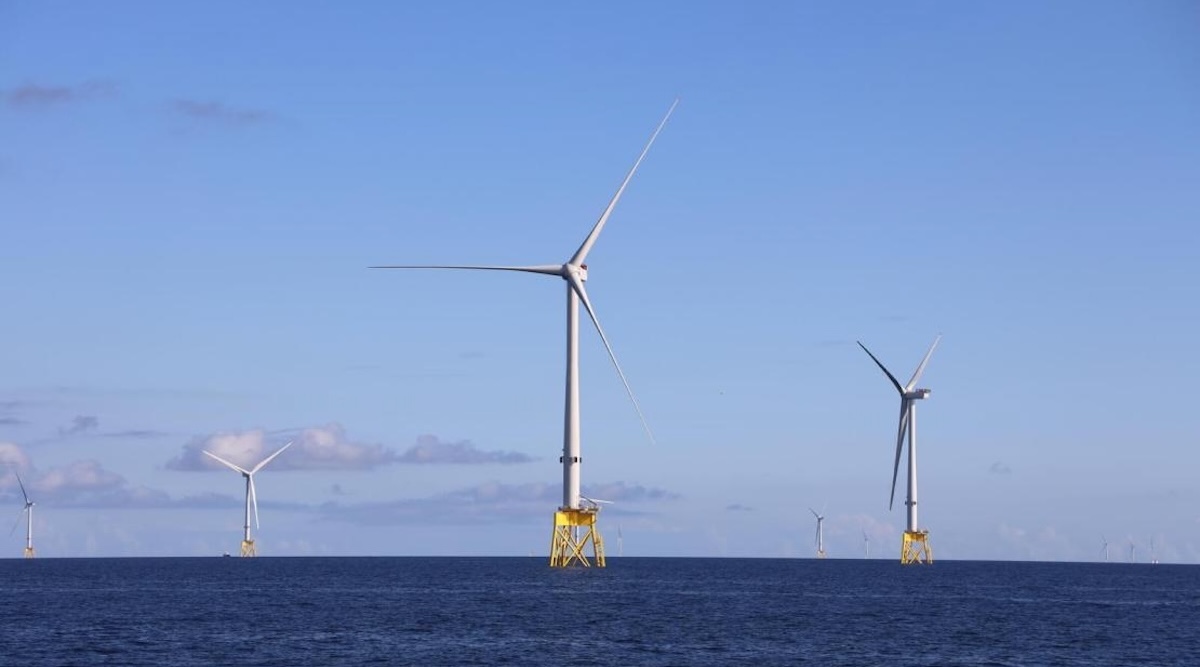
Photo (cropped): Offshore wind farm courtesy of TotalEnergies.
Sign up for CleanTechnica’s Weekly Substack for Zach and Scott’s in-depth analyses and high level summaries, sign up for our daily newsletter, and follow us on Google News!
Have a tip for CleanTechnica? Want to advertise? Want to suggest a guest for our CleanTech Talk podcast? Contact us here.
Sign up for our daily newsletter for 15 new cleantech stories a day. Or sign up for our weekly one on top stories of the week if daily is too frequent.
CleanTechnica uses affiliate links. See our policy here.
CleanTechnica’s Comment Policy