

Support CleanTechnica’s work through a Substack subscription or on Stripe.
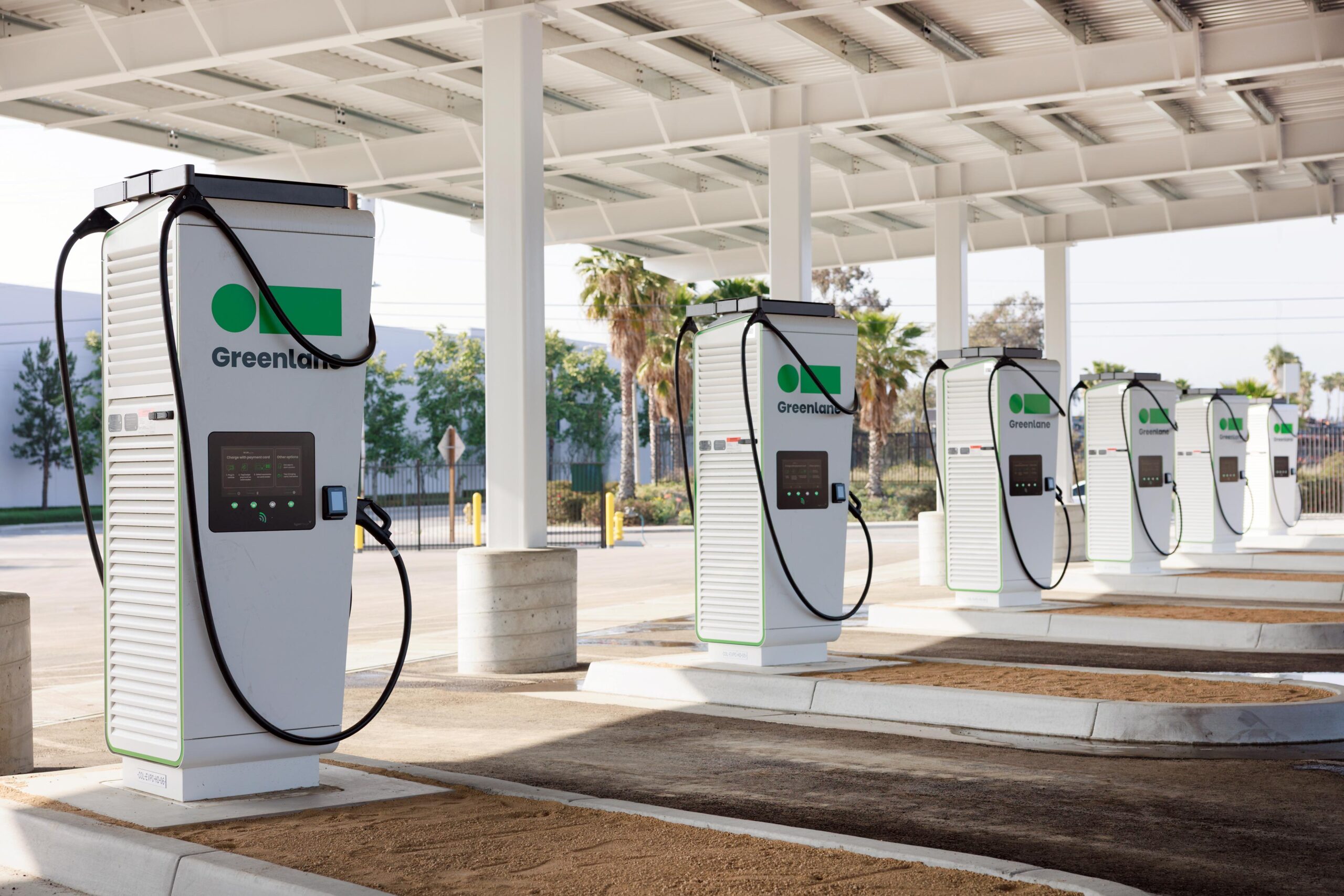
Last year, Greenlane shared some details with CleanTechnica about its truck charging expansion in southern California and Arizona. In May of this year, Greenlane announced it is expanding its truck charging offerings into the state of Texas, with charging sites planned for Houston and Dallas along Interstate 45. This area is one of the highest-volume shipping routes in the country.
“Our customers are making commitments to electrify their fleets, and they need a charging network that can grow alongside them. This is the first leg of the Texas triangle, one of the more important freight arteries in the country, so bringing high-power charging there is the next logical step in building a network that serves how freight moves across America. Every site we develop is guided by a demand-driven strategy—and this is a big next step to building out the broader network,” said Patrick Macdonald-King, CEO of Greenlane.
Each new charging site will have 6–8 pull-through lanes, tractor parking, and charging. There will be CCS charging to electric trucks and megawatt chargers for next-generation trucks.
“Texas is where the future of zero-emission freight accelerates. It’s a critical trucking market and a proving ground for any operator serious about scale. Our launch on the I-45, catalyzed by GMA Trucking’s book-and-claim program, shows what’s possible when the industry collaborates effectively. Greenlane’s Texas expansion gives us the infrastructure backbone to scale that model extending Nevoya’s electric trucking leadership from California into Texas,” said John Verdon, Chief Commercial Officer at Nevoya.
In January of 2026, it was reported that Nevoya would launch 40 electric semi trucks in Texas. “A pilot procurement led by the Center for Green Market Activation (GMA), in collaboration with Smart Freight Centre (SFC), will enable carrier Nevoya to deploy about 40 Class 8 battery-electric trucks on an all-electric Houston–Dallas freight route.”
Most of us don’t drive big rigs or study them, so we may not be aware of how much air pollution they constantly generate. Using all-electric trucks instead of diesels reduces toxic air pollution. “GMA said the trucks are expected to travel up to seven million miles (about 11.2 million kilometers) annually, reducing an estimated 60,000 metric tonnes of CO₂e while improving air quality and reducing noise, according to a news release,” Truck News shares.
Sign up for CleanTechnica’s Weekly Substack for Zach and Scott’s in-depth analyses and high level summaries, sign up for our daily newsletter, and follow us on Google News!
Have a tip for CleanTechnica? Want to advertise? Want to suggest a guest for our CleanTech Talk podcast? Contact us here.
Sign up for our daily newsletter for 15 new cleantech stories a day. Or sign up for our weekly one on top stories of the week if daily is too frequent.
CleanTechnica uses affiliate links. See our policy here.
CleanTechnica’s Comment Policy