

Support CleanTechnica’s work through a Substack subscription or on Stripe.
The Australian government subsidises diesel from primary producers to the tune of AU$11 billion per year. Dr Andrew Forrest of Fortescue Metals has come out swinging, saying that the 18 largest miners receive about one third of this, and don’t need it.
As Fortescue heads to real zero, Forrest wants a shake-up. On the other side of the fence, Gina Rinehart of Hancock Prospecting, another beneficiary of subsidies, is quietly moving to more renewable energy in her mining operations. This, despite supporting right wing, fossil fuel friendly politicians and decrying renewables as a self-regenerating magic pudding. Gina recently donated a jet to One Nation’s Pauline Hanson (our redheaded female Trump impersonator.)
Which begs the question: Is energy from renewables cheaper than subsidised diesel? It appears so.
The diesel subsidy supports a number of industries. Fortescue CEO Dino Otranto is anxious to point out: “We are not talking about small miners, explorers, farmers, truck drivers or tradies. This is about putting a sensible cap on massive tax credits and restoring fairness to the system.
“It [the Fuel Tax Credit] is leaving Australia more dependent on overseas fuel at a time when the world is becoming less stable. It makes no sense to keep subsidising that dependence. Capping the diesel tax handout is a practical step toward restoring energy security and building a fairer, more resilient, self-reliant system.”
The suggestion is that the credit be capped at AU$50 million.
The FTC is currently giving a diesel rebate of 51.6 cents a litre. This is linked to inflation and so will rise over time. It is expected to rise from AU$11 billion to AU$13 billion by 2030.
A video from the ad for the campaign can be seen here — it’s a real tearjerker. This has already shown up on Majella’s Facebook feed.
Matt Pollard, Climate Energy Finance analyst, has recommended an alternative transition idea — use the subsidy to fund decarbonisation. “This would reform the FTC Scheme into a ‘cap-and-reinvest’ model, turning a headwind to diesel displacement by electrification and decarbonisation into a tailwind.”
He used China as an example, where the lower cost of electricity compared to diesel was accelerating the transition to heavy electric trucks according to Liang Linhe of SANY Truck.
Meanwhile, on the other side of the renewable debate, Gina Rinehart (daughter of Lang Hancock and Australia’s richest person) is quietly moving her mining interests towards greater reliance on green energy and away from subsidised diesel. Looks like she is the one slicing the Magic Pudding — wanting cheap renewables but also a diesel subsidy. The irony.
The list of Gina’s mining interests in transition in include:
- Liontown Resources, 20% owned by Hancock Prospecting. Gina is the largest shareholder. Their Kathleen Valley lithium mine saves costs by running on a wind, solar, and a battery hybrid power station — averaging 80% renewable energy use in its processing operations.
- Lynas Rare Earths in Mt Weld, Western Australia draws over 95% of their energy needs from renewables.
- Hancock Iron Ore (formerly Atlas Iron and Roy Hill) is using renewable energy where it can cut costs. The goals are not decarbonisation (as per Forrest) but optimising cost reduction by energy efficiency. Projects include hybrid systems to dewater remote Pilbara mines, using Australian-made 5B Maverick modular solar technology. This is expected to save 250,000 litres of diesel each year. A battery powered locomotive has been ordered for the Roy Hill mine. As well as saving on diesel, it is expected that the zero-emissions locomotive will reduce greenhouse gas emissions along the Port Headland heavy transport corridor.
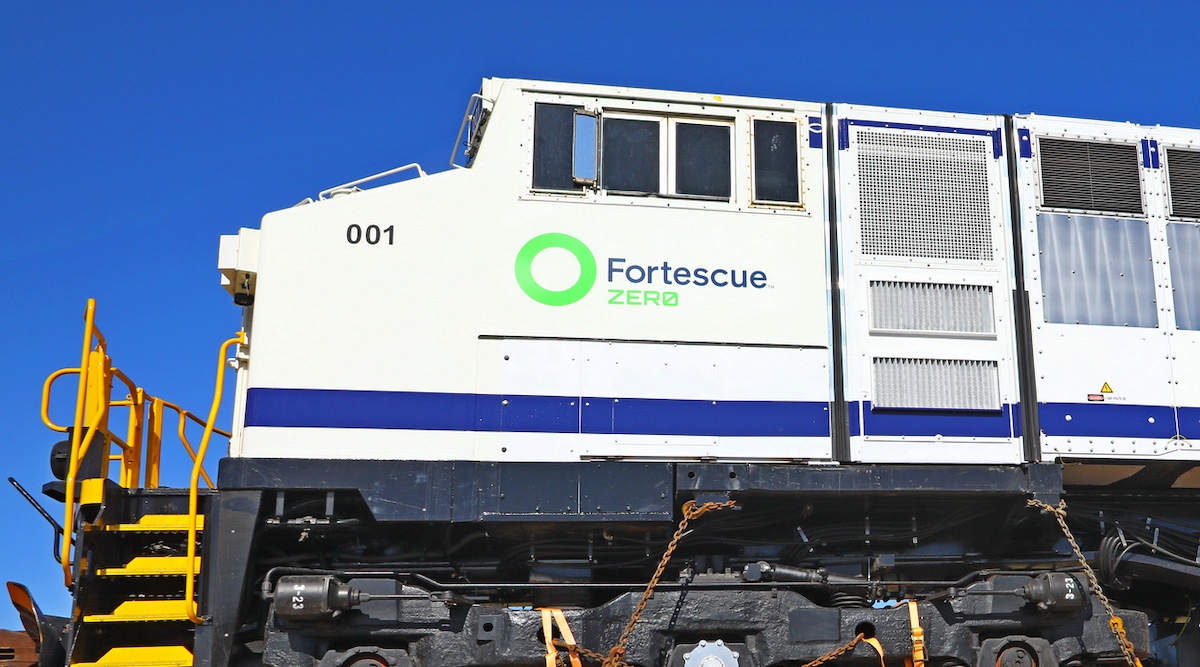
I wonder. It appears to that Forrest is setting the agenda, proving what is commercially viable, and his competitors are following. Fortescue Metals is already running a zero-emissions locomotive. Economics is winning the fight against climate change, no matter what your ideology. Off-grid mines can spend up to a third of their operating budget on diesel. These mines are a long way from the port, and transport costs are high.
Off-grid, remote mines traditionally spend massive amounts of money on diesel, which accounts for up to one-third of a mine’s operating costs. By adopting solar and wind solutions, Rinehart’s companies and investments drastically reduce fuel usage and operating costs. Things change when it’s her money on the line. Here is a humorous analysis.
It is worth comparing what people say and what they do. In the past, Gina has said that solar farms could end up taking one third of Australia’s prime agricultural land, turning scenery into eyesores. This ignores the fact that most of Australia is desert and deserted. We could follow the Chinese example, producing power and also reducing desertification.
She has claimed that solar and other renewable sources are not economically viable with subsidies. However, she is discovering that they are a better option in remote areas than government-subsidised diesel. She would much prefer nuclear power.
One way or another, leading or following, the future is clear — it is electric from renewable sources. Even if you deny climate change and rail against solar farms and wind turbines, the economics is clear. The bean counters have spoken.
Sign up for CleanTechnica’s Weekly Substack for Zach and Scott’s in-depth analyses and high level summaries, sign up for our daily newsletter, and follow us on Google News!
Have a tip for CleanTechnica? Want to advertise? Want to suggest a guest for our CleanTech Talk podcast? Contact us here.
Sign up for our daily newsletter for 15 new cleantech stories a day. Or sign up for our weekly one on top stories of the week if daily is too frequent.
CleanTechnica uses affiliate links. See our policy here.
CleanTechnica’s Comment Policy