

Support CleanTechnica’s work through a Substack subscription or on Stripe.
Nearly two years ago, the Republican candidate for president of the United States told a group of oil and gas executives that if they ponied up $1 billion for his campaign, they could write their own ticket if he won. My old Irish grandmother liked to say, “Be careful what you wish for, you just might get it.” The fossil fuel barons dutifully funneled barrels of money to his campaign and their candidate won by the narrowest of margins.
Then the payback began. Money for EV rebates and charging infrastructure? Gone. Money for renewable energy development? Gone. Regulations unfriendly to thermal generation of electricity? Revoked. It seemed like everything those fossil fuel execs could ever hope for was being granted by their fairy godfather in Washington.
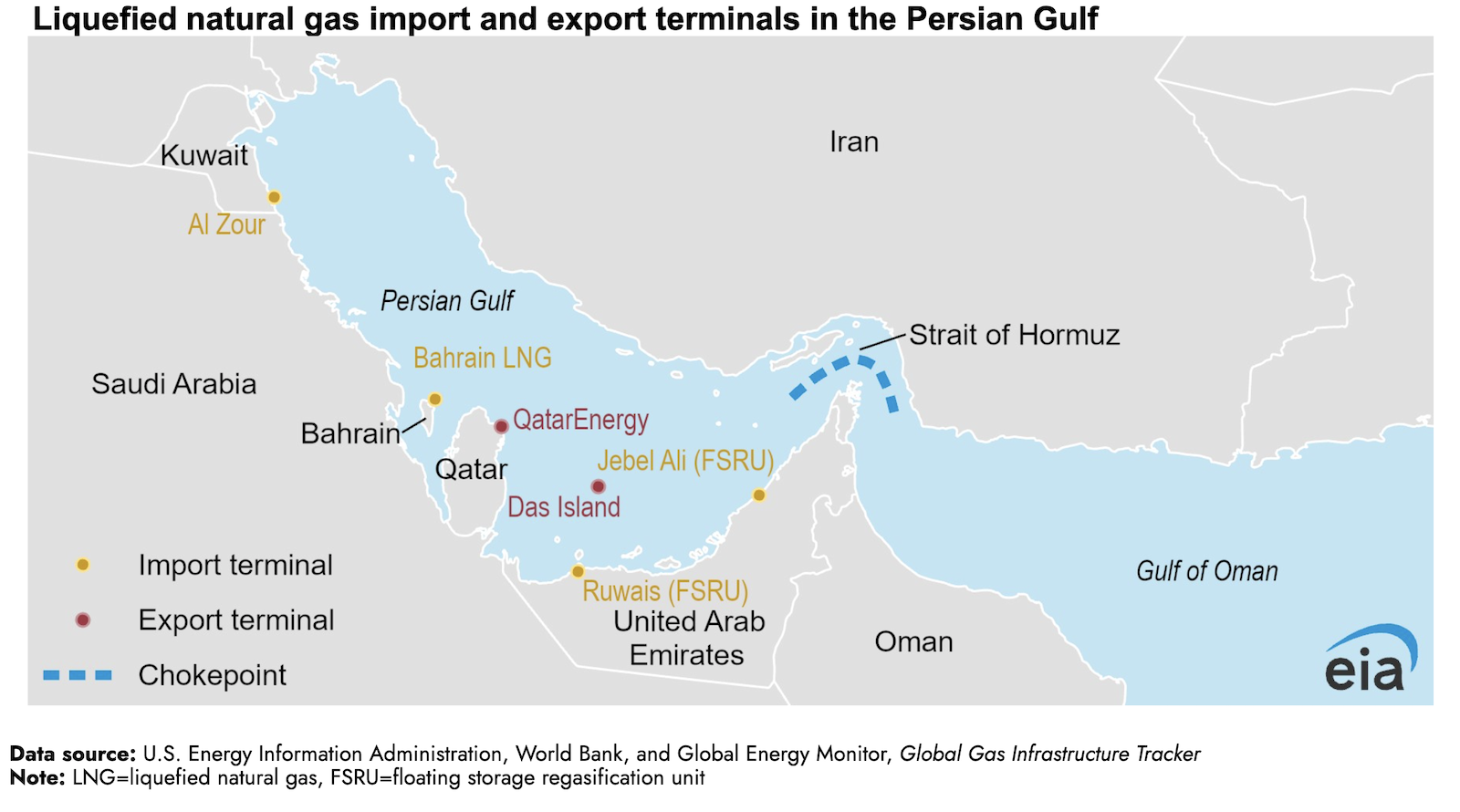
Then on February 28, 2026, the president decided to attack Iran. The chest thumping, eyeliner-using head of the Department of Destruction enjoyed his fifteen minutes of fame as he thumped his chest and shouted about “lethality.” The world watched as shock and awe rained down on a third rate military power in the Middle East. Then something completely predictable happened — Iran closed the Strait of Hormuz to all commercial shipping. Not only did that stop 20 percent of the world’s supply of oil and LNG, it also interrupted the supply of fertilizer needed to grow food for the 8 billion humans who inhabit the Earth.
Was all of this predictable? Absolutely. The people who are supposed to know about such things counseled against such a rash move, but the alleged president was like Irwin McDonald, the general who led Union troops into the first Battle of Bull Run in 1861. Both expected total victory after a brief skirmish and both got smacked upside the head by reality.
$5.00 Gasoline
The Financial Times on May 20, 2026, published an article (subscription only) entitled “The Oil Shock Is Coming For America.” It claimed one of the results of the unprovoked attack on Iran would be the price of gasoline in America rising to more than $5.00 per gallon in the weeks and months ahead, partly because of the demand for jet fuel, which is in critically short supply.
A barrel of oil yields fewer gallons of jet fuel than it does gasoline. Today, American refineries are producing 340,000 barrels a day less gasoline than they did before February 28, which means the pressure on gas prices will increase over time even if supplies from the nation’s strategic oil reserves continue.
Gasoline reserves could reach their lowest level since the Energy Information Agency first began tracking them in 1990. You economists in the crowd are well aware of what happens to prices when supplies decrease. Looking down the road, the Financial Times points out that higher energy costs today will inevitably lead to higher inflation later this year.
It concludes its analysis this way: “In the US, the $5 per gallon price threshold is days away. What follows, and for how long, depends almost entirely on whether this administration is prepared to pursue a political resolution with Iran on nuclear, missile, and security arrangements before the economic arithmetic falls off a cliff. There is one solution to all this. It is not military. It is diplomatic. And the clock is running. ”
Declining Oil Inventories
Fortune quotes Hamad Hussain, a climate and commodities economist at Capital Economics, who wrote a note to clients recently that said, “[I]f the Strait remains effectively closed and commercial oil inventories in the OECD continue to be run down at the same pace as they were in April, oil stocks could reach critically low levels by the end of June. That would be consistent with Brent crude prices reaching an all time nominal peak, and could require more disorderly and economically damaging cuts to oil demand.”
A lot of people are expecting relief from strategic oil reserves, but as Fortune points out, “They cannot fall to zero as certain volumes are needed to maintain pressure within storage systems, and the daily flow of releases is limited. In addition, 1 billion barrels of oil is estimated to have been lost already, dwarfing the IEA’s planned total release of 400 million barrels.”
“Given the extent of supply losses from the Middle East, the risk of a ‘non-linear’ adjustment in demand and prices will continue to grow for as long as the Strait of Hormuz remains effectively closed,” Hussain added. What that bland language means, according to Fortune, is that rather than oil prices following a straight-line trajectory higher, they could instead go parabolic, looking more like the curved end of a hockey stick.
Analysts at UBS also said oil inventories are approaching record lows, and warn that “buffers have now largely been exhausted.” As stockpiles go even lower, UBS said oil prices could become more volatile and it highlighted the “risk of panic buying if physical dislocation intensifies and the Strait of Hormuz remains closed.” If that sounds like prices “going parabolic,” you are paying attention.
System Failure
Art Berman has 40 years of experience as an oil geologist and energy consultant. He says his mission is to “annihilate your preconceived notions and rearm you with unfiltered, data-backed takes on energy and its colossal role in the world’s economic pulse.” His blog post on March 27, 2026, carried this portentous title: “A System Failure is Not an Oil Bull Market.”
“Oil is likely to surge to extreme highs in 2026, but that does not mark the beginning of a long term structural bull market. It’s a wartime spike inside a debt saturated global economy. The higher prices go, the more they tighten credit, weaken growth, and destroy demand. Oil is more likely to peak with the crisis and then follow a weakened global economy into a longer period of softness,” he wrote.
The problem with seeing these events as a golden opportunity to make a fortune in oil, Berman said, is that the analysts pushing that scenario are “treating oil like other commodities and assume this shock resembles past disruptions. It does not. Oil is not a store of value. It cannot sit idle in warehouses like metals. It must move continuously through a complex system of transport and refining to create value. Refineries are the only real buyers of physical barrels, and demand ultimately depends on end-use consumption. Oil is the bloodstream of the economy, not a financial asset.
“They also assume that capital cycles operate the same way they always have: high prices stimulate investment, which eventually restores supply. That’s a risky assumption. Today’s global system is more indebted, more politically fragmented, and closer to the limits of growth than in prior cycles. Higher energy prices now tighten financial conditions, erode real incomes, pressure central banks, and increase recession risk. Under-investment has created scarcity, but scarcity now interacts with a far more brittle financial system. That makes the bullish case inherently short lived.
“Most critically, they treat the Iran war and the closure of Hormuz as confirmation of their thesis rather than as a system-level shock. They acknowledge the severity of the disruption but frame it as temporary and manageable. That’s consistent with mainstream analysis,” Berman wrote.
A Different Perspective
He sees things from a different perspective — not as a temporary supply constraint but as “a physical system failure. The world’s most important energy choke point is impaired at a scale without precedent. Energy is the economy, and when the primary artery is disrupted, the system begins to break down.”
Some observers are comparing the blockage of the Strait of Hormuz to the period between 2011 and 2014, “when real Brent prices averaged more than $150 without obvious demand destruction. But that period was supported by extraordinary monetary policy, abundant liquidity, and a fully functioning global logistics system. None of those conditions apply today. This is not simply higher prices. It is disruption of oil, gas, fertilizers, and critical trade flows. It may produce a short term bull market in energy, but that strength will persist only until the economic system begins to weaken,” Berman suggested.
He pointed out that even if the war ended tomorrow, it would take months for the flow of oil, LNG, and other commodities to resume. “Infrastructure repairs could take years, and some production losses may be permanent. Current trends indicate no imminent resolution. If this goes on for a month or two, global GDP might fall by 1 to 2 percent. If it persists longer, the situation becomes far more serious. If it expands to other choke points such as Bab el-Mandeb, the operating assumptions of the global economy begin to fail,” Berman claimed.
“That may sound extreme, but it is conservative because it excludes further infrastructure damage, expanded military conflict, or panic-driven market behavior. Other experienced analysts are converging on similar conclusions. Eric Nuttall has called this the worst energy crisis of our lifetimes. Rory Johnston warns of a potential cataclysmic economic shock without rapid restoration of flows. Christine Lagarde has stated that the damage may already imply multi-year inflationary consequences.”
As a consequence of this unforced error, construction of renewable resources has accelerated around the world. Even if the Strait of Hormuz was fully opened tomorrow, those clean energy systems will still get built, bringing further demand destruction to the oil and gas overlords in perpetuity. As the world learns from this painful lesson, it will become abundantly clear that it is oil and gas that are unreliable energy sources, not renewables.
What You See Is What You Get
All this because a man with the mental age of a pre-pubuscent boy — someone who thinks the best way to celebrate his birthday is by watching a cage fighting match on the lawn of what is left of the White House — is the current president of the US. He thought it would be fun to send the Iranians a few warheads on a clear day in February because he says he was worried about Iran having a nuclear weapon capable of reaching the United States. But in fact there is a rogue nation that does have nuclear weapons capable of reaching US territory, yet he has no interest in protecting Americans from that threat. Not even the Secretary of Armageddon with the pomade in his hair is that stupid.
The alleged president is in a tight spot — one of his own making — and those who supplied much of the money needed to get him elected are paying a heavy price for their political adventurism. Normally when the oil and gas and coal industries invest in a political candidate, they reap outlandish profits as their reward. This time they will reap a whirlwind of demand destruction that may threaten their very existence. Why? Because….
Sign up for CleanTechnica’s Weekly Substack for Zach and Scott’s in-depth analyses and high level summaries, sign up for our daily newsletter, and follow us on Google News!
Have a tip for CleanTechnica? Want to advertise? Want to suggest a guest for our CleanTech Talk podcast? Contact us here.
Sign up for our daily newsletter for 15 new cleantech stories a day. Or sign up for our weekly one on top stories of the week if daily is too frequent.
CleanTechnica uses affiliate links. See our policy here.
CleanTechnica’s Comment Policy