


Support CleanTechnica’s work through a Substack subscription or on Stripe.
EVs are reaching new levels of market penetration in China. Chinese retail NEV (BEV and PHEV) market share was estimated to be 63% for May, while Chinese wholesale (includes exports) reached 61%, according to CPCA, as reported in CnEVPost. We will have to wait for a more detailed breakdown. While retail EV sales were down 5% YoY in China, they were down less than the overall market and were up 15% MoM to 974,000 units in May. Wholesale (including exports) NEV sales stood at 1.36 million, up 12% YoY and 11% MoM.
These numbers represent an all-time high and a significant milestone. It also signifies further divergence from the US market, where EV adoption continues to struggle. However, China could be at a tipping point where the technology takes over the market. There are signs that this will just be the start, with new EV product introductions and market influences poised to drive share even higher.
Product Transition Sets Up Next Phase
In May, BYD made up 27.7% of Chinese wholesale NEV sales. A significant shift in their numbers alone has a noticeable impact on the total market. BYD saw a small passenger vehicle wholesale increase YoY to 376,990 shipments in May, while their MoM increase was 19.41%. Exports made up 160,644 or 42% of the total for the month, up 80.40% YoY. However, the product transition impact is more noticeable on retail sales. BYD’s 222,809 retail sales in China were down 24.7% YoY from 293,429 in 2025, but up 19.77% MoM. If you do the math, the entirety of the 5% YoY decline in retail sales for NEVs in May can be attributed to the YoY decline in BYD sales within China. If BYD sales were flat, then NEVs would already be roughly 2/3 of retail sales in China.
However, BYD is at a turning point in the middle of arguably the largest product transition in its history. The launch of vehicles with the Blade Battery 2.0 makes mainstream EVs charge as fast as ICE can refuel, while costing less to buy than comparable legacy ICE vehicles. New models are more technologically advanced and offer better performance. BYD has a massive order backlog, including mainstream models like the new Yuan Plus. The Datang has over 100,000 orders after presales started in April and is expected to have its sales launch in mid-June. Some people are also still waiting to place orders on previously-revealed cars. The Seal 08 was shown in March but still hasn’t become available for presale, much less gone on sale yet. A new high-volume Han model has also been seen testing but has not even been revealed yet. While Fang Cheng Bao has increased capacity, delivery time is still estimated in months for some models, and their sports sedans are also on the way. Some Denza models that have appeared in regulatory filings have had their launches pushed back and trims of the Z9 GT have extended wait times. Wang Chaunfu recently acknowledged the supply constraint and offered an additional day of free flash charging for every day of delay.
All that does not include the potential sales impact of BYD taking full responsibility for city driving with their God’s Eye A/B intelligent driving system. And it does not take into account the new 4nm Xuanji A3 AI chip that is in production and headed to models to provide L3/L4 intelligent driving.
BYD has projected an overall sales increase for the year with the new product, despite sales being down year to date. That will require a significant increase in sales in the coming months. But BYD is not alone.
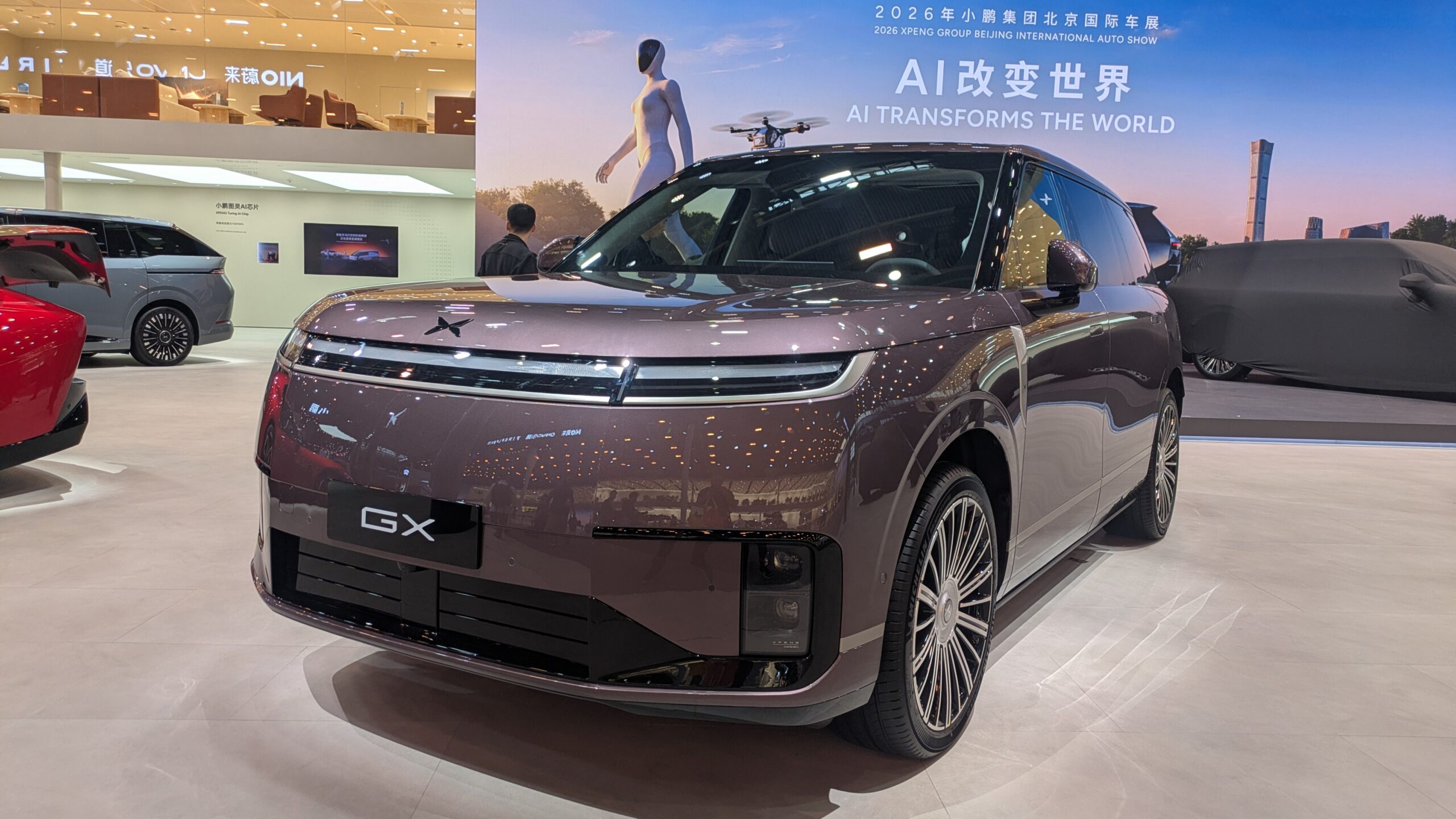
XPENG has also introduced multiple new or updated vehicles, with more models on the way. This has also led to a massive backlog for new models like the GX, with a wait time of 35 weeks. That model forms the basis for their robotaxi. However, the transition to new products has also led to slower sales of older models YTD. When production ramps up, XPENG is also poised to see an increase in sales for the year, which will also contribute to overall NEV market share..
There were also many other sporty and premium models introduced recently, in addition to more mainstream models. These vehicles were far more compelling than any ICE vehicle introduction. When those new models ramp up, where does the market end up overall?

Market Influences
Of course, that does not even get into the rising cost and instability associated with gasoline vehicles. China imports most of its oil, and much of that oil comes from the Middle East. That makes China more vulnerable to supply disruptions, although they have also built up a large stockpile of oil. However, that is not sustainable, and recent events are even more likely to skew policy toward electrification. For drivers, running a car on petroleum is becoming increasingly unappealing in China, based on cost and uncertainty, as well as convenience.
China is bringing 28 million charging facilities online by the end of 2027. China had previously taken 18 months to go from 10 million to over 20 million as of last December. That works out to an average of roughly 128,000 added per week over that period. For comparison, the US has 85,398 public and private charging stations total, according to AFDC. That infrastructure rollout makes EV ownership significantly different than it was even a few years ago, particularly in rural areas that were previously underserved. Those rural areas could start seeing composition that looks more like Tier 1 cities, where EVs dominate.
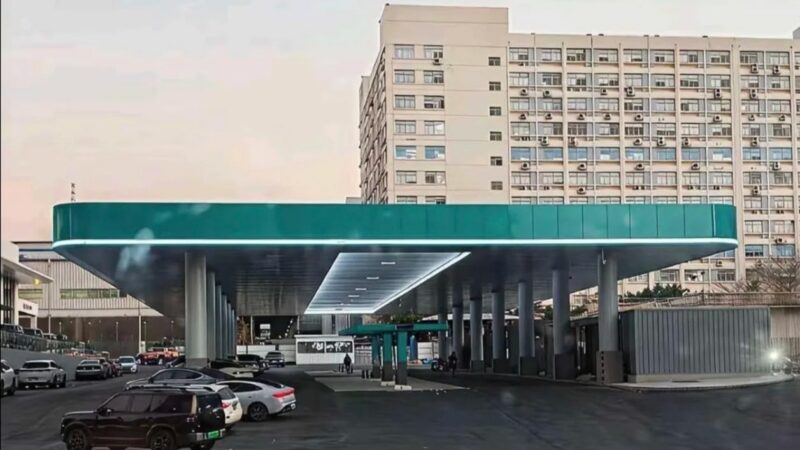
In addition to overall charger prevalence, speed is increasing. BYD has brought over 6100 multi-gun, MW+ Flash Charging stations online as of May and recently announced a new partnership with Sinopec to install even more at service centers across the country. For comparison, Tesla has 3112 Supercharging stations online in the US. Geely and others are also introducing MW-level charging. While these chargers are unlikely to be use daily by most people, they add a level of convenience and can charge more vehicles per day from the same footprint.
On top of that, the current 63% NEV market share comes after China cut its purchase tax exemption, restricted its scrappage program and reduced the benefit. If the Chinese government wants to stimulate automobiles sales or accelerate the shift to EVs, there are tools at their disposal. While we are discussing policy, changes in what qualifies as a PHEV in China have become stricter. Battery ranges are now often over 300 km, in contrast to what people are familiar with in the West. Combined with the more convenient, lower cost charging infrastructure, they are likely to be used primarily as EVs in China.
What Comes Next?
If supply-constrained product was available now, EVs could already be seeing over 2/3 retail market share in China. It will be interesting to see more detailed numbers for May. It is looking increasingly likely that we could end up with 60%+ for the year, despite a slower start. Could we hit a monthly peak above 70% this year?
Could wholesale hit those numbers? Oil disruptions are having global impact. Developing countries, where Chinese automakers have a strong presence, are leapfrogging established markets in EV adoption. Currently, YoY EV share growth in places like Europe has been driven up by the rapid growth of Chinese brands. Will that growth continue? Could protectionist measures shift focus away from Europe? What other global markets could add to the EV total?
While global politics is increasingly unpredictable, all signs are pointing to China building upon its EV progress so far. More and better infrastructure combined with better EVs should drive share growth in the near term. As EVs take over market share, economies of scale start tipping in their favor. If other markets become more open and competitive, the latest products also could reach them faster and drive further growth globally.
But what do you think? When do you think the largest car market might hit 70% or more?
Sign up for CleanTechnica’s Weekly Substack for Zach and Scott’s in-depth analyses and high level summaries, sign up for our daily newsletter, and follow us on Google News!
Have a tip for CleanTechnica? Want to advertise? Want to suggest a guest for our CleanTech Talk podcast? Contact us here.
Sign up for our daily newsletter for 15 new cleantech stories a day. Or sign up for our weekly one on top stories of the week if daily is too frequent.
CleanTechnica uses affiliate links. See our policy here.
CleanTechnica’s Comment Policy