
GM Empower Event — GM Announces Sodium-Ion Grid-Scale Battery Storage Developed In The US


Support CleanTechnica’s work through a Substack subscription or on Stripe.
I was invited to a GM event in San Francisco on June 9th where GM made three big announcements:
- GM is activating vehicle-to-grid (V2G) capability for existing customers, with no new hardware required.
- GM is expanding grid-scale battery storage with a big bet on sodium-ion technology (this article).
- GM’s new “Energy Pass” — one universal interface for public charging.
GM Bets Big on Sodium-Ion for Grid Storage: Right Chemistry at the Right Time
With AI data centers and surging electricity demand putting new pressure on the grid, the conversation around batteries is shifting. For years, the focus was almost entirely on electric vehicles — higher energy density, faster charging, lighter weight. Those metrics still matter for cars. But when utilities, hyperscalers, and power providers talk about energy storage, their priorities look different. They need reliable, affordable power that can be delivered over long periods in real-world conditions, often with minimal maintenance.
That shift is exactly why GM is moving forward with next-generation sodium-ion battery cells purpose-built for grid-scale storage. The company announced the effort in partnership with Peak Energy, supported by an investment from GM Ventures. It’s a deliberate bet on matching the right chemistry to the right application rather than forcing one solution across every use case.
Sodium-ion chemistry works on the same basic principle as lithium-ion chemistry — ions move between electrodes during charge and discharge. Sodium and lithium sit in the same column on the periodic table, which gives them useful similarities. But the differences matter for stationary storage. Sodium-ion cells can handle a wider temperature range and deliver more cycles. That opens the door to systems that may not need active liquid cooling, which removes a lot of hardware, maintenance, noise, and parasitic energy losses. In large energy storage installations, those simplifications can add up to meaningfully lower total cost of ownership over 20-plus years.
GM’s approach stands out because it builds directly on the battery expertise the company has developed for vehicles. The work is centered in Warren, Michigan, where GM has a centralized battery R&D operation. The same team advancing lithium-manganese-rich (LMR) chemistry for future EVs is now applying that know-how to sodium-ion for the grid. Prototyping of purpose-built sodium-ion cells for stationary use is scheduled to begin this year at the Wallace Battery Cell Innovation Center. Because sodium-ion cells share important architectural similarities with lithium-ion, GM can leverage existing design, prototyping, and industrialization capabilities instead of starting from scratch.
This isn’t an either-or situation. While the longer-term sodium-ion program advances, GM is already supporting near-term grid demand through other channels. Through its Ultium Cells joint venture with LG Energy Solution, the company is moving quickly to produce LFP batteries for commercial energy storage applications. At the same time, repurposed GM EV batteries are already in service. Working with Redwood Materials, GM is deploying roughly 10,000 second-life battery packs into energy infrastructure, including power systems for Crusoe’s AI data center in Sparks, Nevada. Starting next year, another roughly 100 packs will go into one of GM’s own Michigan facilities, providing about 7.2 MWh of dispatchable energy and expected to save more than $3 million in local electricity costs over the life of the project.
What makes sodium-ion particularly interesting is the development headroom that still exists. Lithium-iron-phosphate (LFP) has improved a lot over the past 25 years, but gains are slowing as the chemistry matures. Sodium-ion is earlier on its curve, similar to LMR for vehicles. That leaves more room for meaningful improvements in energy density and cost performance as the technology scales. Sodium is also one of the most abundant elements on Earth, which creates a path toward battery systems that rely less on materials subject to supply-chain concentration and geopolitical risk.
As someone who follows both EV and grid developments closely and maintains an all-electric home, I see this as a logical extension of the broader energy strategy GM outlined at its recent event. The same company that is simplifying public charging with Energy Pass and activating vehicle-to-grid capability on existing vehicles is now extending its battery leadership into stationary storage. It’s a full-ecosystem approach: make charging easier, turn parked vehicle batteries into grid resources where it makes sense, and develop dedicated stationary chemistries for the large-scale, long-duration needs that data centers and renewable integration create.


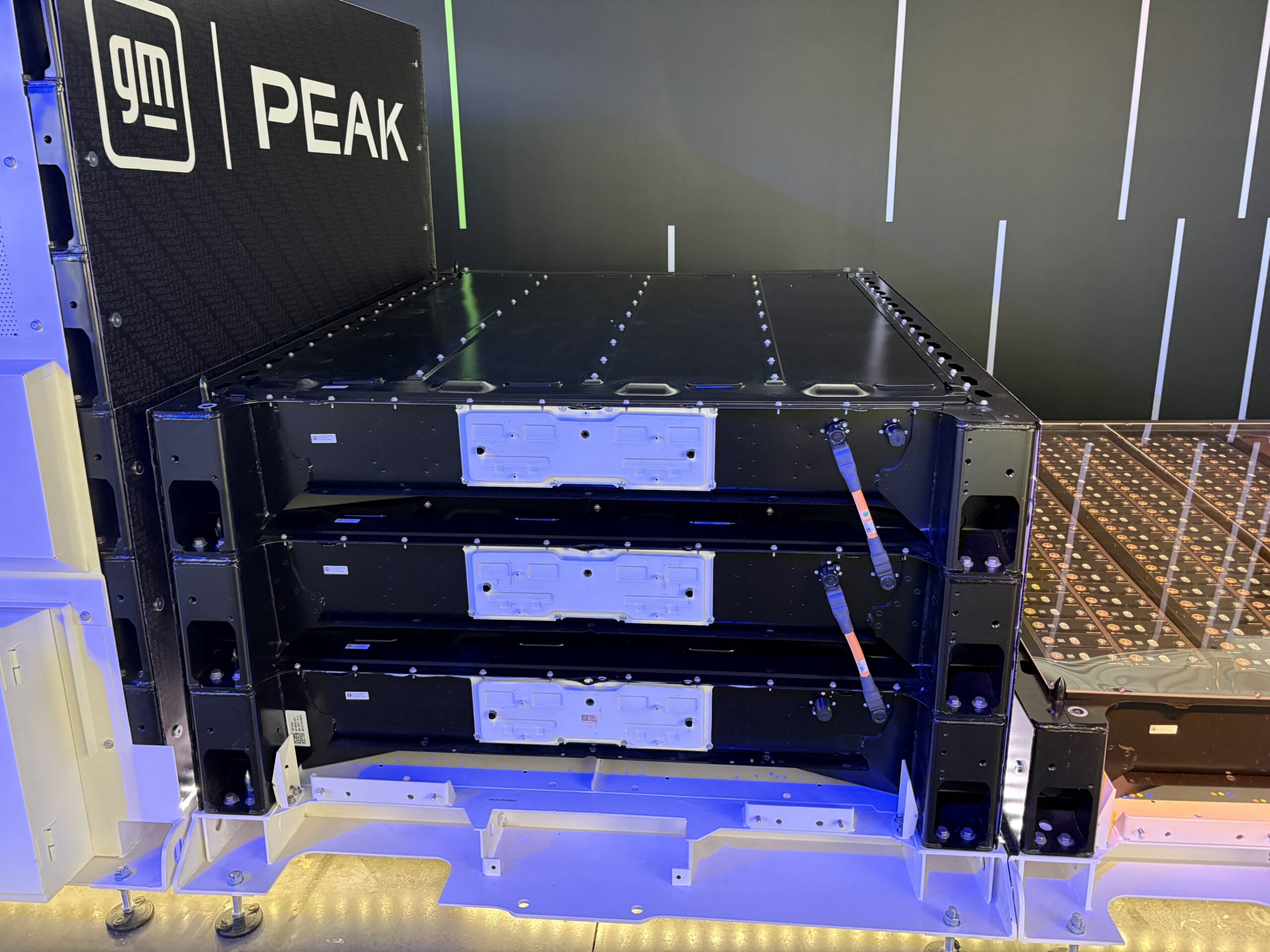

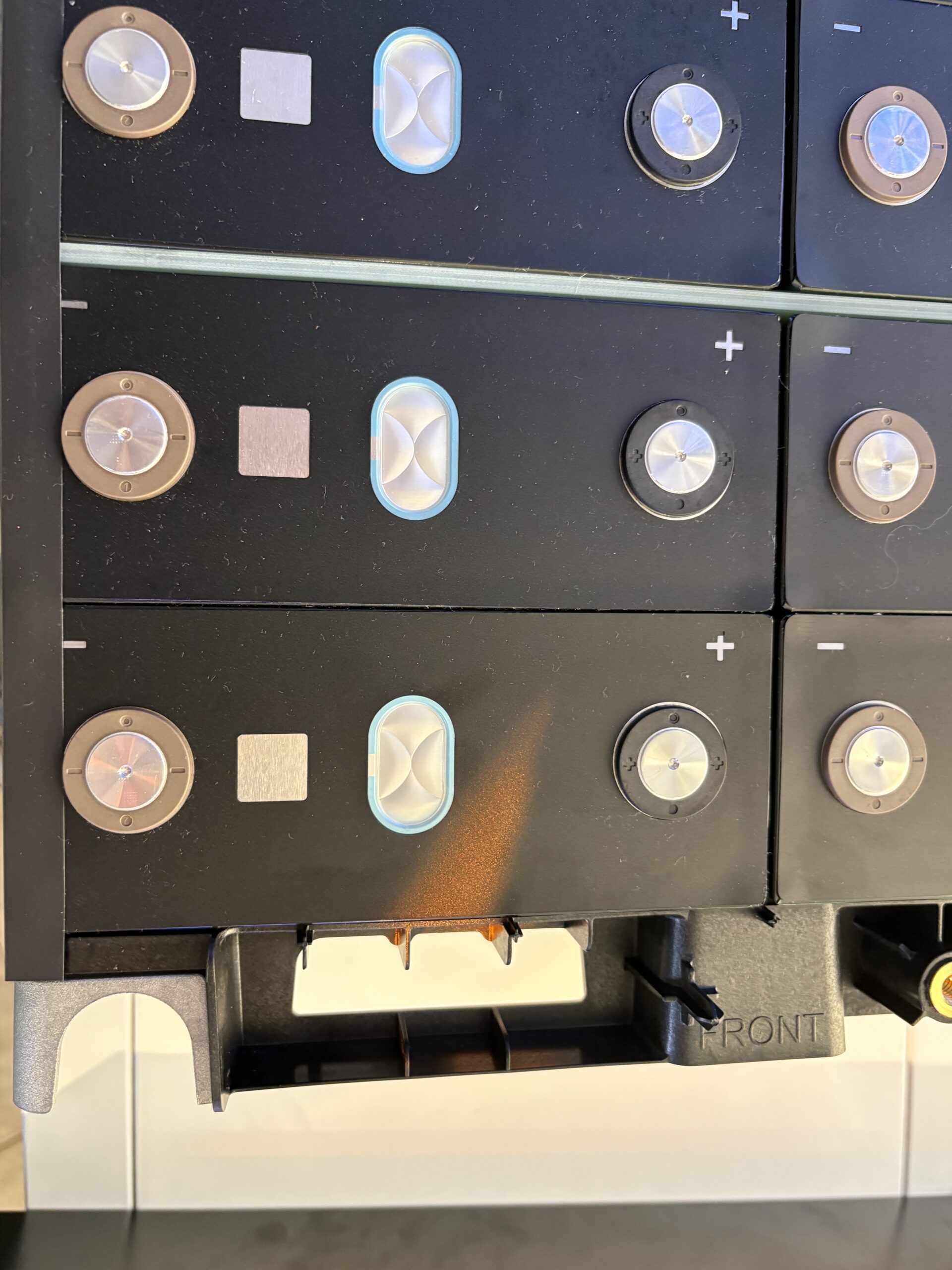



The most significant thing that came through in the presentation and from talking to the leaders of Peak Energy is that this technology saves money in several ways:
- The materials are cheaper and more available worldwide.
- The manufacturing cost will go down as they build more and discover more optimizations.
- This is all developed in the US, so there is no licensing and there are no royalty costs paid to another company or country.
- Since this battery is comfortable at high and low temperatures, it can be passively cooled. They don’t need to build or pay to run a complex system to keep the batteries at the optimal temperature. This substantially cuts both capital and operating costs, reduces maintenance, and improves reliability. “The best part is no part.”
Conclusion
None of this happens overnight. Sodium-ion still needs to prove itself at scale, and the real test will be whether the cost and reliability advantages show up in actual deployments. But the direction feels right. The grid needs more tools, not just more of the same. By focusing on the right chemistry for the job and leveraging the manufacturing and R&D footprint it has already built in the US, GM is positioning itself to help deliver storage that is durable, cost-effective, and better matched to the demands of a grid under pressure.
If the execution matches the intent, this could become one of the more important quiet shifts in how we store and manage electricity at scale. The cars were the starting point. The grid is the next frontier.
Disclosure: I am a shareholder in Tesla [TSLA] and XPeng [XPEV]. But I offer no investment advice of any sort here.
Sign up for CleanTechnica’s Weekly Substack for Zach and Scott’s in-depth analyses and high level summaries, sign up for our daily newsletter, and follow us on Google News!
Have a tip for CleanTechnica? Want to advertise? Want to suggest a guest for our CleanTech Talk podcast? Contact us here.
Sign up for our daily newsletter for 15 new cleantech stories a day. Or sign up for our weekly one on top stories of the week if daily is too frequent.
CleanTechnica uses affiliate links. See our policy here.
CleanTechnica’s Comment Policy