


Support CleanTechnica’s work through a Substack subscription or on Stripe.
I was invited to a GM event in San Francisco on June 9th where GM made three big announcements:
- GM is activating vehicle-to-grid (V2G) capability for existing customers, with no new hardware required.
- GM is expanding grid-scale battery storage with a big bet on sodium-ion technology.
- GM’s new “Energy Pass” — one universal interface for public charging (this article).
GM Launches Energy Pass: One App to Finally Simplify Public EV Charging
Public charging has always been the part of EV ownership that feels more complicated than it should. You pull up, often in bad weather, only to download another app, create another account, enter another payment method, and hope the charger actually works. It’s a friction point that legacy automakers and charging networks have been slow to fix — until now.
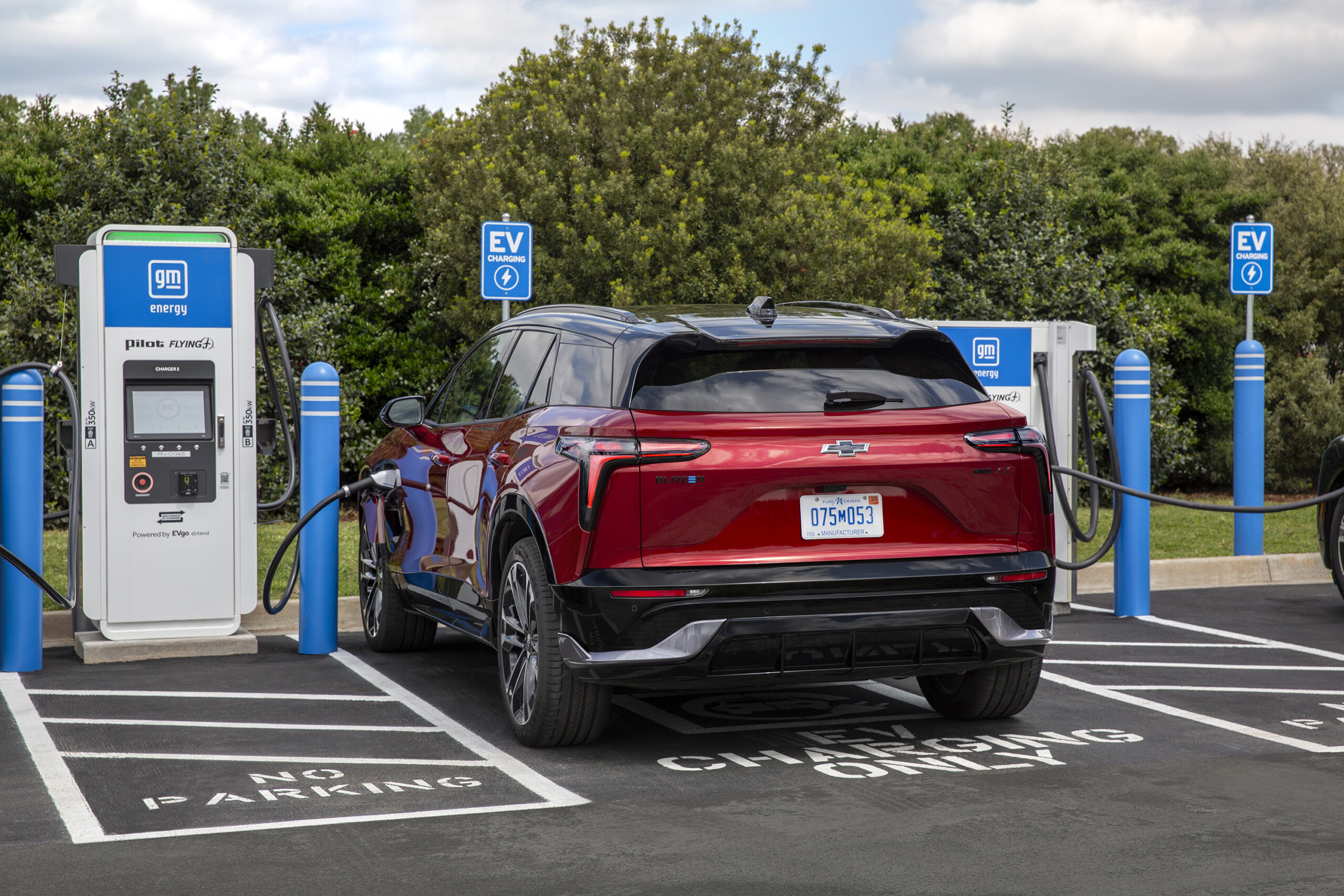
GM just announced Energy Pass, a new unified charging experience built directly into the MyChevrolet, MyCadillac, and MyGMC apps that millions of drivers already have on their phones. The idea is simple and long overdue: eliminate the fragmented mess of separate apps and accounts and replace it with one clean interface for finding stations, starting sessions, paying, and tracking everything in one place.
At launch, Energy Pass connects drivers to Tesla Superchargers, IONNA chargers, and Electrify America chargers, with ChargePoint and EVgo rolling in soon. Together these networks represent nearly 70% of all DC fast chargers in the United States, plus plenty of Level 2 options. For anyone who has followed the charging landscape, that coverage number stands out. Tesla alone holds roughly 52% of US DC fast charging ports (around 37,000 stalls as of early 2026 data), so folding in the other major players creates meaningful reach from day one.
The experience is designed around minimal effort. After a one-time enrollment, drivers can access participating networks, start and stop sessions from the app, see live status, review charging history and receipts in a single spot, and unlock exclusive discounts at select locations. At compatible stations, Plug&Charge takes it further — pull up, plug in, and walk away. Payment happens in the background. That capability is already live at IONNA Rechargeries and EVgo stations. GM plans to bring it to ChargePoint this summer, and vehicles with native NACS ports will get it at Tesla Superchargers as well.
This announcement lands right as GM accelerates its shift to the North American Charging Standard. The 2026 Cadillac OPTIQ and 2027 Chevrolet Bolt already feature native NACS ports, and every new 2027 model year EV across Chevrolet, GMC, and Cadillac is expected to launch with them. An over-the-air update later this year will enable Plug&Charge on Tesla Superchargers for GM’s existing NACS-capable vehicles. It’s the same direction the entire industry has been moving since Tesla opened its network and made NACS the de facto standard.
As someone who has driven Teslas for years and keeps an all-electric home, I’ve been spoiled by a relatively seamless Supercharger experience. The app, the reliability, the software integration, and the sheer density in many corridors have made long trips straightforward. That doesn’t mean the broader public charging ecosystem hasn’t needed work. For drivers of other brands, the multi-app, multi-account reality has been a legitimate barrier to confident road tripping and everyday use. Energy Pass directly tackles that friction for GM’s expanding EV lineup — Chevy Equinox EV, Chevy Blazer EV, Chevy Bolt, Cadillac models, and electric GMC trucks and SUVs.
What I find most interesting is how this move validates Tesla’s long-term bets. By integrating access to Tesla Superchargers into their own apps and embracing native NACS ports, GM is acknowledging that a single reliable network plus software-defined simplicity wins. Tesla owners already enjoy that. Now GM drivers get a much cleaner path to the same high-quality infrastructure without juggling adapters and separate logins forever. It’s also good for Tesla — more vehicles using the network increases utilization and strengthens the case for continued expansion.
Every minute saved hunting for a working charger or fighting with apps is time back in your day. Reduced range anxiety and smoother public charging sessions make EVs more practical for more people, which ultimately supports higher adoption and better resale values. GM hints that Energy Pass is built to grow — more networks, more in-app features, more discounts and benefits over time.
The early screenshots GM shared show a modern, map-centric interface with clear station search, status indicators, and session controls. It looks intuitive on paper. Real-world performance — uptime accuracy, Plug&Charge reliability across networks, and how well it handles edge cases — will decide whether it delivers on the promise. But the direction is correct.
We’re watching the EV charging experience mature from a collection of siloed apps into something closer to the seamless, background experience drivers deserve. Tesla led with software, reliability, and opening its network. GM is now meeting that standard with unified access and full NACS commitment. Both are necessary. Continued infrastructure buildout, more high-power sites on highways, and steady improvements in home and destination charging will matter just as much.
For GM owners tired of the old way of doing things, Energy Pass is a genuine step forward. It won’t solve every infrastructure gap overnight, but it removes a layer of unnecessary complexity that has held back confidence for too many drivers. That’s exactly the kind of progress the market needs right now. More seamless charging means more EVs on the road and less time spent downloading and registering apps instead of enjoying the drive.
Photos



Disclosure: I am a shareholder in Tesla [TSLA] and XPeng [XPEV]. But I offer no investment advice of any sort here.
Sign up for CleanTechnica’s Weekly Substack for Zach and Scott’s in-depth analyses and high level summaries, sign up for our daily newsletter, and follow us on Google News!
Have a tip for CleanTechnica? Want to advertise? Want to suggest a guest for our CleanTech Talk podcast? Contact us here.
Sign up for our daily newsletter for 15 new cleantech stories a day. Or sign up for our weekly one on top stories of the week if daily is too frequent.
CleanTechnica uses affiliate links. See our policy here.
CleanTechnica’s Comment Policy