


Support CleanTechnica’s work through a Substack subscription or on Stripe.
The Denza Z was the big news this week from the 408th monthly MIIT regulatory filings.
The sports car has a 500 kW motor on the front axle and two 340 kW motors on the rear axle for a total of 1180 kW (1582 horsepower).
0-100 km/h has previously been stated as less than 2 seconds. Top speed for the hardtop and convertible version is listed as 300 km/h, while the performance version is up to 350 km/h (217 mph). All three have the same power rating and the performance version has a massive wing that would add both drag and downforce. As such, the round top speed numbers are likely based on tire ratings.
Speaking of tires, the convertible has 255/40 front and 265/40 rear, while the hardtop has 255/40 front and 295/35 rear, both on 20 inch wheels. The performance version moves up to 21 inch wheels with wider 275/35 front and 325/30 rear tires.
In addition to four-wheel steering, it is completely steer-by-wire. Meanwhile DiSus M active suspension keeps wheel and body motion under control. While battery details and range have not been announced, it can be assumed from other vehicles in their lineup that this will be on 1000V architecture with BYD’s flash charging capability.

The convertible version offers three colors of soft top. For the hardtop and performance versions, the standard roof is made of carbon fiber. At 2,220 kg for the hardtop, up to 2290 for the convertible, these cars are not light, but also not particularly heavy for 1000+hp EVs. At 4780-4870 mm long and 1990 mm wide, it is also roughly the footprint of many current Ferrari sports cars, although about a meter longer than a Lotus Elise.
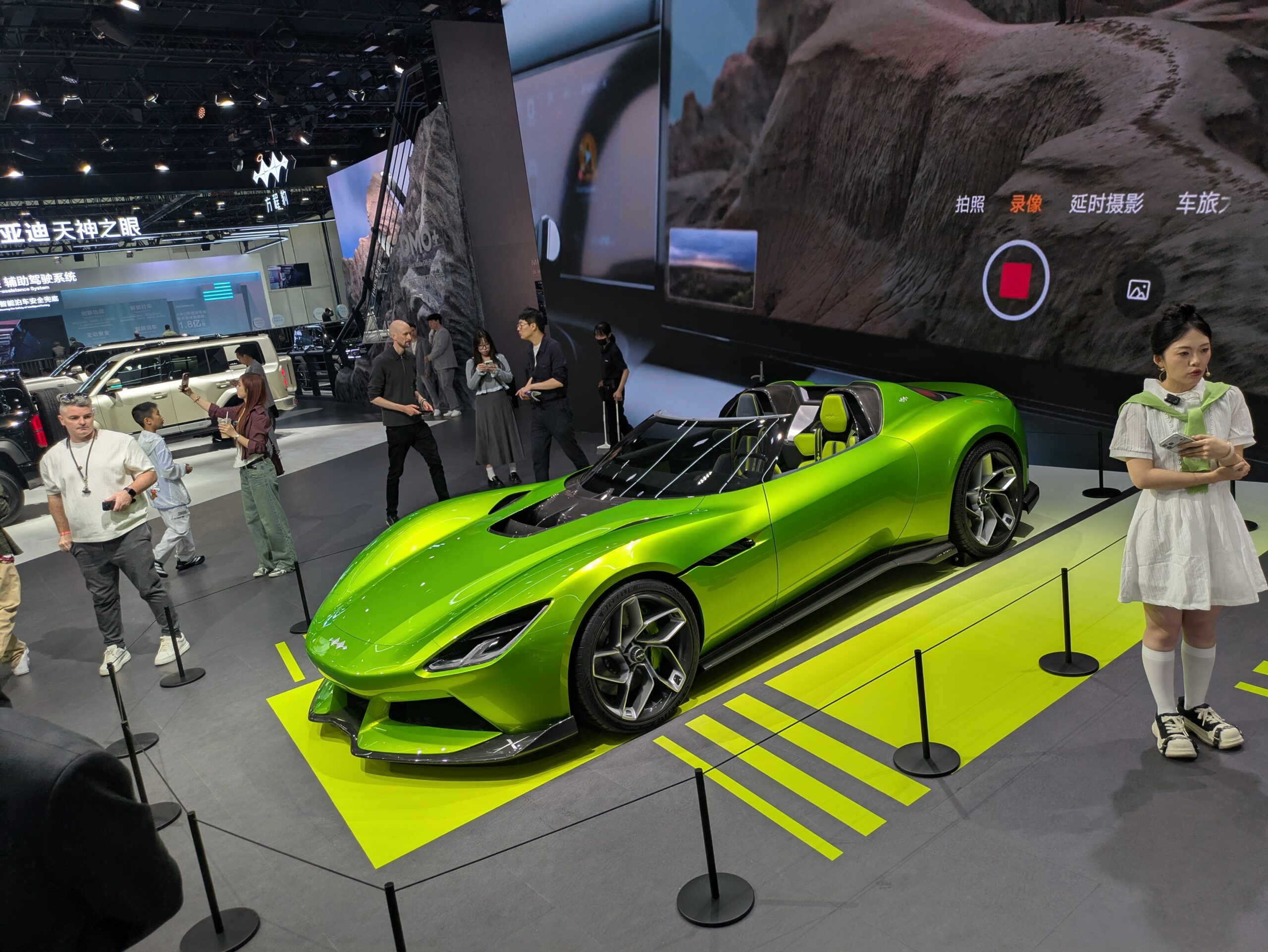
All three versions have four seats. For a two seater, you can either move up to the Yang Wang U9 or wait for the 2027 Fang Cheng Bao Formula X. An even hotter track version of the Denza Z has also been seen testing. Having seen both the Denza Z convertible and the Formula X at Auto China, they are clearly attractive cars that draw a lot of attention.
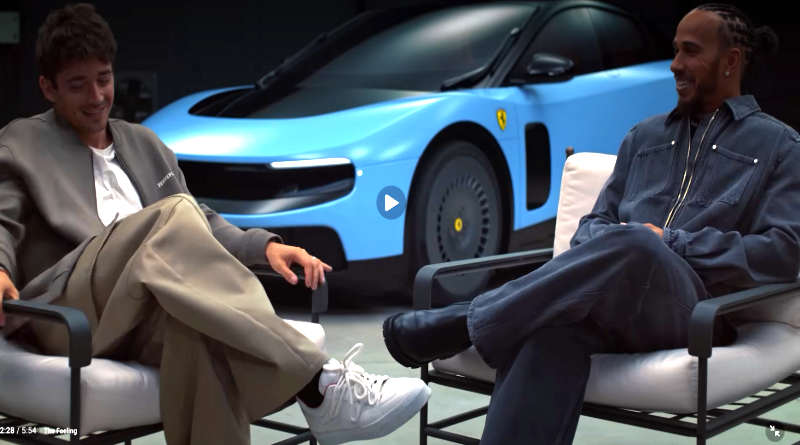
However, when looking at these sports cars, I kept thinking about the recently introduced Ferrari Luce.

Ferrari Luce Takes A Different Direction
Unlike the Denza Z, the Luce is a divergence from the traditional sports car. It switches to a tall sedan/short crossover layout. At 60.8” tall, closer to a Model Y (63.9”) than a Model 3 (56.7”). The form factor was justified by the battery being in the floor, but other automakers do not feel limited by that.
Rather than optimizing for downforce, the car was designed to reduce drag coefficient. As Ferrari Chief Design Officer Flavio Manzoni explains:
“Normally, when we design another type of Ferrari in terms of aerodynamics, the main objective is the downforce…The [main objective for an EV] is the drag coefficient. The parameters are totally different. [The EV] must be like a kind of solid object, very pure. The body side must be almost continuous, almost flat. Even the wheels must be flat.”
However, the drag coefficient of the Luce comes in at 0.254. This is higher than every Tesla, outside of the Cybertruck and Semi. Similar to the boxy XPENG GX full sized SUV at 0.255. And far higher than the Denza Z9GT going on sale in Europe at 0.21, which also has active aero to provide downforce. Despite being a larger, more powerful car, with the same 122 kWh battery capacity (although LFP) the Z9GT also has greater WLTP range, likely due in part to that lower drag. And these cars do not have to look weird to have better aerodynamics and efficiency. We do not yet know the drag coefficient of the Denza Z.

Ferrari also talks about the technology in the car. However, you can go line by line and each technology falls short of the more powerful Yang Wang U7, with its electromagnetic suspension, MW+ fast charging, intelligent driving, etc. That car is even slipperier than the Denza, at 0.195 coefficient of drag. If you do not need across the board superiority, there are many cars with more technology onboard in one area or the other in China. So, the Luce falls short as technological showcase.
Focus was given to comfort and NVH, leading to Ferrari’s first isolated rear subframe. However, it is hard to imagine that it would live up to Chinese premium sedan comfort standards or amenities. Some have liked the physical controls (somewhat ironically coming from the designer famous for moving phone controls to a touch screen), but they are not alone in that regard either.
And that gets into the problem. While a 4-door sedan is new for Ferrari, it is not unique in the market. In China, 5m, 1000 hp, AWD, electric sedans with advanced technology and active suspensions are everywhere. And not just from BYD. With amenities and technology that goes beyond what Ferrari offers… and at about 1/10th of the $640,000 Ferrari is trying to charge.
While the Denza Z is expected to be closer to Mustang price territory than Ferrari territory, there isn’t as much competition in the 2-door BEV sports car segment. Maybe the MG Cyberster, but that is more of a GT. At the Ferrari price point, very little competition. And there is room to pursue lighter vehicles. While Ferrari brags about the weight savings of the Luce, it is still heavier than the Denza Z. With Ferrari-style budgets, there is also room for more exotic materials, weight to come down and dynamics to be closer to what people expect from the brand. We could see things like the 3D-printed frame of the U9 Xtreme supercar trickle down into other models.
The choice to diverge from what made Ferrari special in order to enter a crowded premium sedan market also faces other challenges.
Brand Divergence
Ferrari started producing customer cars to fund its racing activities. Initially, those customer vehicles shared significantly with their race cars. As racing and road regulations diverged, the sharing became a bit more spiritual. Subsequent sale to FIAT and other changes in corporate ownership also shifted the product from its original positioning, but sports cars were still the foundation. Beyond any specifications, Ferrari is able to command elevated prices due to their legacy of passion and performance.
Balancing the legacy that built a brand with what will take the brand forward is always a challenge. For a premium brand, you have to preserve the brand essence that supports the elevated price point. While you can argue that a Porsche Cayenne is a departure from what made Porsche famous, it also would not be successful without the halo of the 911 making the more family-friendly crossover seem sportier than it is. You need to lead with the passion product for a performance brand, even if that is not what drives the bulk of revenue.
In terms of EVs, Ferrari is leading with the more practical vehicle and letting other companies take the electric sportscar/supercar market. There are compromises in the vehicle that take it away from what is appealing about Ferrari. It positions the EV as the compromise, rather than something to be excited about.
As other brands increasingly prove EVs on the track, people will be less likely to turn to Ferrari to get a high-performance EV. Ferrari may keep their focus on ICE sports cars and treat EVs as practical options to conduct everyday chores or to meet compliance. However, that dilutes the sporting appeal of EVs. By diverging from the passion that drove their legacy, Ferrari may be relinquishing their future to legacy powertrains.
If BYD were to buy Maserati, they would gain sporting history. If BYD enters Formula 1 (potentially under Maserati brand), they would be competing with Ferrari on the world’s largest motorsports stage. And while BYD would undoubtedly rely on experienced motorsports engineers to run the program, having the largest R&D staff of any automaker would provide the team with additional resources.
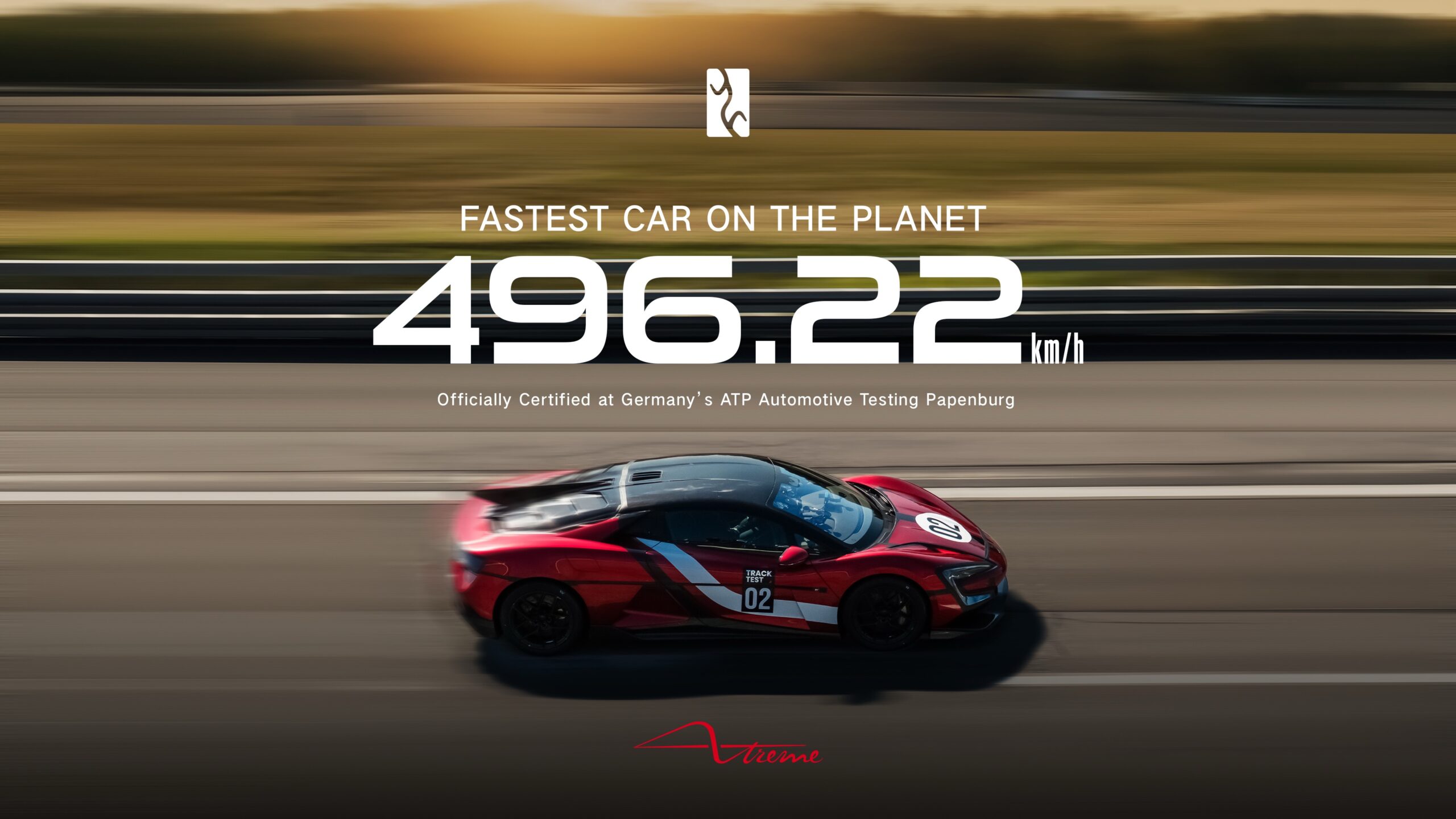
By establishing itself with electric sports cars and potentially electric racing, BYD could take the lead in the enthusiast market in an electrified future. They already have set records for lap times and the fastest production car. This may look more like a GTR driving Nissan sales or GT40 driving Ford sales, but it will inject passion into the brand.
Some may think sports cars are pointless and prefer something more practical. Some people hate auto racing. However, performance can drive people to choose an EV, especially people who previously might not have considered it. In terms of driving EV passion, Ferrari seems to be falling behind in the race. Do you think BYD or someone else will take the lead?
Sign up for CleanTechnica’s Weekly Substack for Zach and Scott’s in-depth analyses and high level summaries, sign up for our daily newsletter, and follow us on Google News!
Have a tip for CleanTechnica? Want to advertise? Want to suggest a guest for our CleanTech Talk podcast? Contact us here.
Sign up for our daily newsletter for 15 new cleantech stories a day. Or sign up for our weekly one on top stories of the week if daily is too frequent.

CleanTechnica uses affiliate links. See our policy here.
CleanTechnica’s Comment Policy