
GCL Plans To Integrate AI Data Centers Directly with the Grid — CleanTechnica Field Trip


Support CleanTechnica’s work through a Substack subscription or on Stripe.
GCL is the largest private energy producer in China, and we were fortunate enough to get a tour of its headquarters. Afterwards, we sat down with the company’s executive team to see how they are advancing China’s strategy to upgrade China’s energy generation systems to zero-emissions technologies.
Disclaimer: the author’s travel and accommodations were paid for by iMpact PR as part of a tour of companies they work with in China.
In addition to upgrading and improving the resilience of China’s electricity grid, GCL is taking China’s cleantech overseas with beachhead markets well established in Australia, Southeast Asia, and Europe.
GCL is a key installer and manager of China’s clean energy grid and has been since 1996 when they first moved into the energy business. GCL’s Energy Technologies business currently manages 8.2 GW of installed capacity, over 97% of which is clean energy.
GCL largely operates in China, with expansion underway across Southeast Asia. They shared their forecast across Southeast Asia, which revealed plans to increase battery energy storage deployments from roughly 2 GWh per year today to nearly 16 GWh per year by 2032.
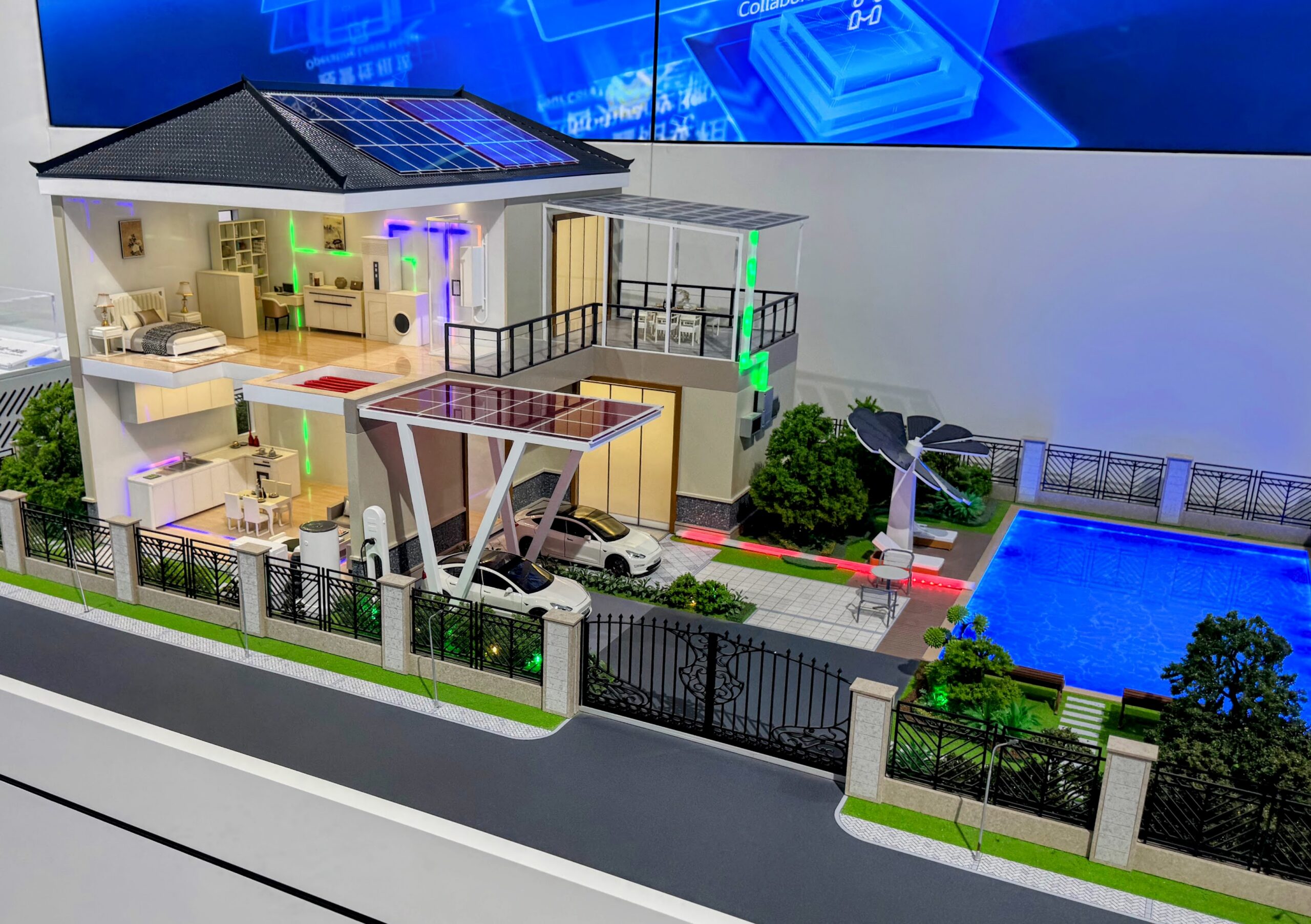
Similarly, they plan to increase annual offshore wind deployments from just under a 1,000 MW of deployments in 2025 up to just under 3,000 MW of new offshore wind deployments per year by 2029.
Solar is following a similar trend with just over 4 GW AC installed in 2025 with plans to increase that to to over 14 GW AC per year in 2030 across Southeast Asia.
These are the meaningful numbers that are truly driving the clean energy transition in Southeast Asia. Well it’s easy to chalk this up as base capitalism and typical business practices pushing into new markets in search of higher returns for investors, clean tech deployments like these are also what drive emissions down, increasing energy Independence along the way.
Virtual Power Plants
A key component of GCL’s strategy is virtual power plants or VPPs. Virtual power plants aggregate production and consumption capacity of electricity and allow the energy provider to create demand signals typically driven by financials to incentivize electricity production and consumption partners to change their behavior to support the grid.
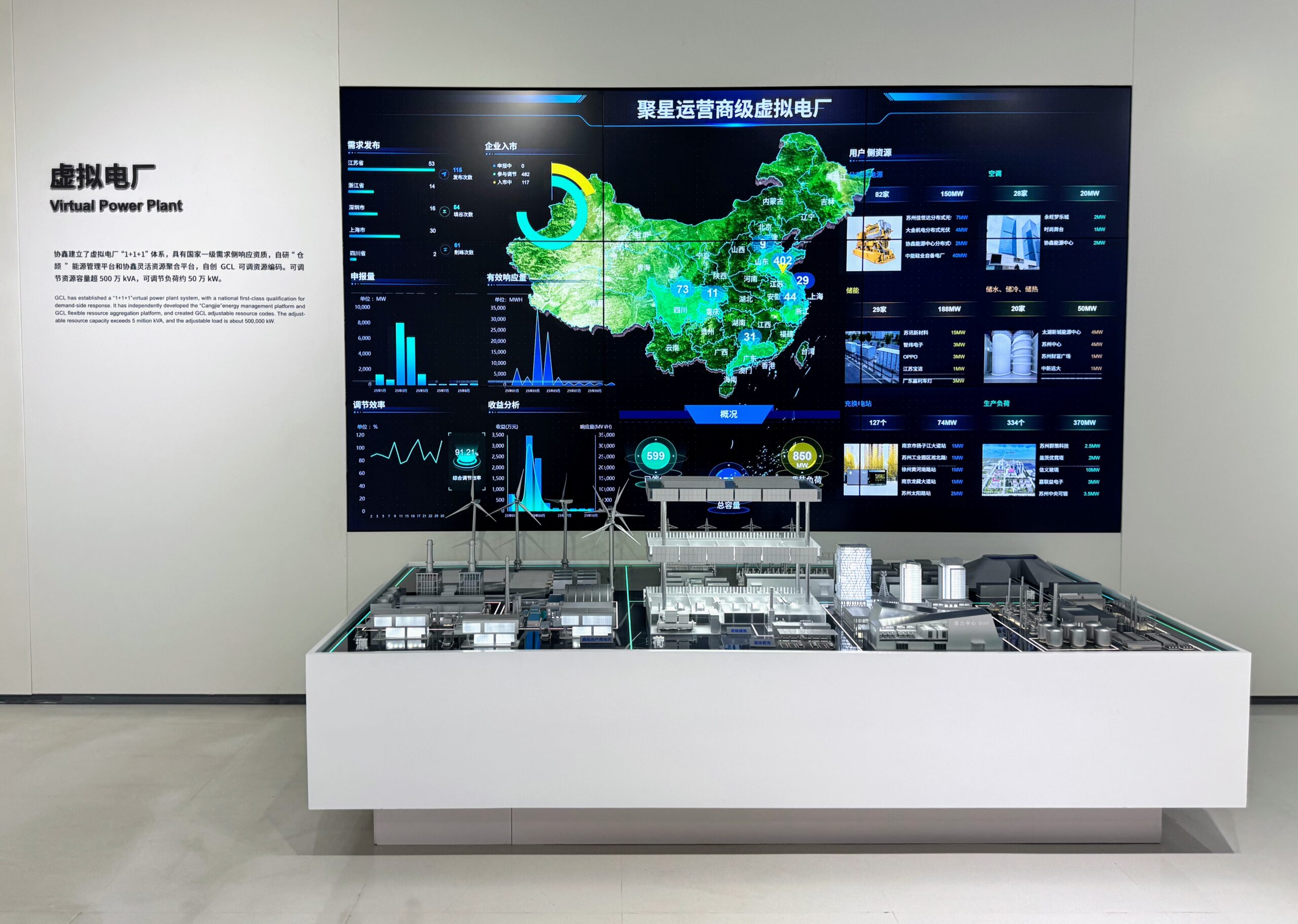
For example, as grid consumption peaks, GCL could offer a factory a financial incentive to reduce power consumption by 1 megawatt. On the flip side, grid energy storage systems exist to store excess power and feed it back when the grid needs it — for a small fee, of course.
Virtual power plants are critical for integrating more intermittent cleantech generation assets to the grid and create a healthy market for energy storage systems to be added to the grid. Providing a stable framework for compensation for these energy storage assets is critical to stabilizing the grid and providing predictable pricing signals to potential investors in grid infrastructure.
Enabling AI data centers at scale
In parallel to leading the clean energy transition, GCL has an eye towards the future with a well established pipeline of AI data center projects that not only connect them to the grid but introduce virtual power plant solutions directly into the data centers of the time of construction.
In most of the world, companies are struggling to find electrical grid capacity to support the massive power draws of AI data centers. Hundreds of thousands of GPUs are being installed at the megawatt scale, pulling more power from a single data center than some cities do. GCL has taken a different approach, integrating data centers into their energy generation, storage, and distribution strategy.
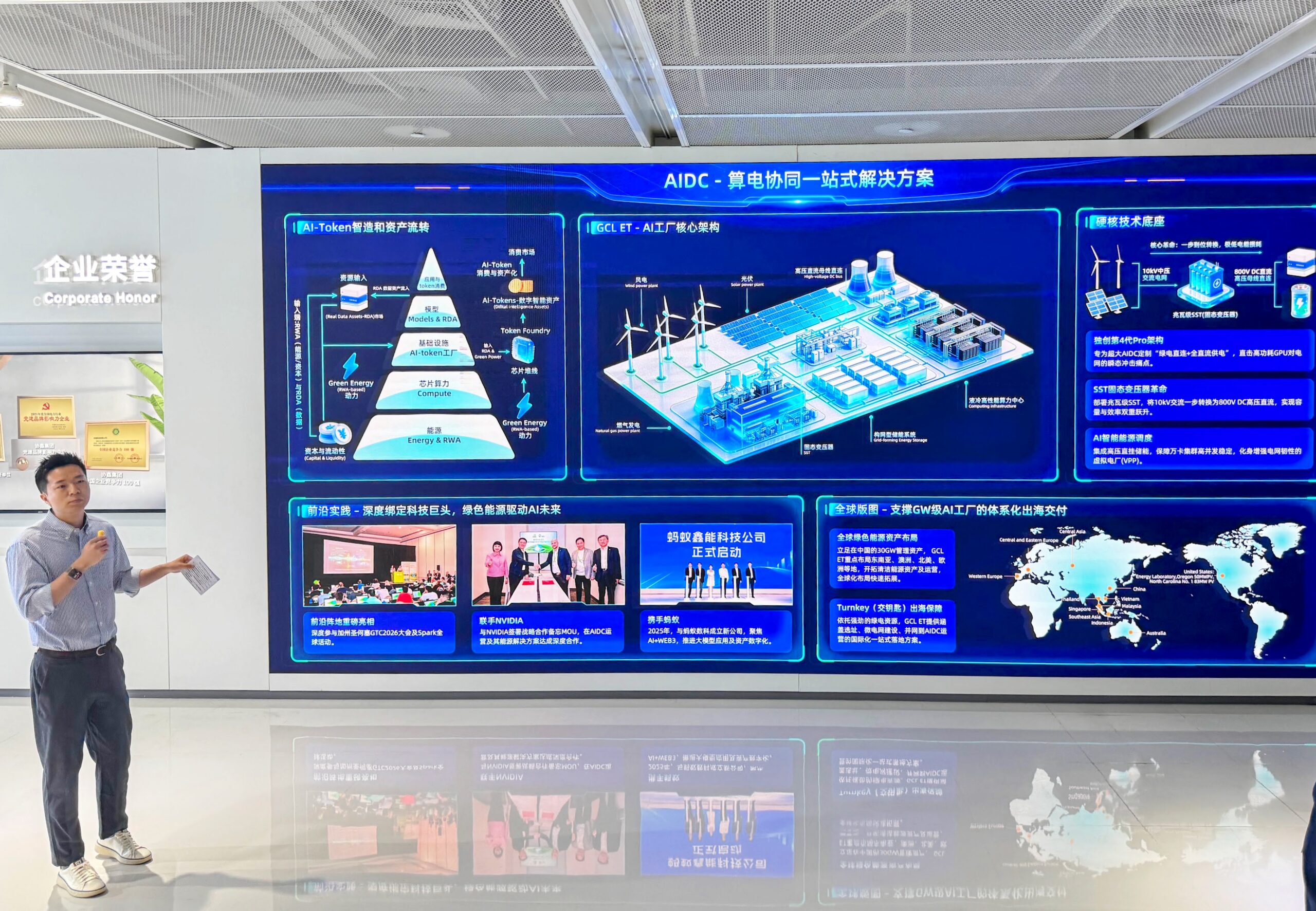
The core concept is to increase flexibility of their operations by using excess electricity on the grid to recharge storage assets like pumped hydro and grid-scale battery energy storage systems (BESS), but to spool up AI data centers, selling the resulting tokens for additional revenue for the company. This accomplishes several meaningful things for GCL and its customers.
Right out of the gate, the resulting AI tokens have value, which generates additional revenue from electricity that might otherwise have been grounded or left unused.
The flexible nature of the new AIDC solution gives GCL another tool for managing electricity generation. Having an additional flexible demand bucket lets them push excess electricity to AIDC units when it makes sense or to shut down generating assets when it does not add value.
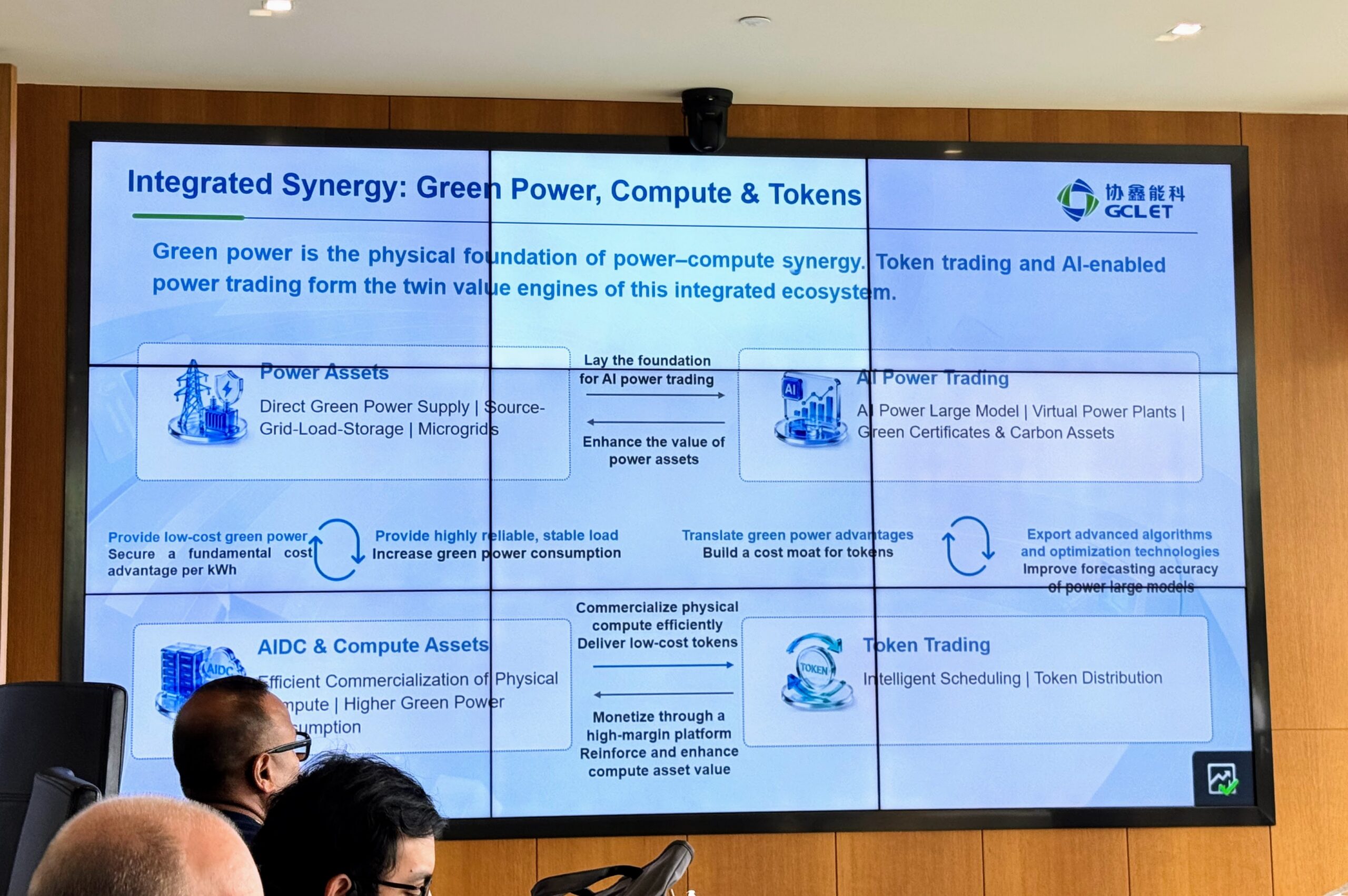
Producing AI tokens when it makes sense to supply them creates a new market for tokens where pricing can be adjusted based on the cost to produce the token. When using excess electricity to produce tokens, the value can be lower to incentivize customers to use the tokens. When grid demand is already high, the price of tokens can be increased, naturally driving demand down and helping to balance the grid at the same time.
Finally, integrating electricity generation, storage, and transmission with AI token generation makes the overall process more efficient, giving GCL a cost advantage while providing the lowest cost tokens to customers. GCL is pushing into new territory with its AIDC strategy, with approximately 1 GW of their 8 GW energy generation pipeline consisting of integrated AIDC solutions as of our visit in June 2026.
GCL has developed a thoughtfully planned, integrated approach to AI data centers that puts their intelligence and power electronics at the center of a new AI Center installation. These data centers will be installed alongside energy storage and power generation, allowing GCL to leverage and throttle power generation energy storage and power consumption from the AI data center, not only to integrate well into the grid but to help stabilize it.
In a world where the strength of countries and economies will be largely determined by their AI compute capacity, the ability to add and scale AI data centers without impacting the grid is a huge advantage.
Overall
China is growing so quickly that it’s important to have an intentional approach at the country level to energy generation. A comprehensive energy strategy is critical for managing imports of fossil-fired energy like coal and oil, as well as building out a pipeline of cleantech manufacturing and infrastructure installations.
To date, China has largely been using cleantech installations to cover its continuing economic expansion, but we are seeing positive signs on slashing overall emissions as well.
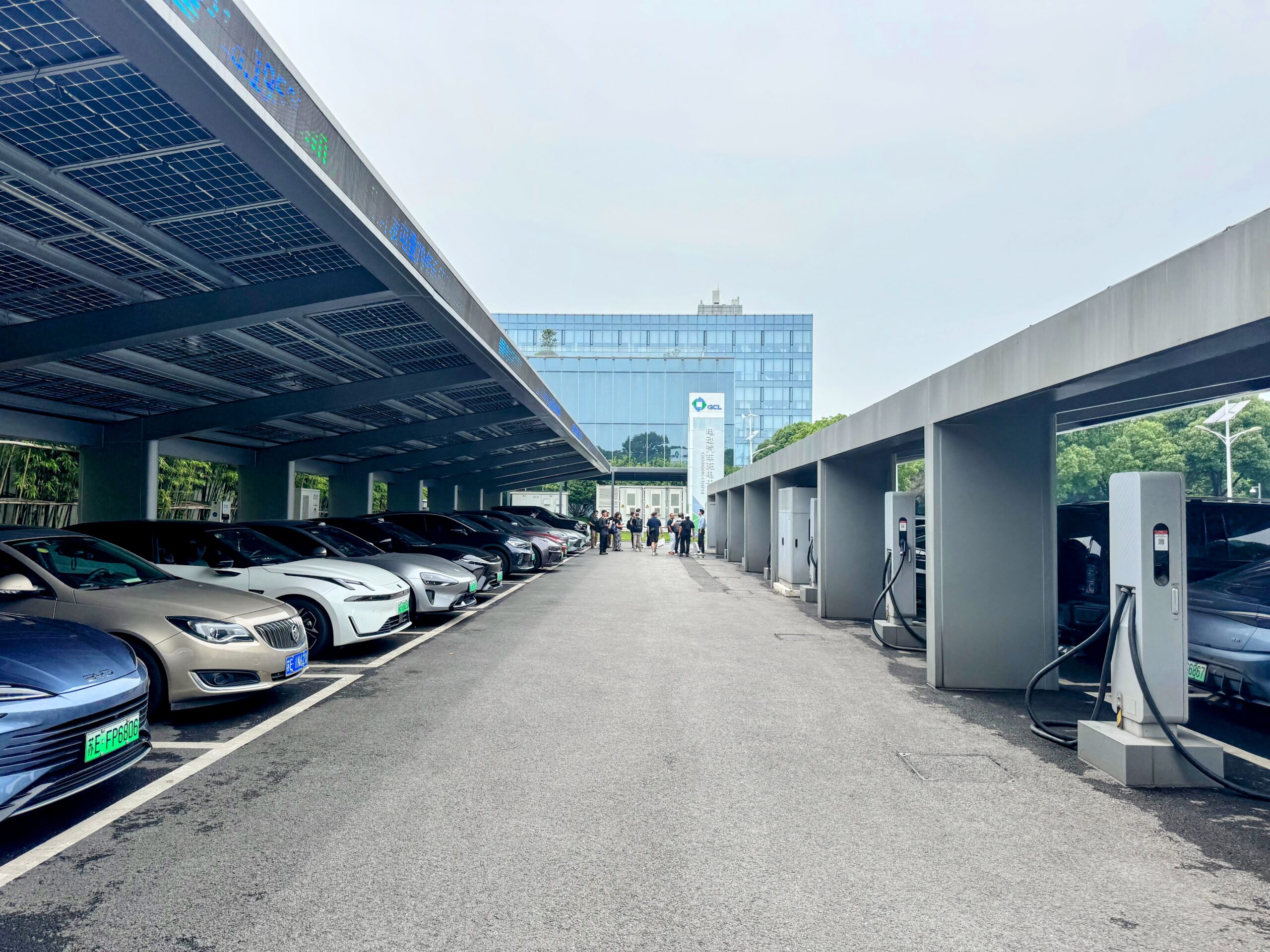
As we keep an eye towards AI data centers and the rapid expansion there, China is obviously a critical piece of the puzzle. In talking with GCL’s executives, they are not only planning out China’s future grid mix, they are actively working to transition to locally sourced, zero-emissions technologies to support the significant loads coming down the pipe with AI data centers.
Because AI compute tokens are fungible, meaning they can be sold and used anywhere around the world, they are yet another vector for China to ramp up operations domestically, selling another service to global customers — just digitally this time.
Time and time again, China has demonstrated its ability to look decades into the future and aggressively build infrastructure to support those plans today. This is evident in the sky lines of Chinese cities, the massive freeways interconnecting them, the swaths of electric cars being produced in China, China’s impressive high-speed rail network, and so much more.
With that in mind, we’ll be keeping a keen eye on GCL’s work integrating AI data centers with the grid to see how the flexible generation of tokens can be used as a force for good to lower the cost of compute, balance the grid, and create the right pricing signals for customers.
Sign up for CleanTechnica’s Weekly Substack for Zach and Scott’s in-depth analyses and high level summaries, sign up for our daily newsletter, and follow us on Google News!
Have a tip for CleanTechnica? Want to advertise? Want to suggest a guest for our CleanTech Talk podcast? Contact us here.
Sign up for our daily newsletter for 15 new cleantech stories a day. Or sign up for our weekly one on top stories of the week if daily is too frequent.


CleanTechnica uses affiliate links. See our policy here.
CleanTechnica’s Comment Policy