
New Jersey Welcomes Robotaxis, But Only If They Have Three Sensor Technologies

Support CleanTechnica’s work through a Substack subscription or on Stripe.
The New Jersey legislature is considering a bill known as S1677 proposed by Senators Andrew Zwicker and Gordon Johnson that would allow manufacturers to test fully autonomous vehicles — otherwise known as robotaxis — within the state, provided they comply with a number of specific requirements. It mandates coordination with the state police and the attorney general’s office so that authorities are fully informed about where and when the testing of autonomous vehicles is taking place. It also requires the test vehicles to be covered by general liability insurance in the amount of $5,000,000 or more.
As it is currently written, S1677 requires that a fully autonomous vehicle must “be equipped with crash-avoidance systems, including a camera system and two distinct sensing modalities that are capable of detecting and tracking obstacles in the event of failure of the camera system.” That provision has drawn criticism from Tesla, but Zwicker said recently, “At this point, I don’t think the evidence is sufficient that a single sensor with software can handle situations that humans can.”
Tech Agnostic
Notice that the proposed statute does not mandate either radar or lidar. It is tech agnostic, specifying only that two monitoring technologies be used in addition to cameras. That leaves the door open for new technologies that may not even exist at the present time, which seems to be a sensible approach, given the pace of innovation today. As technologies advance, or new ones are developed, a rigid legal framework might slow progress down.
Zwicker is a physicist at Princeton Plasma Physics Laboratory who became an AV believer after riding in a Waymo robotaxi in Phoenix. He frames this as safety-first governance for America’s most densely populated state, not an anti-Tesla crusade. Tesla disagrees. Its Engage portal warns the bill would mean its AV technology “couldn’t legally operate in New Jersey.”
Zwicker’s office said it had received roughly 4,000 emails in a single day about the bill. Most people said they were defending Autopilot — but the bill has no impact on Autopilot or Full Self Driving (Supervised), since the legislation is not designed to apply to either system. It is only pertinent to robotaxis, which means, if and when the Tesla Cybercab ever goes into mass production, it will not be able to operate legally in The Garden State unless it complies with the provisions of the new statute — assuming the New Jersey legislature passes it and the governor signs it.
Two Eyes Are Enough For Human Drivers
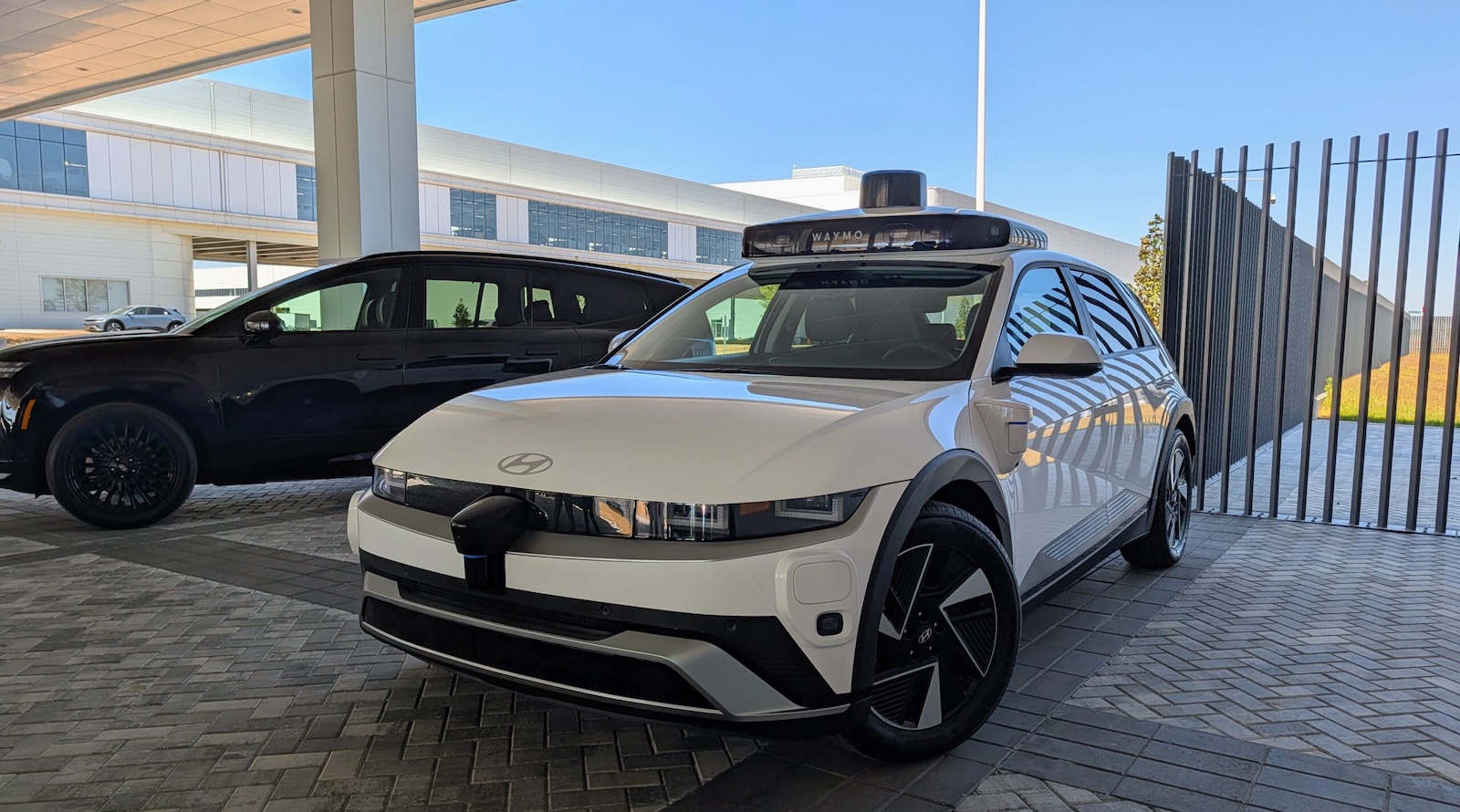
Elon Musk insists that humans navigate just fine with only two eyes, so a camera-only system backed by adequate computing power and AI should be able to do so as well. He complains that adding other systems such as radar or lidar is too costly. [And what is the cost of a human life, Elon?] In addition, he does not want his cars to be festooned with the exterior baubbles, bangles, and bright, shiny appurtenances that he thinks mar the exterior of the autonomous vehicles used by Waymo and Zoox.
Philip Koopman, an autonomous vehicle safety expert at Carnegie Mellon, disagrees. He told The Verge that “human brains are fundamentally more powerful than AI because we understand.” Cameras can get covered in snow or mud or dead insects, completely obscuring their view. Having backup sensors, even if the car’s main source of info is camera-based, is far safer.
Bear in mind that Musk can become obsessed with certain things. He delayed the start of production of the Model X for two long years while his engineers figured out how to make falcon-wing doors work. That was all because Musk hates the sliding doors on minivans and the small channel embedded into the rear quarter panel that makes them work. Don’t call Musk petty; just say he is obsessed by tiny details most people would not lose any sleep over. And note that Honda has found a way to make the sliding doors on its latest version of the Odyssey work with no side channel visible.
Waymo and Zoox argue that cameras struggle in glare and fog, while radar penetrates weather and lidar maps 3D space with surgical precision. “Redundancy isn’t overhead — it’s the point,” said InsideEVs contributor Nico DiMattia. Koopman said recently that camera-only technology “is not up to the challenge” for 24/7 operation across most New Jersey roads today and that, at fleet scale, rare edge cases soon stop being rare.
S1677 also has testing requirements. Companies will need specific state authorization to operate autonomous vehicles in New Jersey, and that authorization wouldn’t come until after at least 50,000 crash-free miles of supervised testing. The testing pilot program would last at least three years, as well.
Three Sensors Are Better Than One
DiMattia wrote, “Tesla argues that its cheaper, simpler sensing setup will give it a scaling advantage. Maybe that will be true someday, when its self-driving tech works better. But Waymo, whose cars are brimming with lidars, radars, cameras, and audio receivers, is way ahead of Tesla right now. The Alphabet-owned company is doing over 500,000 paid driverless trips per week across at least 10 cities, with more markets coming online regularly. It’s still early days for Tesla’s service, and growth has been far slower than Musk has promised.”
Planetizen reports that Victor Tangermann, a senior editor at Futurism, said recently, “Other states could soon follow — including New York, which is pondering a similar bill — in a domino effect that could completely derail the automaker’s current trajectory.” The industry is pushing Congress to preempt the field by passing national legislation, but while that push has been going on for years, Congress has shown little inclination to pass such laws.
This is similar to the artificial intelligence debate going on now all across America, where states are seeking to protect their citizens from rapacious AI operators while the industry is asking Congress to pass laws that would apply generally everywhere in America. Such debates have roiled America since its beginning. Auto manufacturers obviously do not want to deal with 50 different exhaust emissions standards and airlines also do not want to be subject to a welter of competing regulations. On the other hand, the states are supposed to be “little laboratories of democracy” and the Feds are not supposed to come marching in to force their policies on the states.
The real deciding factor will be if Elon, who donated nearly $300 million to elect the current occupant of the Offal Office, decides to call his friend in Washington and beg him to put an end to the states’ meddling in something that he is vitally interested in. Stay tuned.
Sign up for CleanTechnica’s Weekly Substack for Zach and Scott’s in-depth analyses and high level summaries, sign up for our daily newsletter, and follow us on Google News!
Have a tip for CleanTechnica? Want to advertise? Want to suggest a guest for our CleanTech Talk podcast? Contact us here.
Sign up for our daily newsletter for 15 new cleantech stories a day. Or sign up for our weekly one on top stories of the week if daily is too frequent.


CleanTechnica uses affiliate links. See our policy here.
CleanTechnica’s Comment Policy