
A Look Inside Hyundai’s Ocean Cleanup Partnership With Healthy Seas — CleanTechnica Field Trip


Support CleanTechnica’s work through a Substack subscription, on Patreon, or on Stripe. Help us produce all of the high-quality, original content we publish week after week despite the challenges of content-scraping AI, antisocial media, inflation, and other hurdles.
664,000 tons of fishing nets are lost or discarded into the world’s oceans every single year, so we were excited when Hyundai invited us out on an expedition to reclaim two of what they call ghost nets.
Disclaimer Hyundai paid for the authors accommodations to attend this event.
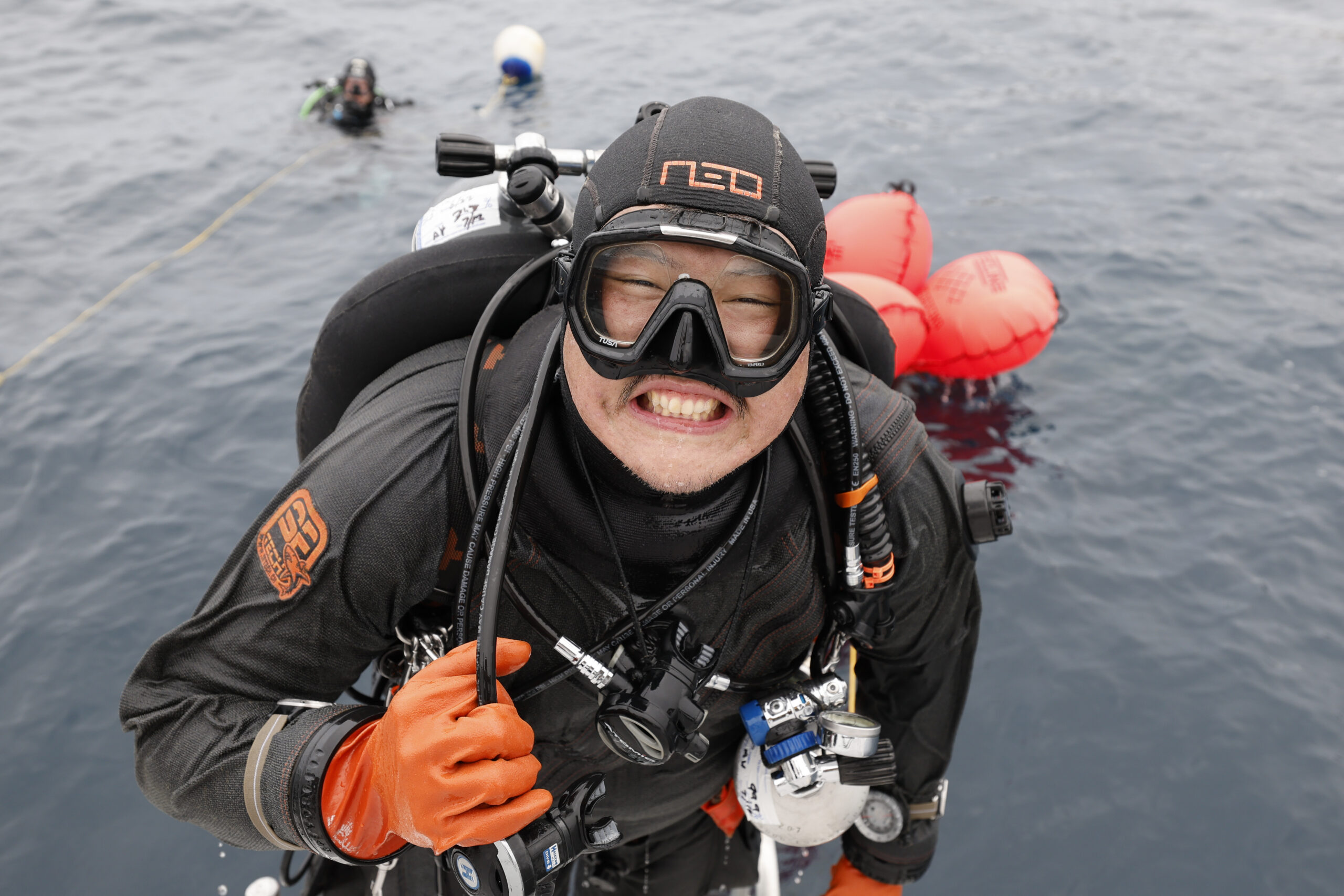
In partnership with non-profit Healthy Seas, which Hyundai supports, a volunteer team of divers from Ghost Diving USA team geared up on a diving vessel in the Long Beach Marina for the 110 foot / 30 meter deep dive down to the shipwreck where the two ghost nets were snagged just off the coast of one of Southern California’s Channel Islands (Google Maps).
The boat departed early with a full crew of recovery divers, gear, the Healthy Seas team, and a few members of the media towards the exposed Western Coast of Catalina Island. The 90-minute dive would allow the divers enough time to get down to the nets, cut them into manageable pieces, and attach recovery floats to them.
They use secondary air tanks to inflate the floats. Sending the chunks of recovered nets and gear up to the surface. From there, the teams onboard the boat take over, clipping onto the floats and hauling them over to the boat.
From there, it’s much like you’d expect — using good old-fashioned manual labor to haul the boat up on deck where any attached marine life is removed. The nets are cut up into more manageable sizes and are sorted into similar materials. They are then brought to shore where they can be cleaned and processed for recycling.

Recycling plastic from the sea is not cost effective compared to virgin plastic, but considering it should be removed from the oceans, the incremental effort required to clean it prior to recycling is minimal. This is one of the huge wins of ocean cleanup efforts, where they use the recovered plastic to create merchandise which then can be advertised as using recovered plastic. The resulting products offer a higher value to customers by letting them directly support ocean cleanup efforts financially.
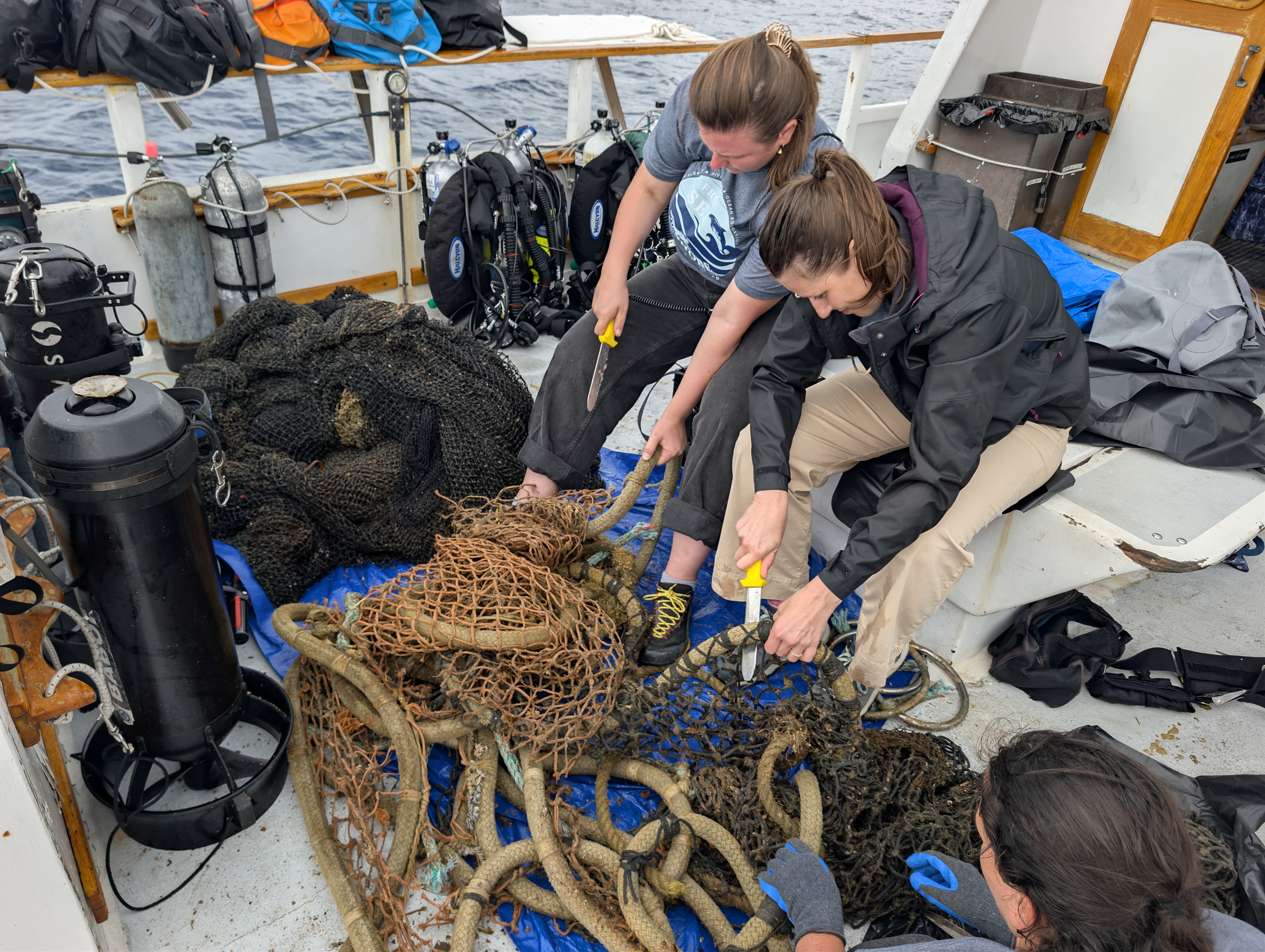
For their part, Healthy Seas has partnered with several organizations to create the proper supply chain to process the fishing nets. When the nets are first brought to shore, they are moved to a warehouse for storage until a fishing quantity can be aggregated to make it worth recycling.
The first stop in their recycling journey is through a company called Aquafil, where they turn the dirty fishing nets into what’s called plastic nurdles. These lentil sized pellets are one of the primary standardized feedstocks for virgin plastics, and recycled nets are typically mixed 50/50 with virgin plastic to maintain a base level of integrity in the resulting nylon nuggets.

From there they are sent on to a company called ECONYL, where the plastic nurdles are extruded into thread that can be used to stitch or create fabrics directly. This thread is what Hyundai uses to turn the recycled nets directly into floormats for Hyundai’s vehicles for the European market. 100% of the yarn in Hyundai’s ECONYL floormats in the IONIQ 5 & 6 are made from regenerated nylon waste, including fishing nets. ECONYL is standard in floormats for the IONIQ 5 & 6 and available as an option in other models.

Identifying and recovering fishing nets clearly isn’t a cost effective source of plastic, but the nets do need to be recovered, so they should also be recycled when they’re brought back onshore, much like damaged fishing nets are at the end of their life.
Besides the direct pollution in the ocean that abandoned fishing nets represent, they also cause a multitude of other problems:
- Loose nets in the ocean create a “curtain of death” in the ocean, catching and killing marine life.
- Nets break down over time, releasing microplastics into the water.
- Loose nets can get caught up in boat props, causing damage.
- Loss of tourism.
Overall
Hyundai’s partnership with Healthy Seas is a great example of how a high-profile company like Hyundai can use its positioning to raise awareness of this core issue while at the same time contributing to improving the situation.
Healthy Seas takes a multi-pronged approach to educate people around the world about the problems discarded fishing nets pose and to directly clean them up. They coordinate beach cleanup projects and larger, more intense fishing net recovery expeditions like the one we were fortunate enough to witness.
Because all of the 664,000 tons of fishing nets discarded or lost in the world’s oceans only come from fishing, not eating fish or reducing fish consumption is also a direct action people can take to keep our oceans clean.
Beyond that, it would be great to see efforts focused on improving tracking of fishing nets or implementing efforts to reduce the flow of fishing nets into the world’s oceans.
Just the same, it’s great to see Healthy Seas and Hyundai stepping up to keep our world’s oceans clean. Head to their official website for more information about the Hyundai’s partnership with Healthy Seas or directly to the Healthy Seas website for information about their efforts.
Featured image courtesy of Hyundai.
Sign up for CleanTechnica’s Weekly Substack for Zach and Scott’s in-depth analyses and high level summaries, sign up for our daily newsletter, and follow us on Google News!
Have a tip for CleanTechnica? Want to advertise? Want to suggest a guest for our CleanTech Talk podcast? Contact us here.
Sign up for our daily newsletter for 15 new cleantech stories a day. Or sign up for our weekly one on top stories of the week if daily is too frequent.


CleanTechnica uses affiliate links. See our policy here.
CleanTechnica’s Comment Policy