


Support CleanTechnica’s work through a Substack subscription, on Patreon, or on Stripe. Help us produce all of the high-quality, original content we publish week after week despite the challenges of content-scraping AI, antisocial media, inflation, and other hurdles.
On my recent trip to Munich for the launch of the XPENG L03, I was able to test VLA 2.0 technology again and gain insight into how it will perform in Europe. I have previously written about the price and the design details of the L03. In this article, I will focus on intelligent driving. I was one of the lucky few who had the opportunity to ride along on a beta test of VLA 2.0 on German roads. Prototypes have only been road testing for a short time in Germany, with the official public launch of the intelligent driving system scheduled for early next year. I already came away impressed with the human-like system on a past test drive in Beijing. From what I saw from this early example, European drivers should be equally impressed.
A Competent Chinese Driver, Driving In Germany
The foundation for the model is based on driving in China. For anyone who has driven in China, the sometimes chaotic, scooter filled roads create a challenging environment. Using that environment to feed the VLA 2.0 model means that the vehicle is already a competent driver.
However, Germany is a bit different. Its road signs are different. Right of way is different. Cars and trams often share the same streets. The unwritten rules are different.
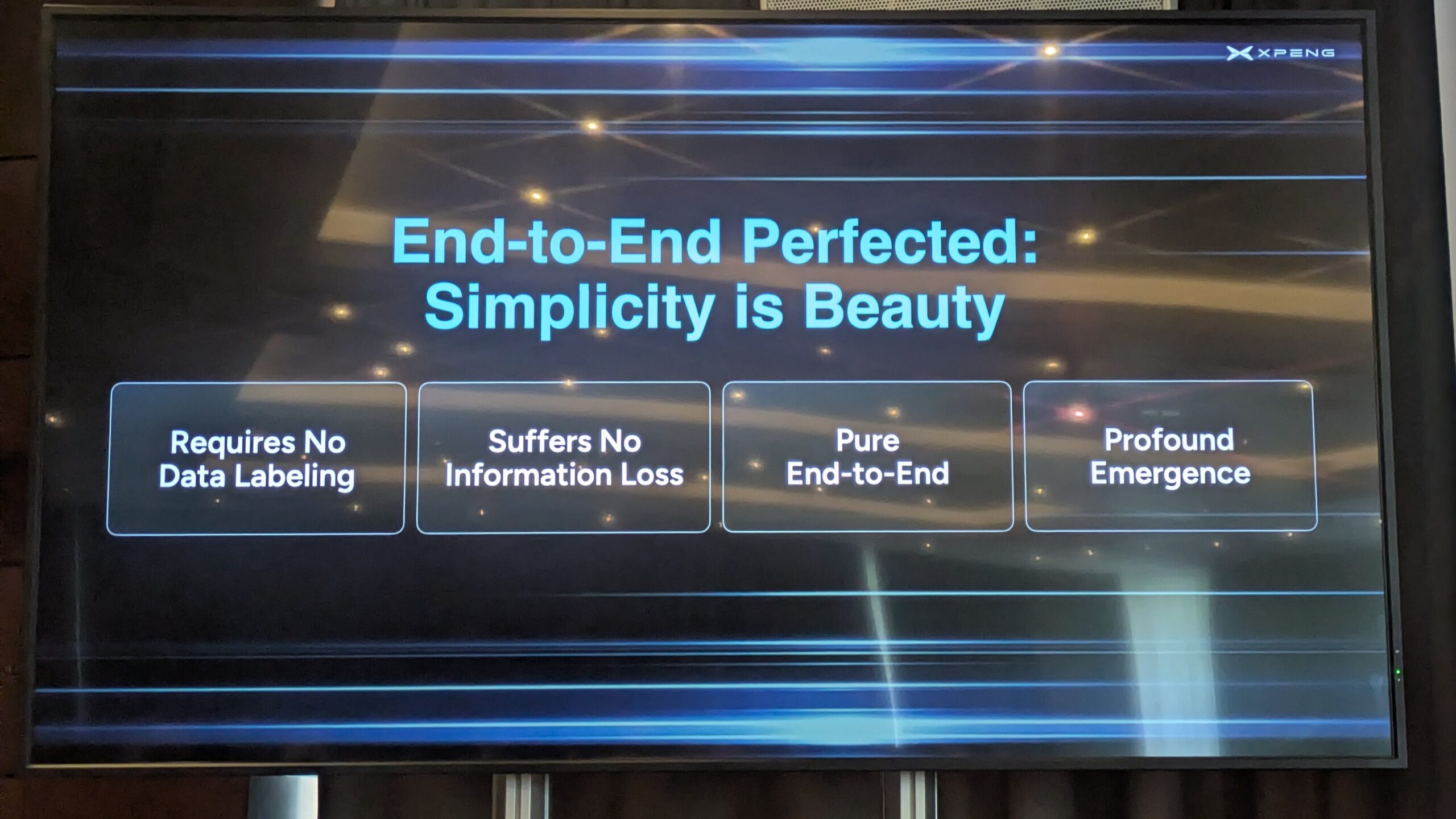
The way VLA 2.0 learns is not by giving it an extensive set of rules to follow. It learns from how people drive. Initially, that learning often happens from simulations. X-World uses “virtual-real mapping and scenario inference” to support how the system evolves to new markets. This lets XPENG predict what will happen on real roads before driving on them. Due to that simulation, relatively little data logging is needed in the real world, largely from edge cases, minimizing privacy concerns. Even in those cases, all data is anonymized before it leaves the vehicle. And all data logging in Europe stays within Europe.
The system also uses no human data labeling. There are no buildings in Buffalo, Austin, California and Utah filled with people labeling images to feed the model, like a certain competitor. The system processes the visuals itself.
3 Turing Ai chips on the L03 offer a combined 2250 TOPS of computing power. This is multiple times the power of many competitors and allows for more of the self-driving decision making to happen onboard.
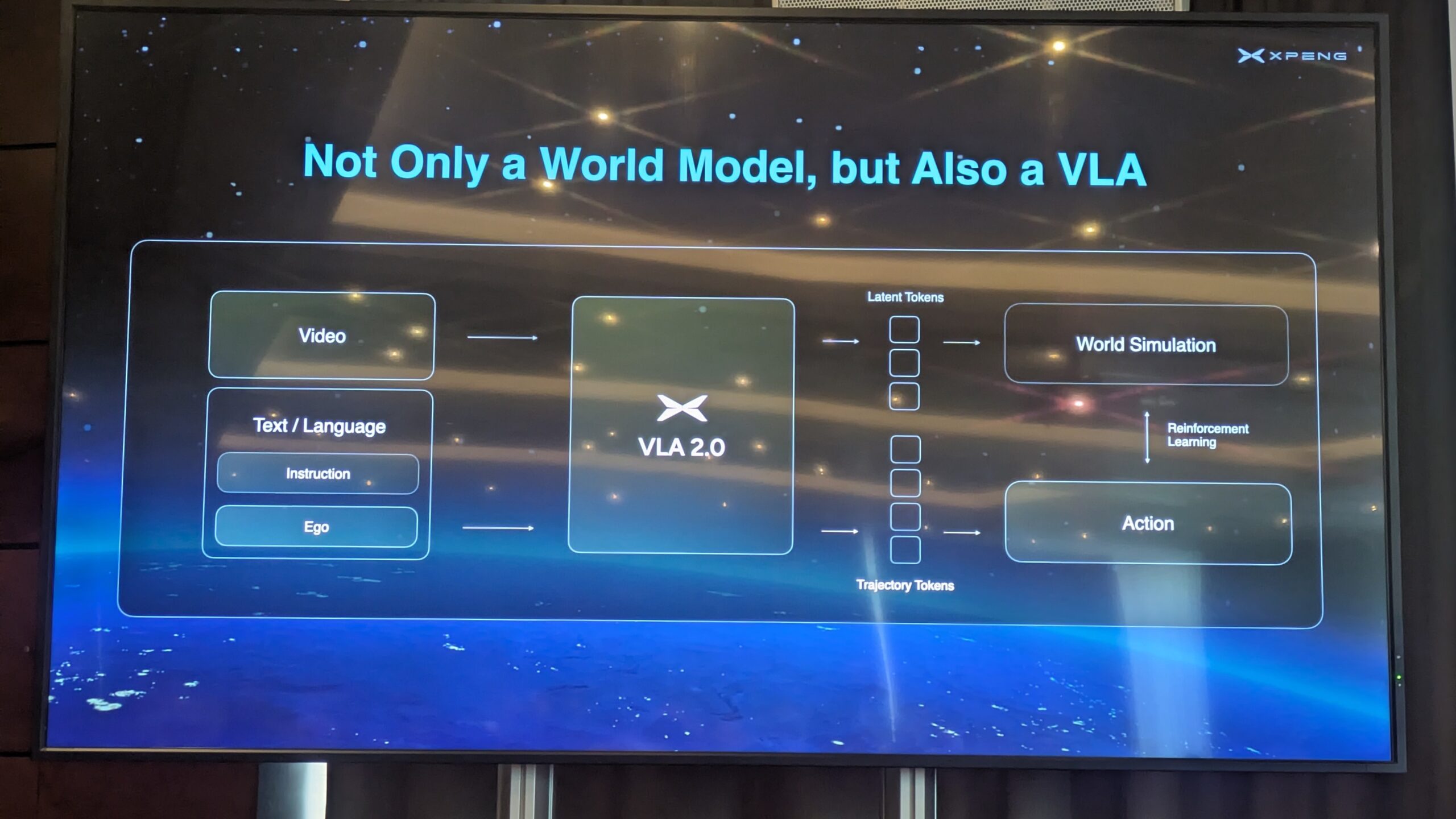
The foundation of the VLA 2.0 model shortcuts from vision to action for many tasks without converting the input into a long language model. This is like seeing a receiver and throwing the ball without having to write a book about how to throw a ball before throwing it. Meanwhile, other features like X-Cache increase inference speed, reduce the amount of processing power needed and use fewer steps to refine visuals. Meanwhile X-Mind enables more efficient proactive driving. The overall approach provides far more effective computing power than the hardware alone would suggest.
Due to the efficiency of the model and the processing power, the vehicle does not need to consult with the cloud while driving. All real time computation and decision making happens onboard.
The system learns from the driver and mimics their driving style. If a driver accelerates quickly and corners hard, the system will drive in a similar fashion. However, sometimes people want the self-driving system to drive a little more relaxed than they do. XPENG is currently working on different drive modes for an OTA update that will allow users to opt for modes that drive more relaxed or more aggressive.
Having driven VLA 2.0 twice in China, I was interested to see how it drives on German roads.
Munich XPENG L03 VLA 2.0 Test
We were able to sample VLA 2.0 in the new XPENG L03. The base L03 models have one Turing chip with 750 TOPS of computing power, which is still more processing power than HW4. The base model offers NGP with L2 ADAS and self-parking. However, only the Ultra trim offers the full version of VLA 2.0 with 3 Turing chips and 2250 TOPS of computing power. That involves a roughly $4000 premium, although it also includes other features, like 20” wheels. This version provides a level of futureproofing to higher levels of intelligent driving, pending regulatory approval. However, if VLA 2.0 ends up being as popular as some expect, we could see the full version expand across trim levels, as it does currently in some more premium models within China.
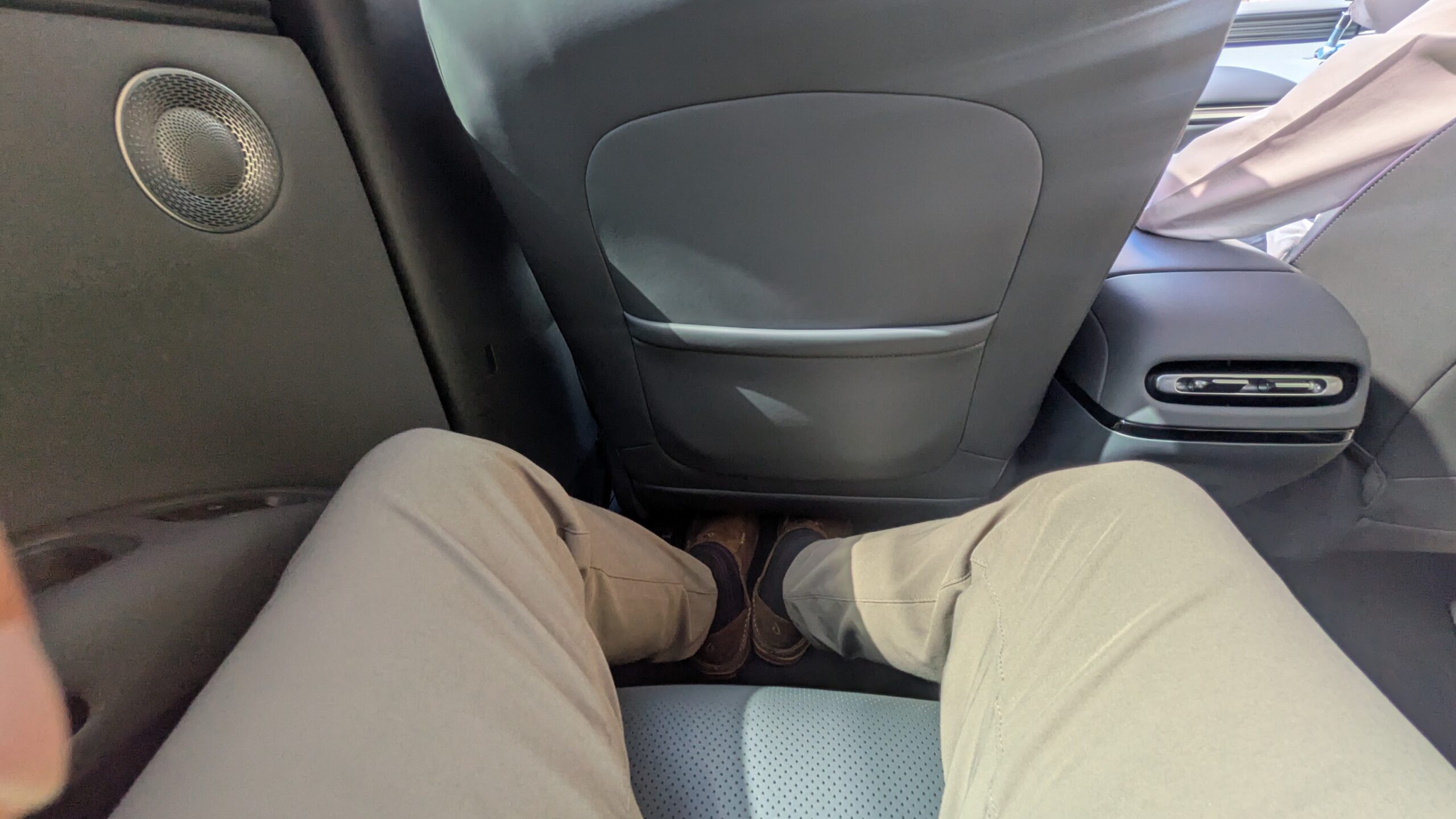
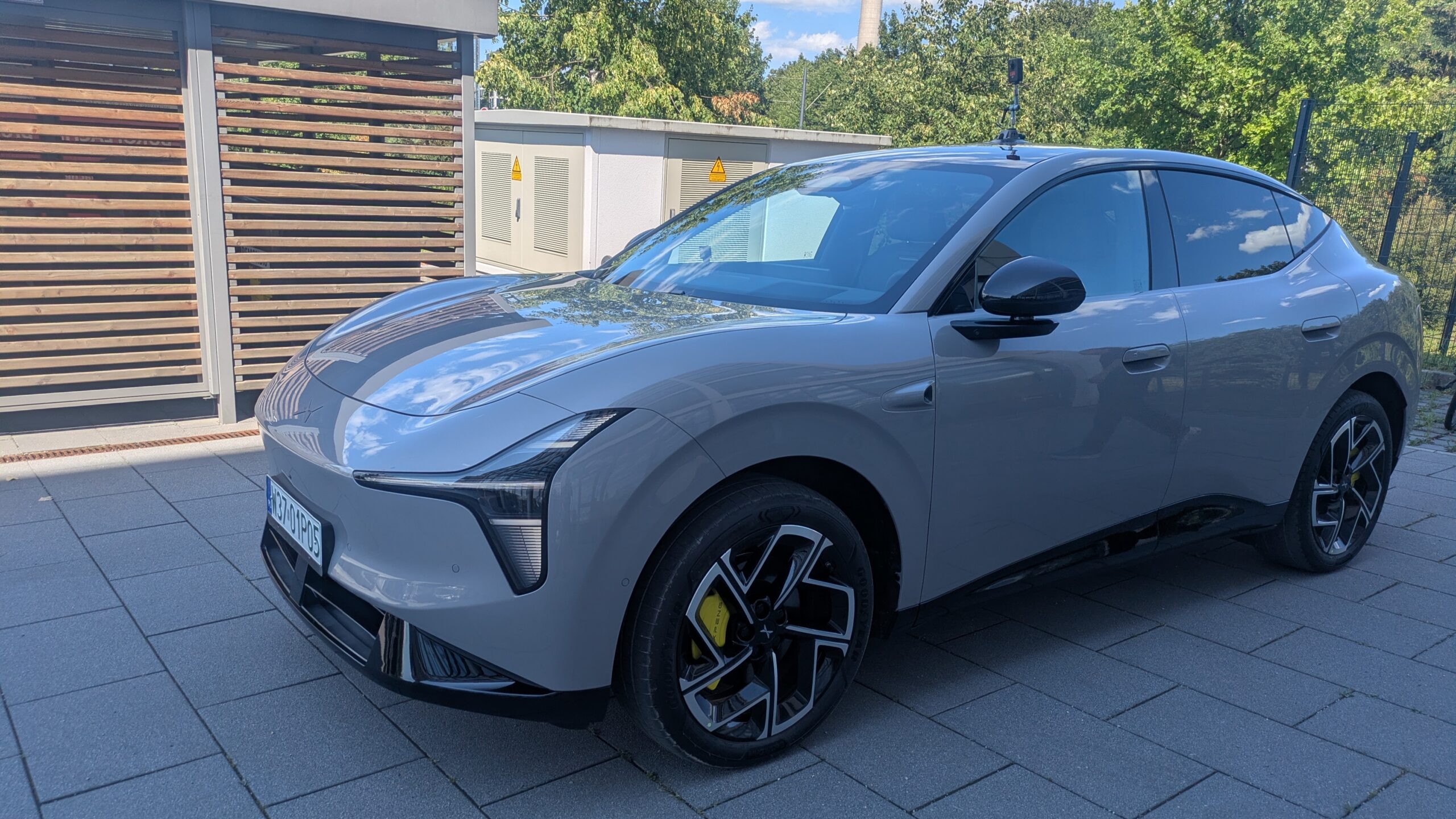
Our test vehicle was an AWD L03 Ultra, which offers 0-100 km/h in 4.5s, although we were not able to sample the full acceleration on this test. This vehicle is a little shorter overall has shorter overhangs than a Model Y, but a larger passenger compartment. Comfortable for four full-sized men, even those wearing cowboy hats. I was accompanied on the test by Matt and Stefan from XPENG, as well as EV expert and longtime CleanTechnica friend Roger Atkins.
My initial impressions were that the drive was a bit overly cautious. However, I found out that this is largely due to the initial test drivers being overly cautious driving one of the first prototype vehicles on the continent. As the human drivers become more confident, the system will also feel more confident.
I also found it interesting that if the human drivers direct the car to break a rule, like parking on the sidewalk, the car will follow the driver. By default, the car will drive below the speed limit. However, if the driver presses the accelerator while the system is engaged, the car will follow their lead and maintain that speed without disengaging. As I mentioned on the ride, the system takes the hint without leaving the room.
The system also seemed cautious with pedestrians and bicycles. It stopped as pedestrians approached intersections and yielded to e-bikes. It did not lock up or feel confused, but it was less assertive than in China. Much of this has to do with differences in German right of way laws.
However, beyond the laws, there are unwritten rules in different driving circumstances. Will people let you cut in or expect you to let them cut in? What will scooters do? What are the proper emergency procedures?
There was one necessary takeover during the drive. We were in a single lane with curbs on both sides. An ambulance came up behind us, and the driver took over to drive over the curb, up onto the sidewalk to let the ambulance pass. It was an interesting edge case, as driving up onto the sidewalk is typically illegal, but necessary to let the emergency vehicles pass. Most people in NYC would not do this. However, it is expected in Germany. As this was logged, the system has already learned from that experience. The other optional takeover was to pull over to let me and Roger switch places in the car.
To be clear, this was a Beta test, not the final version. As mentioned by several people testing the system, it seems to improve noticeably each day. I mentioned that it is somewhat like a concert musician learning a new instrument while they are performing. Overall, the system felt smooth and humanlike, if not quite yet to the same level of confidence seen in China. Almost too reassuring for a beta test, making it easy for the driver to let their attention stray from driving. Of course, driving in Munich is significantly different than driving in Athens or Naples, and it will be interesting to see how the system learns in different environments. It will also be interesting to see how it learns to drive in winter conditions.
Compared to my first experience driving myself in Germany a couple of decades ago, I can honestly say that VLA 2.0 drove better than I did. I remember my first time being confused by different road signs and lane markings. I still find myself confused at times about who has the right of way in different circumstances. I could see the system becoming helpful for people driving on unfamiliar roads.
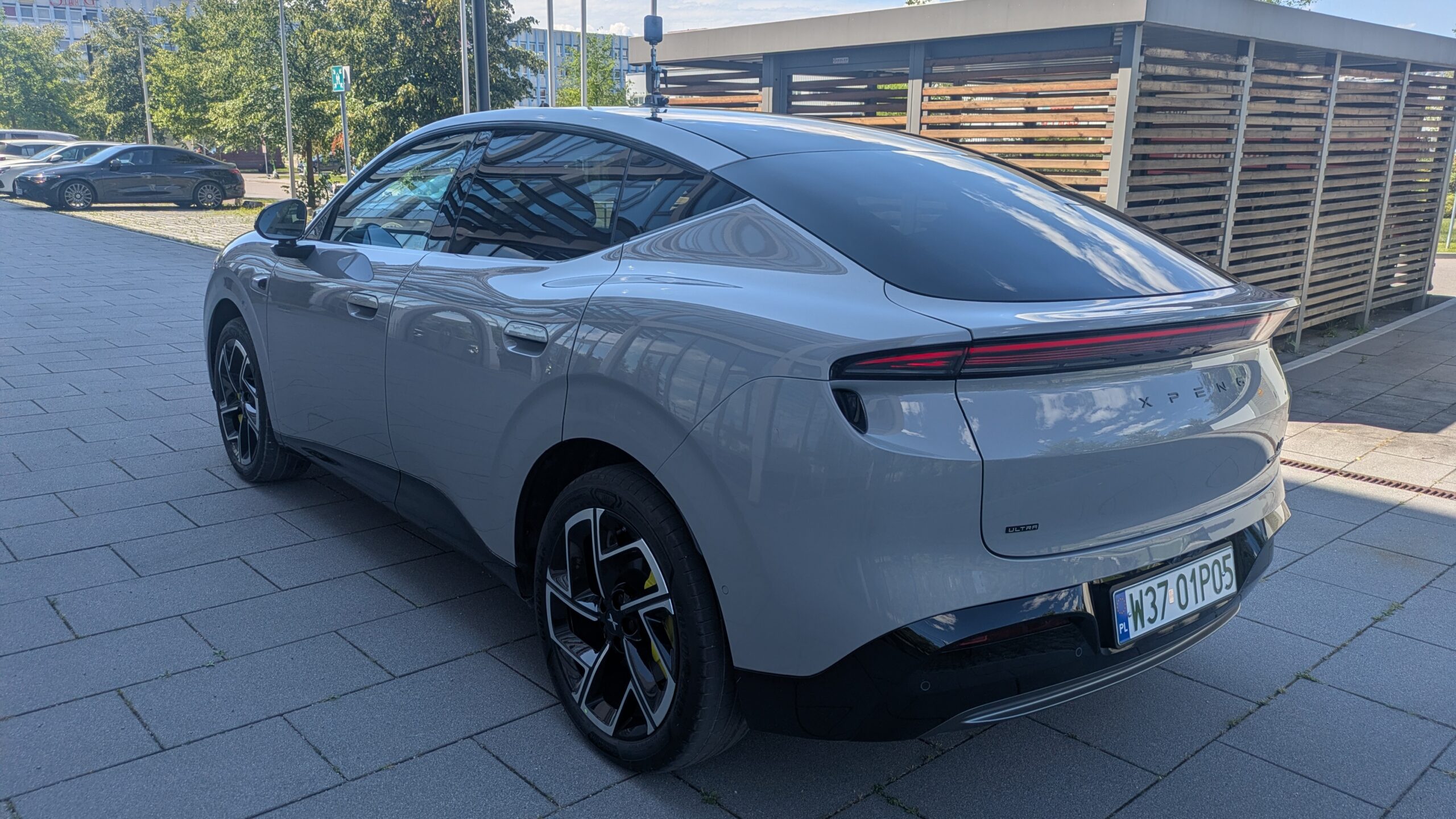
In self-parking, the system can pick different spots and orientations, even where there isn’t an officially lined parking space. We were able to easily turn around in a very tight area with a relatively low, narrow bike rack. Having the ultrasonic sensors undoubtedly helped in this situation, and reassuringly displayed distances to obstacles while maneuvering.
Beyond the self-driving, the car was quiet and rode smoothly. The suspension, adapted for the European market, was a bit firmer than many Chinese market vehicles. More like the sporty Next P7 than the more comfort-oriented P7+. The forward view, frameless mirrors, visible fenders and short overhangs made it seem easy to place on the road. Even though the intelligent driving seemed more than capable, I really wanted to drive it myself.

Potentially The First Global Intelligent Driving System
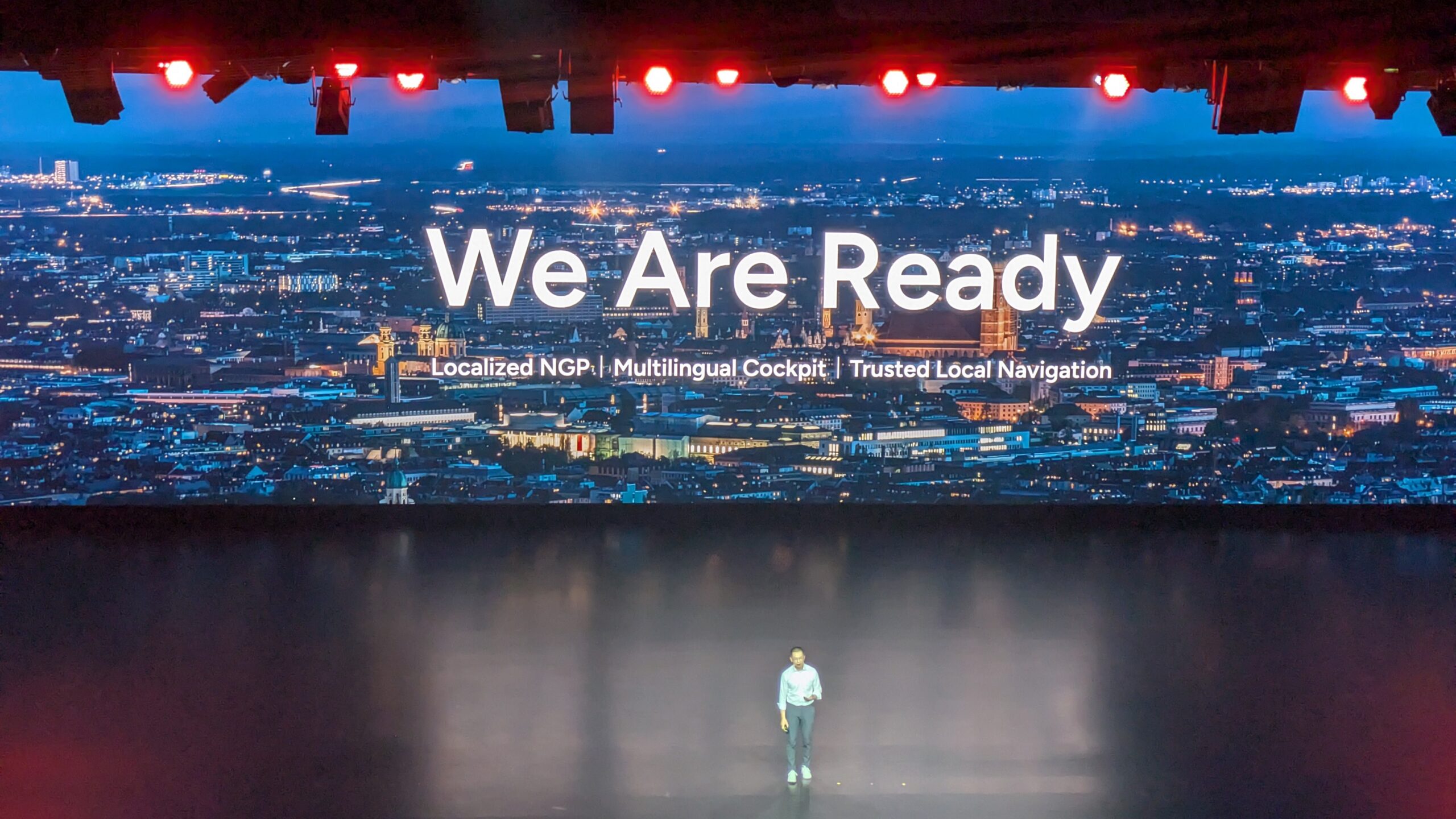
XPENG designed the system from the start to meet global regulations. Not just current regulations, but also proposed regulations. When asked why they removed LiDAR from the system, one of the justifications was based on different regulations around LiDAR in different markets, which would require changes to the system. They wanted one system that can work everywhere without needing modification.
That also meant taking data privacy concerns very seriously. China already has strict laws that prevents companies like Tesla, which uses more centralized data collection, from offering full FSD. XPENG also wanted to be well within proposed global regulations. Data for Europe is kept within Europe and human interaction with the data is limited. Human beings are taken out of the process to such an extent that they said they can’t fully explain exactly how the system is making decisions.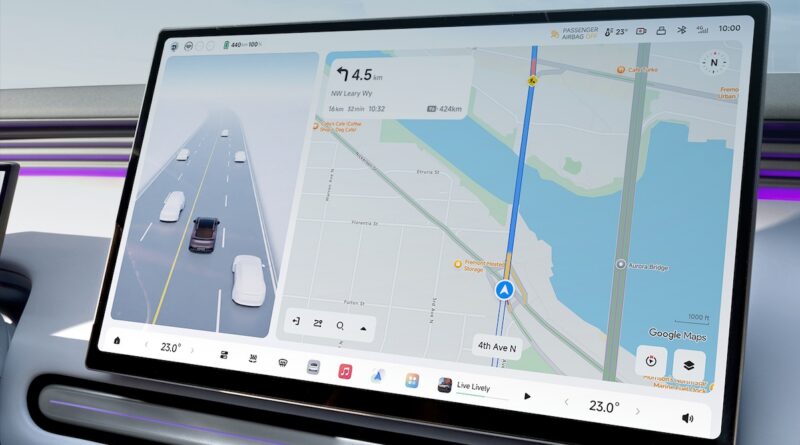
One of the big announcements is the integration of Google Maps data. Google data then feeds XPENG’s interface and systems. While the vehicle does not rely on high-resolution maps for navigation, it will integrate Google data in the future, such as lane information and road closures. This will let it anticipate the preferred lane or the preferred route in advance of getting to an intersection. The beta test currently relied on road signs and markings to know which lane to be in, and the data integration should make the system even smoother.
Due to the wealth of data from roughly two billion phones globally, Google Maps stays updated regularly. There is no need to remap the world. By using western data, regulatory concerns are also minimized.
This isn’t a case where a company does whatever it wants and then tries to shape policy to their will. XPENG designed their system from the start to operate well within proposed regulations. That likely made initial development more difficult, but it is starting to pay off now.
XPENG anticipates that they could be the first company to offer a system that fully complies with the new UN DCAS (Driver Control Assistance Systems) regulations, which harmonize intelligent driving regulations across global markets.
Ready For Global Growth
XPENG claimed in one of the workshops that 69% of drivers in China now consider intelligent driving a must. And that preference is being reflected in sales. According to an official from China’s MIIT, L2 intelligent driving and higher has reached 70.5% market share in China, with navigation-on-autopilot (NOA) accounting for 34.2% of new vehicle sales. In other words, more cars are now being sold with L2 ADAS or higher in China than total car sales in the US or EU. More cars sold in the last quarter with NOA included than Tesla has total active FSD subscriptions. In that environment, the competition for the best intelligent driving system is fierce.
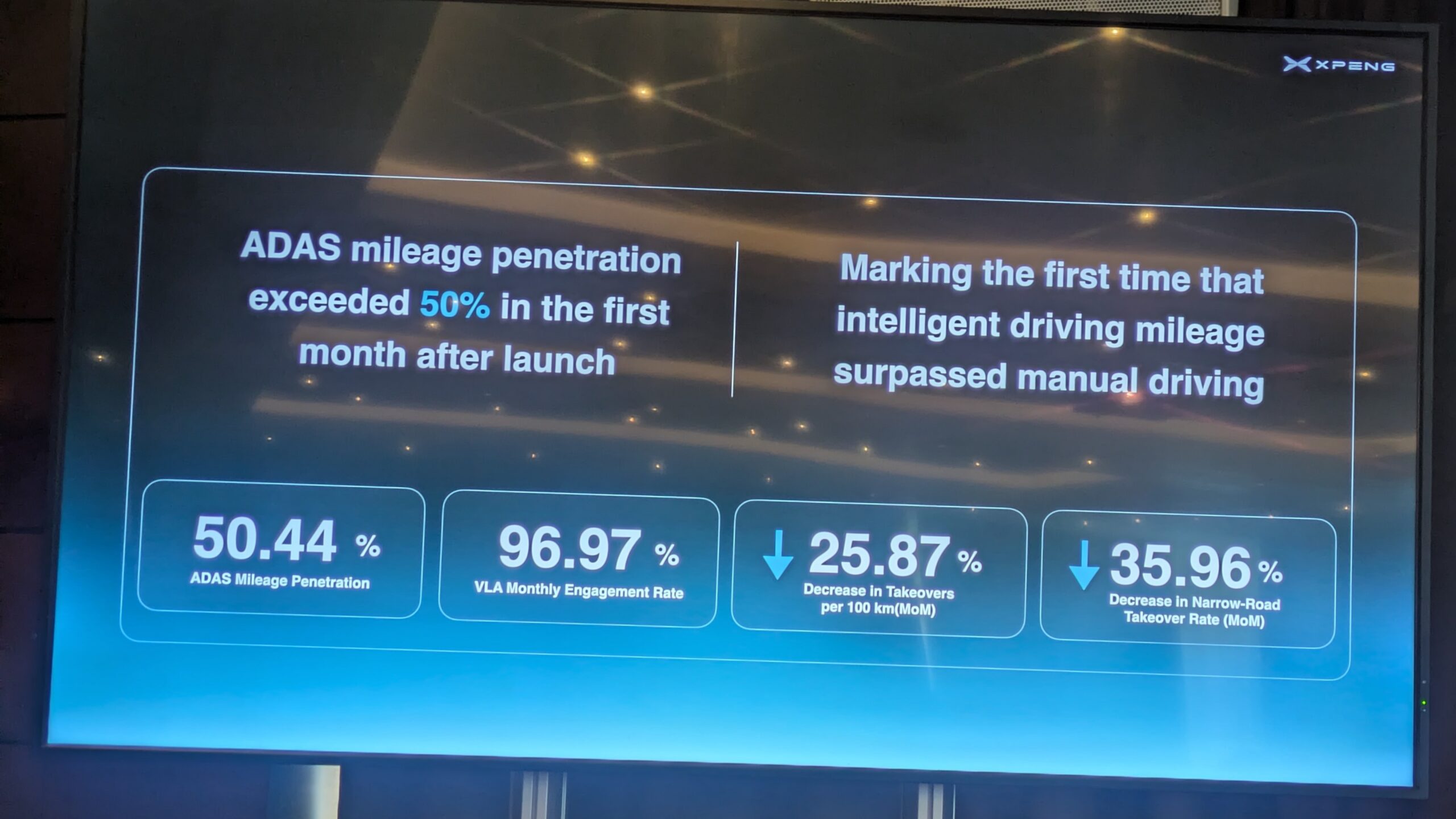
XPENG is striving to lead the pack and has one of the smoothest and most human-like experiences. That inspires confidence in drivers to use the system. On current XPENG vehicles, 50.44% of miles are now driven on ADAS with a 96.97% monthly engagement rate.
From that base, combined with a smart and secure approach to localization, XPENG is well positioned for global intelligent driving technology leadership. Of course, we are not likely to see it in the US in the near term. However, XPENG said that they do have Canada and North America in their long-term plans.
In addition, a Robotaxi is being introduced based on XPENGs GX with no modifications to the premium vehicle. Having this pull up as your ride would feel like a first-class upgrade compared to the typical taxi. While employees are currently getting rides in Guangzhou, it is scheduled to go into commercial operation this year, with broader rollout in 2028.
Intelligent driving is rapidly poised to take over what I like to call “chore driving.” The kind of driving that nobody likes to do. That could take a lot of stress out of trips. However, by removing driving frustrations, it also has the potential to make driving more enjoyable again. I really wanted to drive the L03, even if I could see the system ending up driving much of the time. That dynamic could change how people use intelligent driving, as well as how they use their car overall.
Sign up for CleanTechnica’s Weekly Substack for Zach and Scott’s in-depth analyses and high level summaries, sign up for our daily newsletter, and follow us on Google News!
Have a tip for CleanTechnica? Want to advertise? Want to suggest a guest for our CleanTech Talk podcast? Contact us here.
Sign up for our daily newsletter for 15 new cleantech stories a day. Or sign up for our weekly one on top stories of the week if daily is too frequent.


CleanTechnica uses affiliate links. See our policy here.
CleanTechnica’s Comment Policy