
Test Drive: BYD eMAX7 & the Quiet Shock of an Electric Future for the Soccer Mom


Support CleanTechnica’s work through a Substack subscription, on Patreon, or on Stripe. Help us produce all of the high-quality, original content we publish week after week despite the challenges of content-scraping AI, antisocial media, inflation, and other hurdles.
There are test drives you walk into with expectations, and then there are test drives that quietly ambush you. The BYD eMAX7 belongs firmly in the second category.
Visually, it does not promise much. The exterior is plain and conservative, shaped like a sleek utilitarian tool. Aside from the three-letter badge, nothing about its design will raise your heart rate. It looks like a standard mom-mobile designed for practical buyers who want seven seats without a fuel bill.
The moment you press the accelerator, however, the eMAX7 stops behaving like a sensible people-mover. Instead of lumbering forward like a school bus, the instant torque hits with a clean, silent shove. In Manila traffic, where agility is survival, it behaves like a compact EV that swallowed a living room, darting into gaps and responding instantly to throttle inputs.
Out on the South Tagalog Arterial Road and Balete Highway, the eMAX7 settles into a calm rhythm. The ride is composed and stable. Though, higher speeds reveal the tall body and soft, family-oriented suspension. There is a slight lightness to the movement—a reminder that this is a cruiser built for comfort rather than Autobahn heroics.
The silence inside the cabin is almost disorienting. The absence of engine noise is so complete that you hear the faint hum of tires, the rush of air, and the subtle creak of your own seat. Once you adapt to the lack of noise, vibration, and harshness, the quiet becomes a genuine luxury that keeps long drives calm.
That focus on comfort extends to the control inputs. The steering is light and effortless for parking or tight city U-turns, though it lacks the feedback driving purists crave. The suspension is tuned to absorb broken pavement, handling potholes with relaxed confidence. Crucially, when fully loaded with six passengers, the chassis remains intact without sagging or bottoming out, reflecting engineering tailored for real-world Asian family usage.
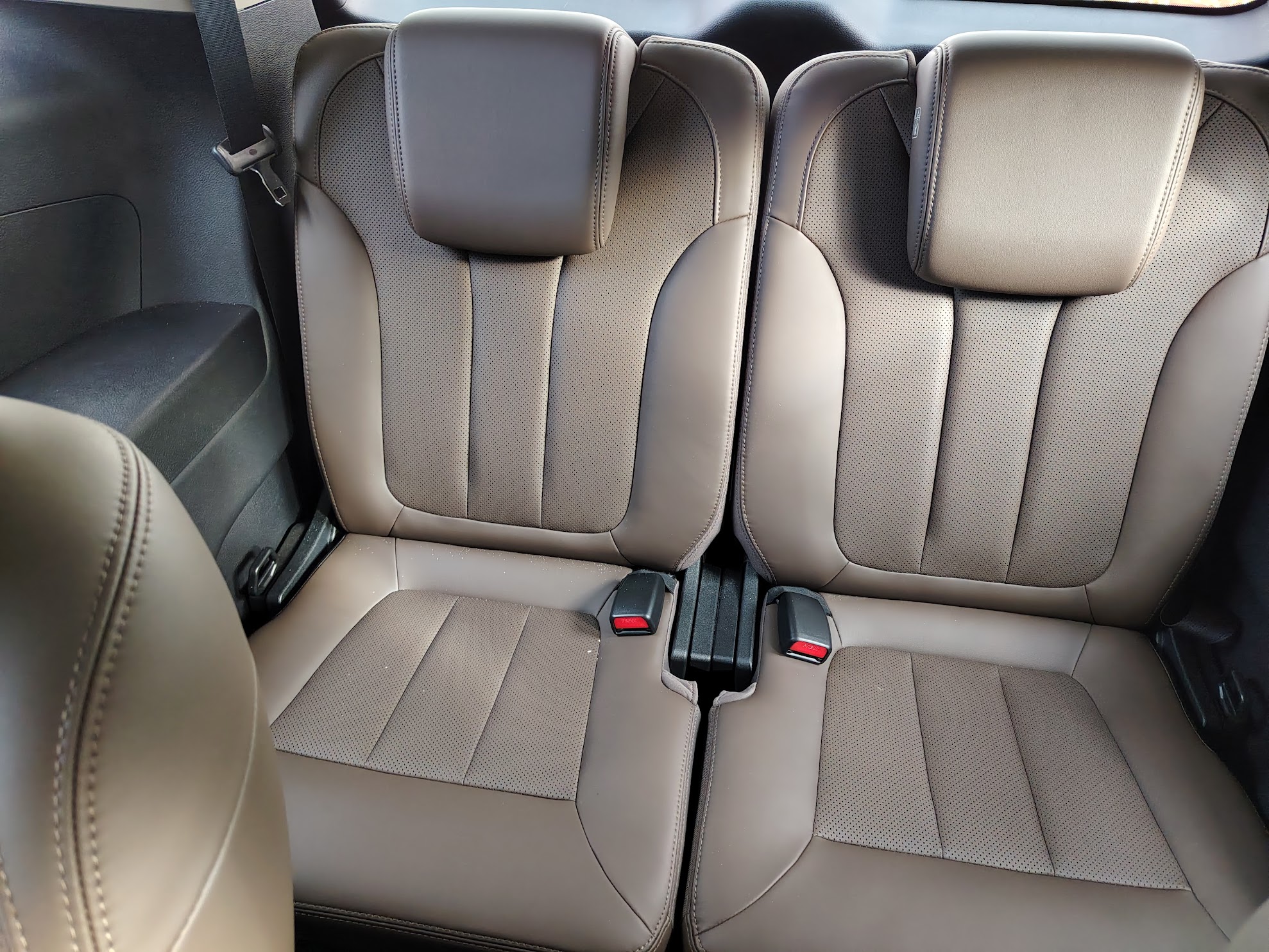
Inside, the cabin layout is modern and open, anchored by a massive dashboard display that operates essentially like a giant, responsive Android tablet. While technically labeled a seven-seater, practical space has limits: the rear bench accommodates two adults comfortably, or three if they are children or very forgiving.
Charging brings the narrative back to local infrastructure realities. Public charging in the city is generally smooth. However, queuing space is frequently occupied by plug-in hybrid electric vehicles that do not strictly depend on public fast chargers. At home, standard extension setups fall short, as the vehicle charger requires a dedicated 60-amp socket—a reminder that EV ownership in the Philippines involves assessing home wiring built long before electric cars existed.
The BYD eMAX7 is not perfect, but it challenges expectations. It accelerates with unexpected vigor, rides with quiet confidence, and offers space that feels deliberately designed for daily utility. Stepping out of it creates a familiar conflict for the modern EV advocate: genuine desire for the technology, tempered by the reality of affordability.
Sign up for CleanTechnica’s Weekly Substack for Zach and Scott’s in-depth analyses and high level summaries, sign up for our daily newsletter, and follow us on Google News!
Have a tip for CleanTechnica? Want to advertise? Want to suggest a guest for our CleanTech Talk podcast? Contact us here.
Sign up for our daily newsletter for 15 new cleantech stories a day. Or sign up for our weekly one on top stories of the week if daily is too frequent.


CleanTechnica uses affiliate links. See our policy here.
CleanTechnica’s Comment Policy