


Support CleanTechnica’s work through a Substack subscription, on Patreon, or on Stripe. Help us produce all of the high-quality, original content we publish week after week despite the challenges of content-scraping AI, antisocial media, inflation, and other hurdles.
So much to share with you. First, we have the overall picture from the Australian Energy Market Operator’s (AEMO’s) latest Quarterly Energy Dynamics (QED) report. As gentailers increase their charges to stay profitable, Australia is producing record renewable energy output. Couple that with the number and size of domestic batteries and we have the lowest wholesale electricity prices in the National Electricity Market (NEM) since 2020.
It is no surprise then that coal generation fell 5% and gas by 30%. These are the lowest quarter 2 averages since 2003. Year on year, renewables grew 37.1% (wind 20%, grid-scale solar 12%, and rooftop solar 7%). Despite this progress, Bloomberg New Energy Finance doubts that Australia can reach its target of 82% renewable energy by 2030, due to grid connection delays and permitting challenges. Bring it on, BNEF — we love a challenge. I have found that BNEF forecasts have been consistently wrong, underplaying innovation and progress.

“During the quarter in the NEM, 14 new generation and storage projects totalling 3.9 gigawatts (GW) were commissioned to full output, while household battery capacity grew by 3,283 megawatt hours (MWh) or 41%. Grid-scale battery capacity more than doubled over the past year to exceed 9 GW.”
“Record renewable generation, combined with growing battery storage and consumer energy resources, continues to reshape Australia’s energy markets,” AEMO Executive General Manager of Policy & Corporate Affairs Violette Mouchaileh said. “These technologies are changing demand patterns, supporting system reliability and increasing the amount of lower-cost energy available across the market,” she added.
Progress is patchy across Australia’s eight states and territories, with some local and state governments still placing obstructions in the way. Average wholesale prices fell 47% in the eastern NEM. As yet, these savings have not been passed on to customers, with some deciding to exit the grid — article in progress on this point.
Pressures on the grid continue to get more complicated. “How will the grid charge all those electric cars?” has been replaced with “how will the grid power all those data centres?” At present, 17 data centre projects are in the pipeline. They are expected to demand 9 GW of extra electricity. That’s about the same amount as is used by one of Australia’s more populous states. All this at a time when coal-fired power stations are failing.
Chris Bowen, Australia’s Minister for Climate Change and Energy, has gone on record to say that in the last three years, not one day has gone past without a breakdown in a coal-fired power station. Leading to his conclusion that coal is no longer baseline — it is too unreliable. Aging coal power stations lead to increased costs for the generators and consumers. You can watch a snippet of his speech to the Australian National Press Club here.
“Despite the loud attempts to ride the algorithms of social media to stop the transition, the quiet majority of Australians are simply getting on with it,” Bowen said.
Western Australia has a separate grid, so it deserves its own paragraph or two. Year on year, Western Australia has added 1 GW of grid-scale batteries and 288 MWh of residential battery capacity. What these figures don’t show is the massive transition to renewables in off-grid mining applications. Fortescue Metals is a good example, with electric trains, trucks, and heavy equipment running on renewable energy generated on private sites. Even fossil fuel advocates like Gina Rheinhart are turning to renewables as the cheaper alternative to diesel.
In Q2 2026, average real-time prices for electricity rose in Western Australia by 30%. Likely causes are that reduced wind generation and reduced coal-fired power meant a greater reliance on gas (up 27%). On the plus side, domestic gas prices fell on the East Coast. International prices remain high. Exporters are celebrating.
And some interesting news snippets: Rooftop solar and batteries are surging, with almost 340 MW of rooftop solar installed in July 2026. This represents a year-on-year increase of 43%. Many of these systems are coupled with a home battery — 46 MW in July alone.
As an example of the measures taken by the lunatic right, people living 800 km from a proposed big battery have managed to delay its development progress. However, good sense has prevailed and Ausgrid has received consent from the New South Wales Independent Planning Commission (IPC) to proceed. The 200 megawatt (MW), 431 megawatt-hour (MWh) battery will be built next to an existing sub-station, and right next to the M4 Western Freeway. Note that this is only 13 km from the Sydney CBD. I can understand people living next door to be NIMBY — but 800 km should be far enough away to avoid any catastrophe.
How can this happen? In NSW a project can be referred if 50 people object. Please note that only one objection came from someone living within 5 km of the proposed BESS site. The local fire services had no significant concerns about the location of the BESS. Construction is expected to begin by the end of the year.
And here is the sort of traffic jam I am happy to see. Live Traffic New South Wales warns motorists to plan their journey and allow extra time as 80-metre-long wind turbine blades are transported across NSW from the port of Newcastle to Uungula Wind Farm in the Central-West Orana Renewable Energy Zone — a distance of about 400 km using major highways. This is a designated “Over Size” route. The blades will leave Newcastle in the middle of the night to “minimise impacts” on traffic (perhaps an unfortunate turn of phrase, methinks). The process may take several weeks.
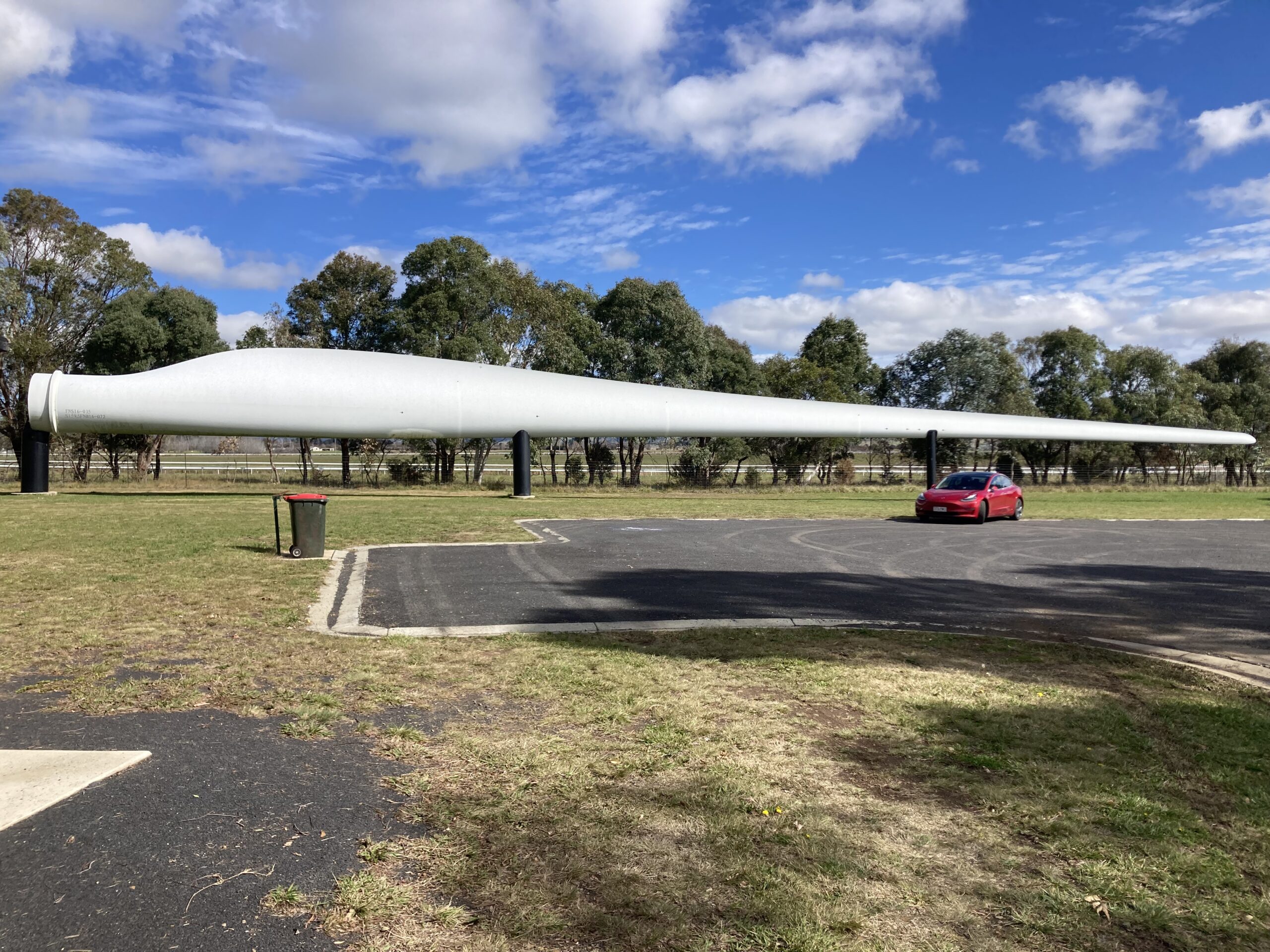
So, there you have it — overall progress; a challenge from BNEF; a defiant federal minister; and an energy sector working hard to transition while still making a profit and balancing the demands on the grid. It’s an exciting time to be able to eat popcorn and watch the show.
Sign up for CleanTechnica’s Weekly Substack for Zach and Scott’s in-depth analyses and high level summaries, sign up for our daily newsletter, and follow us on Google News!
Have a tip for CleanTechnica? Want to advertise? Want to suggest a guest for our CleanTech Talk podcast? Contact us here.
Sign up for our daily newsletter for 15 new cleantech stories a day. Or sign up for our weekly one on top stories of the week if daily is too frequent.


CleanTechnica uses affiliate links. See our policy here.
CleanTechnica’s Comment Policy