


Support CleanTechnica’s work through a Substack subscription, on Patreon, or on Stripe. Help us produce all of the high-quality, original content we publish week after week despite the challenges of content-scraping AI, antisocial media, inflation, and other hurdles.
This week, BYD launched new Seal 06 and Qin MAX mainstream midsized sedans. These models bring improved performance, upgraded technology and flash charging to the affordable sedan segment. However, they also bring up some questions about how the models compete with each other.
Mechanically, the new Seal 06 and Qin MAX are virtually identical. At 4870 mm long, 1890 mm wide and 1495 mm tall, the new Seal 06EV is 150 mm longer than the previous generation EV at 4720 mm long, which was the same length as a Model 3. Compared to a Camry, the Seal 06 is 45 mm shorter but 50 mm taller and 45 mm wider. So, it fits solidly into the midsized sedan segment. The Qin MAX dimensions are essentially identical, other than 4 mm shorter facias. However, despite increasing in size, power, range and equipment, the base models stay the same weight, while the top specs lose 5 kg.
Range increases from 545 km to 630 km for the top EV powertrain, while power increases from 160 kW to 240 kW (322 hp), sent to the rear wheels. Range increases from 470 km to 530 km for the base powertrain and power increases from 110 kW to 120 kW (161 hp). EV models also include a dual pivot front suspension, 5 link rear suspension and offer DiSus-C active damping.
In terms of performance, the EV models with the 120 kW motor go from 0-100 km/h in a leisurely 9.6 s. Models with the 240 kW motor take a more spirited 5.9 s. All DM-i versions accelerate to 100 km/h in 7.5 s.
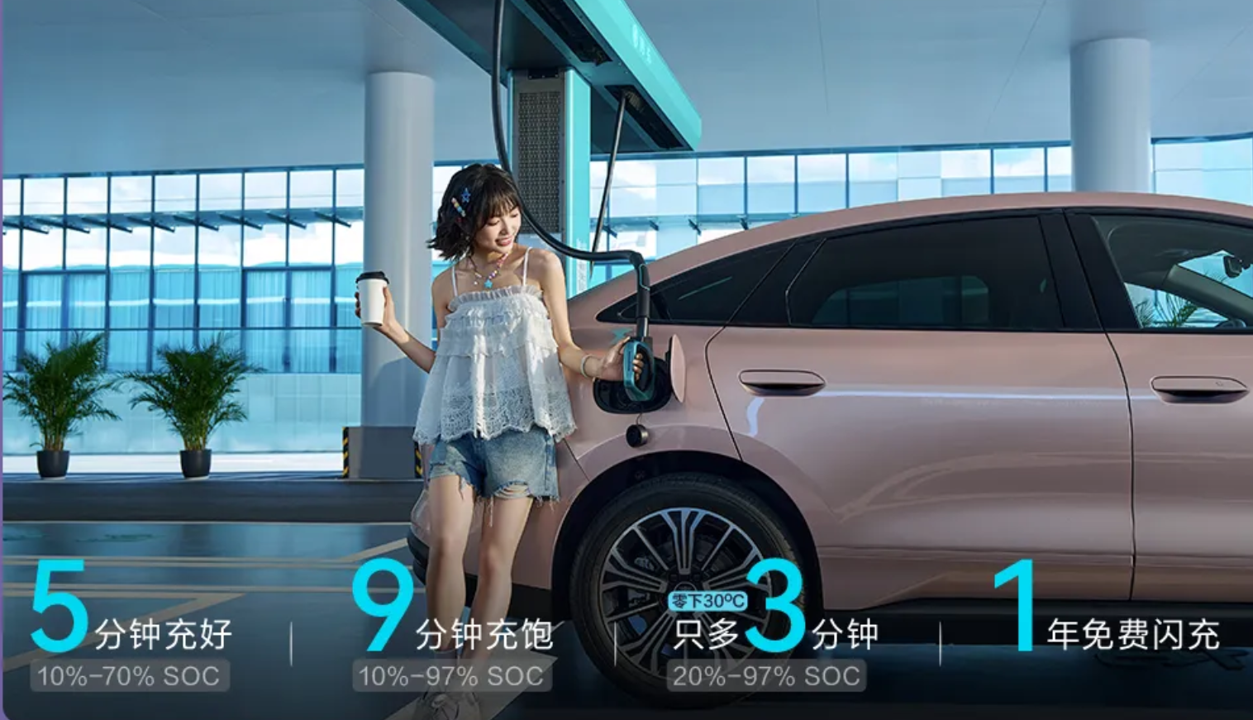
The highlight of all EV models is the second-generation Blade Battery and the ability to Flash Charge. That battery had previously been offered in more expensive models, but this is the lowest price vehicle so far. That means 10-70% in 5 minutes and up to 97% in 9 minutes. As these are LFP batteries, routine charging to 100% is recommended.
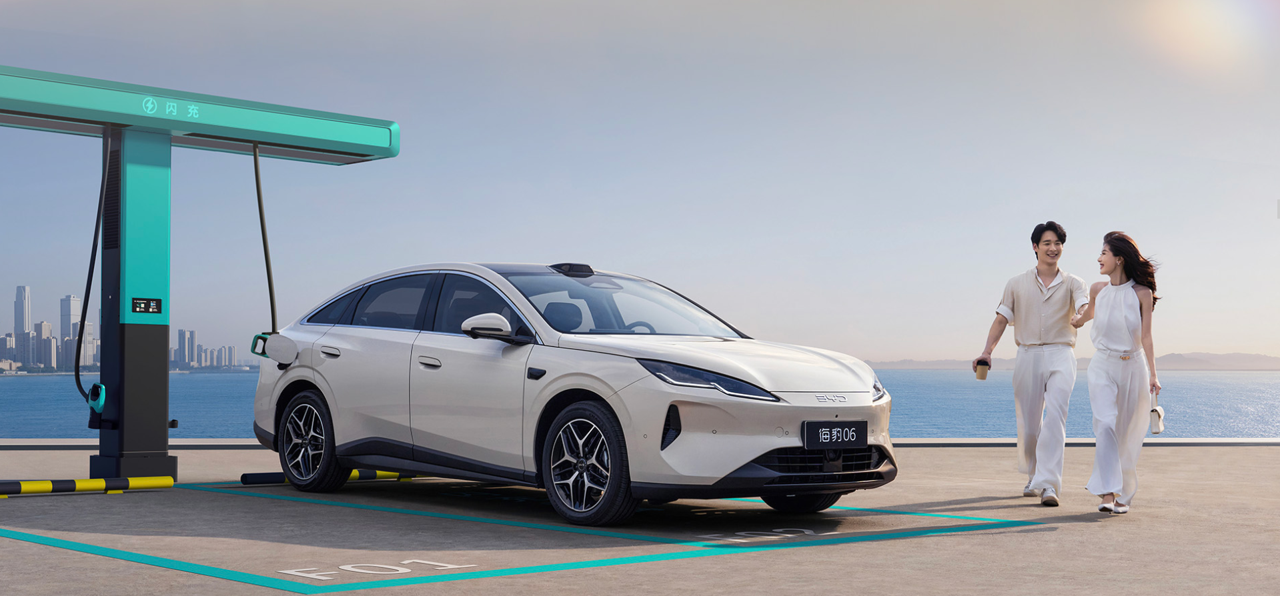
BYD currently has over 7000 flash charging stations in operation and plans to have over 20,000 by the end of the year in China. Each with multiple charging points. For comparison, according to AFDC, there are currently 4733 DC charging stations with the NACS plug in the US. In collaboration with Sinopec, the station count is set to increase significantly. These are not just charging points added to filling stations, but former gas stations converted to charging stations with the associated convenience amenities. A similar partnership with Shell is being developed, as well as flash charging deployment at KFC locations. And that will be just a part of the 28 million charging points in China scheduled to be online by the end of the year, in addition to home charging. While the Seal 06 and Qin MAX do not have over 1000 km of range like some premium BYD models, when combined with the ability to conveniently charge as fast as gas cars can refuel, 630 km should be more than enough range for most people.
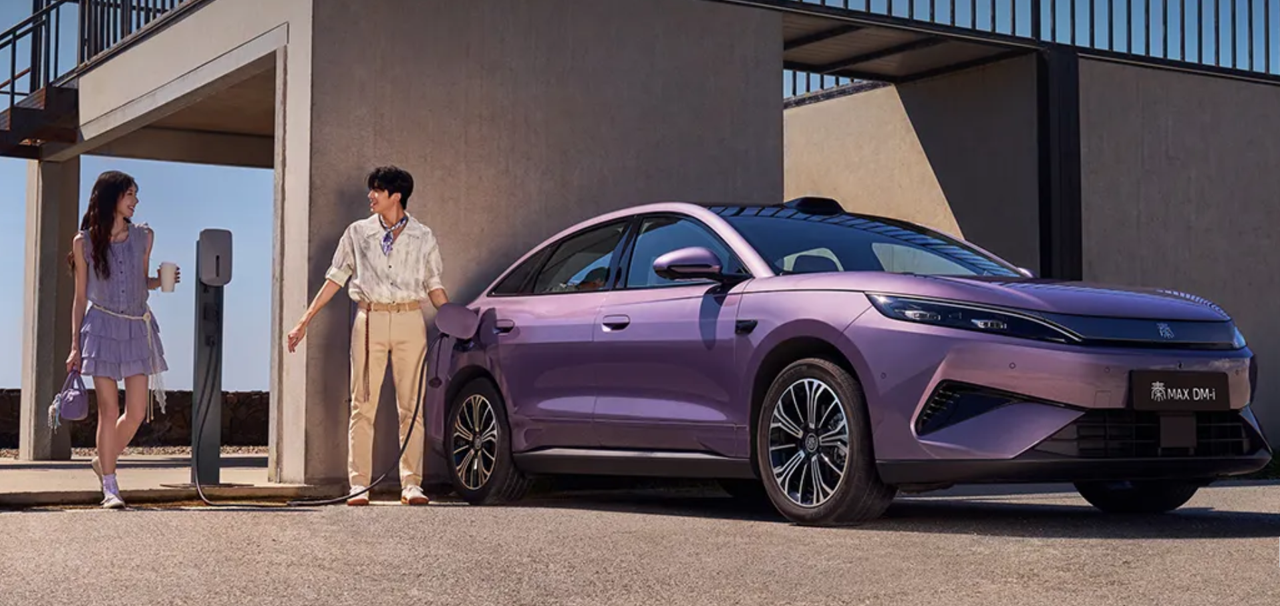
If that range isn’t enough, BYD also offers PHEV versions. Battery ranges are 230 km for the base model and 320 km for the top trim, up from 128 km and 210 km in the previous model. These EV ranges should be enough to keep regular driving under battery power. However, unlike some of BYD’s more premium DM-i models, the Seal 06/Qin MAX stick with the previous generation blade battery and offer a maximum charging rate of 48 kW for the base model and 74 kW for the longer-range version. Based on battery capacities of 25 and 34 kWh, respectively, charging would take over half an hour. That might not be out of line with what some existing EV owners are used to, but it makes owners less likely to fast charge during road trips. Clearly, BYD intends DM-i drivers to use the range extender on long trips with fuel economy rated at 2.59l/100km (~91 mpg) and a total combined range up to 2370 km (1472 miles). That makes is the longest total range of any vehicle globally, according to BYD. It is enough to drive from my home in Queens to Key West, New Orleans or Fargo without refueling. Far enough to drive from London to the Algarve. Completely unnecessary total range. I have a feeling that customers will eventually realize this, forget about those range numbers and then focus on other attributes. I could see a refresh adding flash charging and a little more battery range but losing a bit of the total range.

Some automakers are struggling with new Chinese intelligent driving regulations. However, BYD announced that all versions of God’s Eye already outperform the new national standard in China.

Competing With Each Other
Overall, the Qin MAX and new Seal 06 represent a level of product consolidation. The cars they are replacing had different bodies and interiors for the BEV and PHEV versions. The new cars share the same bodies and interiors across powertrains but differ significantly under the skin. BEV models put the motor in the rear and offer a frunk up from, while the PHEV models are front wheel drive and have a different suspension.
However, between the Qin MAX and Seal 06, the differences come down largely to styling, although there may also be some differences in software and tuning. We would have to drive them to know for sure. However, the styling choices are interesting.

In China, BYD cars are broken up into Ocean series, named after ocean animals, and Dynasty series, named after historic Chinese dynasties. Each has different dealer networks. Traditionally, BYD’s Ocean series cars, like the Seal 06, have been positioned as more youthful compared to Dynasty series vehicles, like the Qin MAX. However, the Seal 06 added more traditional silver trim around the windows, not found on the previous generation or other Seal models. The top Qin MAX does away with the silver trim, but it replaces Qin L models that had chrome trim around the windows. While it may be a small detail, it isn’t the only detail that indicates a shift in positioning.
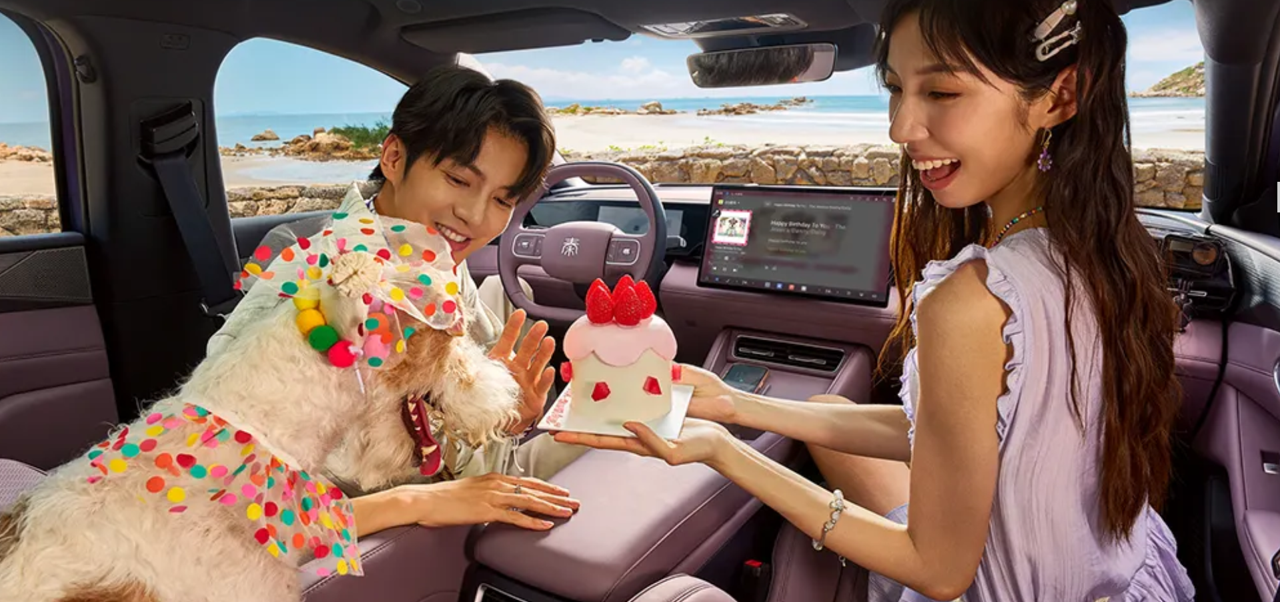
On the interior, the Qin MAX adopts the latest 2-spoke steering wheel with intelligent driving paddle shifter controls, shared with the Yuan Plus. Meanwhile the Seal 06 has a more traditional 4-spoke design. The Qin MAX interior highlights threaded attachment points and multiple bag hooks, which they claim are popular with young customers. The Qin MAX also offers more vibrant exterior colors and the option for a “low saturation purple” interior.

In their sales presentations, the Qin MAX seemed to focus on young single people. Meanwhile the Seal 06 seemed focused on young professionals and families. More emphasis was placed on performance in the Qin MAX presentation, while the Seal 06 focused more on comfort. The Qin MAX also prominently featured animals and animated characters associated with the infotainment system. It should be noted that “young” new car buyers are truly young, often in their early 20’s. This helps to explain some of the almost child-like cultural references. Meanwhile, that buying age bracket is largely non-existent in the US new car market, with the average car buyer in their mid-50’s. I would not expect BYD’s Chinese marketing to carry over to many older auto markets.
However, this direction is different than other cars in their lineups. For example, the new Seal 08 has a sportier appearance with black trim while the new Han (aka, Da Han) has far more brightwork and elegant styling with a focus on comfort.
The two cars also have essentially identical pricing, ranging from 99,900 RMB ($14,815) for the entry DM-i up to 155,900 RMB ($23,112 USD) for the top spec EV with LiDAR-equipped God’s Eye B. So, they are also going after the same price bracket. We’ll get more into affordability and value in Part 2.

It all begs the question: with all the consolidation, why keep two sub-brands of essentially the same model? If BYD were to combine similar Qin and Seal models or Song and Sealion models, those vehicles would easily top the sales charts. And they could further improve economies of scale. If you have ever worked within a brand portfolio of a major corporation, internal politics can become a challenge. Different competitive brand managers often want to have products that cover every segment that their coworkers on other sub-brands also target. However, there needs to be some differentiation and discipline to avoid cannibalization and wasted resources.
If the different sub-brands appeal to different customers, then the different sub-brands have value. But there should be some level of consistency and differentiation to set sub-brands apart. I could see the desire for the Qin to break away from its car service image, now that BYD has another brand dedicated to that market. But the model differentiation should have some reason behind it. Without that, consumers can get confused.
Sign up for CleanTechnica’s Weekly Substack for Zach and Scott’s in-depth analyses and high level summaries, sign up for our daily newsletter, and follow us on Google News!
Have a tip for CleanTechnica? Want to advertise? Want to suggest a guest for our CleanTech Talk podcast? Contact us here.
Sign up for our daily newsletter for 15 new cleantech stories a day. Or sign up for our weekly one on top stories of the week if daily is too frequent.


CleanTechnica uses affiliate links. See our policy here.
CleanTechnica’s Comment Policy