
India Collaborates with Japan to Reduce China’s Dominance in EV Battery Supply Chain

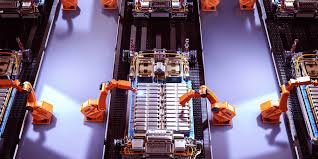
India is engaging in high-level talks with Japanese firms to diversify its electric vehicle (EV) battery and critical mineral supply chains. This initiative aims to reduce reliance on China, which currently dominates the global battery material and manufacturing sector.
Strategic Discussions in Delhi
Over a dozen leading Japanese companies, including Panasonic, Mitsubishi Chemicals, Sumitomo Metals and Mining, Asahi Kasei, and Nichia, are meeting with Indian counterparts in New Delhi. These discussions, organized by Japan’s Battery Association of Supply Chain (BASC), focus on forming partnerships with Indian companies such as Amara Raja and Reliance. The aim is to establish joint ventures for lithium-ion battery production and sourcing of critical minerals like lithium and graphite.
Diversifying the Battery Ecosystem
The talks are centered around creating a resilient, multi-country supply chain that includes:
-
Joint research and development in battery technologies
-
Shared processing infrastructure for refining critical minerals
-
Co-manufacturing battery cells and energy storage systems in India
This diversification effort aligns with India’s broader goal to become a global hub for EV production and battery storage technologies.
China’s Market Control
China currently accounts for about 80% of global lithium-ion battery production and controls nearly 90% of the world’s rare earth magnet exports. This monopoly extends across the entire value chain—from mining and refining to battery cell production—making it difficult for other nations to compete without significant collaboration and investment.
Challenges and Expert Views
Experts suggest that while Japanese firms bring advanced capabilities in battery chemistry and hybrid systems, the upstream layers such as mining and refining remain largely under Chinese influence. Without robust investment in domestic mining and secure overseas mineral assets, India will continue to rely on China for critical battery inputs.
Domestic Cost Pressures
Indian battery manufacturers are grappling with cost disadvantages. Companies like Amara Raja, Exide, and Reliance are expected to produce battery cells at prices 20–30% higher than Chinese imports due to dependency on imported raw materials and limited local refining capacity. Even with new domestic gigafactories expected to become operational by FY27, achieving cost parity with China remains a formidable task.
Policy Measures and Incentives
To counter these challenges, the Indian government has rolled out several supportive policies:
-
A ₹18,100 crore Production Linked Incentive (PLI) scheme to support battery manufacturing
-
Extension of zero customs duty on capital goods for battery production through 2029
-
A national target of installing 100 GWh of domestic battery capacity by 2030
Although progress under the PLI scheme has been slower than expected, the policy environment indicates strong governmental intent to develop a competitive domestic battery industry.
India’s partnership initiatives with Japanese battery and materials firms mark a strategic pivot toward supply chain diversification in the EV sector. While the collaborations can provide vital technological and commercial momentum, India must also focus on securing upstream resources and refining capabilities to achieve genuine supply chain independence. With the right mix of policy support, international alliances, and domestic investment, India could emerge as a formidable force in the global EV battery ecosystem.