

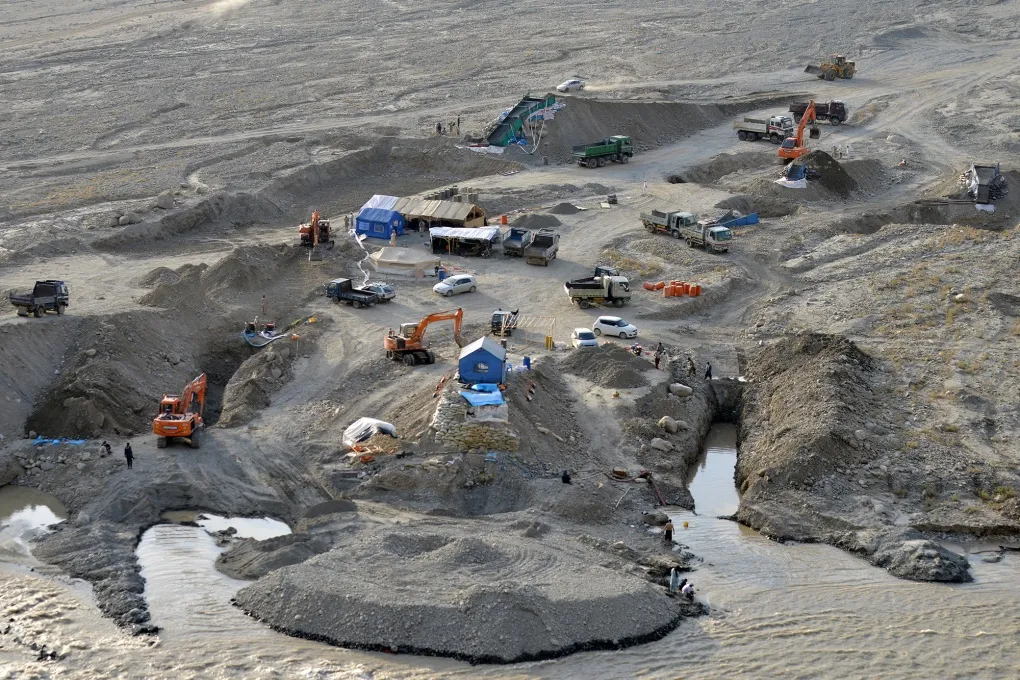
Afghanistan’s Foreign Ministry announced that China is keen to integrate Afghanistan into its Belt and Road Initiative (BRI), a global infrastructure and investment program aimed at enhancing connectivity across Asia, Africa, and beyond. This development follows high-level talks in Kabul between Chinese Foreign Minister Wang Yi and Afghanistan’s acting Foreign Minister Amir Khan Muttaqi. The discussions, which also covered mining cooperation, signal China’s strategic interest in Afghanistan’s mineral wealth and geopolitical position, this article explores the context, implications, challenges, and opportunities of Afghanistan’s potential BRI participation, drawing on recent developments and regional dynamics.
Details of the Announcement
Kabul Talks
-
Meeting Overview: On August 20, 2025, Wang Yi met with Muttaqi and Taliban Prime Minister Mohammad Hassan Akhund in Kabul to discuss expanding bilateral cooperation. The Afghan Foreign Ministry reported China’s interest in Afghanistan’s formal BRI participation, with Wang pledging to initiate mining projects in 2025.
-
China’s Commitments: Wang emphasized deepening political trust, trade, and agricultural cooperation, while urging Afghanistan to combat militant forces to ensure security for economic projects. China, the first country to appoint an ambassador to Taliban-ruled Afghanistan in 2021, aims to support long-term stability.
-
Taliban’s Perspective: The Taliban views BRI participation as a pathway to economic development and international legitimacy, with Acting Commerce Minister Haji Nooruddin Azizi previously expressing interest in joining the China-Pakistan Economic Corridor (CPEC), a flagship BRI project.
Historical Context
-
Prior Engagement: Afghanistan has been involved with the BRI since 2016, when a Memorandum of Understanding was signed during a state visit by then-Chief Executive Abdullah Abdullah. In 2023, China and Pakistan agreed to extend CPEC into Afghanistan, targeting infrastructure investments to aid reconstruction in the sanctions-hit nation.
-
Taliban’s Outreach: Since taking power in 2021, the Taliban has actively sought Chinese investment, with Azizi attending the 2023 Belt and Road Forum in Beijing to invite investors for mineral and infrastructure projects.
Strategic Importance of Afghanistan in BRI
Geopolitical and Economic Significance
-
Strategic Location: Afghanistan’s position at the crossroads of Central, South, and Southwest Asia makes it a vital hub for BRI’s connectivity goals, linking China to Europe, the Middle East, and South Asia. The northern, central, and southern BRI belts, including routes through Central Asia and Pakistan, rely on Afghan stability.
-
Mineral Wealth: Afghanistan holds untapped mineral deposits worth $1–3 trillion, including lithium, copper, and iron, critical for global supply chains. Chinese firms like Metallurgical Corp. of China (MCC) are eyeing projects like the Mes Aynak copper mine, dormant since 2008 due to security concerns.
-
Infrastructure Potential: BRI participation could fund transportation networks, energy infrastructure, and digital connectivity, addressing Afghanistan’s challenges like 70% electrification shortages and limited road networks.
Regional Dynamics
-
China-Pakistan Cooperation: The CPEC, valued at $60 billion, is a cornerstone of BRI, and its extension into Afghanistan could enhance regional trade. A proposed road through the Wakhan Corridor would provide China direct access to Afghanistan, bypassing Pakistan.
-
Global Context: The announcement aligns with regional trends, such as Zambia’s 2025 suspension of illegal Chinese mining operations, reflecting a broader push for regulated resource extraction. Similarly, the U.S. prioritizes domestic copper production through projects like Resolution Copper, highlighting global competition for critical minerals.
Challenges
Security Concerns
-
Militant Threats: Wang Yi urged Afghanistan to address “terrorist forces,” including Uyghur militants linked to the East Turkistan Islamic Movement (ETIM), a concern for China’s Xinjiang security. Past attacks, like the 2022 Kabul hotel bombing targeting Chinese businesspeople, underscore risks.
-
Instability: Afghanistan’s lack of governance and ongoing conflict, with 20% of its territory contested in 2025 per regional reports, complicates large-scale infrastructure projects.
Administrative and Legal Hurdles
-
Taliban Governance: The Taliban’s limited administrative capacity, coupled with international sanctions, hinders project implementation. Previous Chinese investments, like the Amu Darya oil deal terminated in 2012, failed due to transparency issues.
-
International Recognition: No country formally recognizes the Taliban, limiting Afghanistan’s access to global financial systems and complicating BRI funding.
Economic and Environmental Risks
-
Debt Concerns: Critics warn of BRI’s “debt trap” model, with countries like Sri Lanka facing repayment challenges. Afghanistan’s economic fragility, with a 2025 GDP of $15 billion, raises concerns about loan sustainability.
-
Environmental Impact: Mining and infrastructure projects risk ecological damage, as seen in Zambia’s Aruwimi River pollution, potentially fueling local opposition in Afghanistan’s resource-rich areas.
Opportunities
Economic Development
-
Infrastructure Growth: BRI projects could address Afghanistan’s infrastructure deficits, with investments like the 2016 Sino-Afghanistan Railway reducing trade costs by 30%. New roads and energy projects could boost GDP by 1–2% annually, per 2025 economic projections.
-
Job Creation: Mining projects like Mes Aynak could create 10,000 jobs, supporting local economies in provinces like Logar, mirroring Zambia’s Kalengwa Mine revival in 2024.
Geopolitical Benefits
-
International Legitimacy: BRI participation offers the Taliban a platform for global engagement, as seen with Russia’s 2025 recognition, potentially easing diplomatic isolation.
-
Regional Integration: Connecting Afghanistan to CPEC and Central Asian networks could enhance trade, with bilateral trade with China already at $1 billion in 2025, per Muttaqi’s statement.
Strategic Alignment
-
China’s Goals: Afghanistan’s inclusion strengthens China’s access to critical minerals and alternative trade routes, reducing reliance on maritime lanes like the Malacca Strait.
-
Global Influence: Successful BRI projects could position China as a leader in post-conflict development, inspiring other nations like the DRC to adopt similar models.