

Artemis Gold has announced board approval for an expanded Phase 2 (EP2) development of the Blackwater gold mine located in central British Columbia. EP2 represents a significant addition to processing plant capacity from the previously announced Phase 1A project, which is currently in construction, growing from an expected 8 Mt/y before the end of 2026 to 21 Mt/y before the end of 2028.
Once EP2 is in production, the Blackwater Mine is expected to produce an average of 500,000 to 525,000 ounces of gold for the first 10 full years. The EP2 investment decision is conditional upon receipt of formal confirmation of adequate hydro-electricity supply from BC Hydro, expected in early 2026.
The company estimates that EP2 will be completed at a capital cost of US$1.44 billion which compares favourably with prior expansion study estimates and industry benchmarks on a per tonne of throughput capacity basis (EP2 capital intensity $110 per tonne of additional annual throughput). EP2 is expected to be funded primarily from operating cash flows and is supported by the company’s strengthened balance sheet which provides financial flexibility to fund growth.
The strong gold price environment and the previously announced Phase 1A expansion have allowed the Company to optimise EP2 at a larger scale compared to the previous Phase 2 expansion plan in the 2024 Expansion Study. EP2 is based on the Blackwater Mine’s existing Proven and Probable Mineral Reserves as outlined in the 2024 Expansion Study and no changes have been made to the Mineral Reserve and Mineral Resource estimates.
EP2 increases gold production to over 500,000 ounces per year and economies of scale provide for lower unit operating costs, which will cement the Blackwater Mine’s position as one of the lowest-cost and highest-margin gold operations globally and transforms the mine into one of the three largest single gold mines in Canada. All-in sustaining costs (AISC) are expected to be in the range of US$800 to US$1,100 per ounce of gold sold in the next 10 years. At current spot gold prices of approximately US$4,200 per ounce, this translates into an AISC margin1 of over US$3,000 per ounce of gold sold, or approximately 75% margin on revenue.
Early works for EP2 are set to commence in January 2026, with major works construction scheduled to begin in Q3 2026 and continue for approximately two years. At peak construction, EP2 is expected to generate 1,500 direct construction jobs, plus additional indirect jobs and indirect and induced economic activity. This is in addition to the approximately 900 contractors and direct employees currently working at the Blackwater Mine to operate Phase 1. Once EP2 is completed, the Blackwater Mine is expected to employ approximately 1,200 direct employees and contractors.
Artemis Gold CEO Dale Andres commented: “The Blackwater Mine is a world-class, large-scale asset in a tier-one mining jurisdiction that is delivering low-cost production and strong cash flows. Our consistent long-term vision for the Blackwater Mine has been to grow low-cost production to at least 500,000 gold ounces per year through staged, capital-efficient expansions funded primarily by cash flow from operations. EP2 delivers on our long-term vision and now is an opportune time to embark on this next phase of growth. We have a strong and experienced team in place who successfully delivered Phase 1, and we have strong cash flows and a solid balance sheet that will allow us to build EP2 without diluting our equity holders.”
He added: “”We look forward to continuing to work collaboratively with our Indigenous partners, local communities and the provincial and federal governments to responsibly develop the Blackwater Mine. EP2 will expand the Blackwater Mine to be one of the largest gold mines in Canada and will generate significant economic and other community benefits for many years to come.”
Artemis Gold President Jeremy Langford commented: “The decision to proceed with EP2 is another major milestone for the company. Since achieving commercial production in May, we have been working diligently on optimising and right sizing the EP2 plant design to deliver the next stage of growth for the Blackwater Mine, in parallel with advancing Phase 1A design and construction. We are being disciplined in our approach to planning for the successful delivery of EP2, allowing for sufficient time through Q3 2026 to advance engineering and procurement together with early works activities which allow us to hit the ground running when major works construction activities are scheduled to commence in Q3 2026.”
The processing plant for EP2 has a design throughput capacity of 13 Mt/y, which combined with Phase 1A (8 Mt/y) will increase the total throughput capacity of the Blackwater Mine to 21 Mtpa. This compares to the 2024 Expansion Study which had a 9 Mt/y Phase 2 plant expansion, increasing design capacity to 15 Mt/y from the original Phase 1 design of 6 Mt/y.
The Phase 3 expansion to reach a 25 Mt/y processing rate, referenced in the 2024 Expansion Study, is expected to be largely achieved through continued debottlenecking and optimisation of the Phase 1/1A and EP2 processing plants, with only modest further capital requirements anticipated to support these efforts in the future. There is also potential for any Phase 3 expansion to be larger than 25 Mt/y in the future and for mine life extension with re-optimisation of the mine plan and potential mineralisation expansion. An update to the Mineral Resources and Mineral Reserve estimates is expected in 2026.
The EP2 processing plant is designed as a separate facility located adjacent to the existing Phase 1 processing plant. This will allow for the segregation of Phase 1 operating activities from EP2 construction activities to ensure minimal disruption to current operations during EP2 construction and commissioning.
Front-end engineering and design for EP2 was completed in December 2025, along with detailed project execution plans. Planning activities for early works and construction are well advanced. The Company has already placed orders for several long lead time items, including for the primary grinding mills and construction camps. In September 2025, orders were placed with Metso for both an 18 MW semi-autogenous grinding (SAG) mill and an 18 MW ball mill. The ball mill is already fully fabricated due to cancellation by another customer. These orders, along with the dedicated early works phase through Q3 2026, are expected to significantly de-risk the EP2 schedule.
Early works activities for EP2 are expected to start in January 2026 and will focus on key activities needed to facilitate timely construction, including installation of a new construction camp, additional geotechnical site investigation, earthworks, and further progressing detailed design and procurement activities. Major works construction is expected to commence in Q3 2026 and is anticipated to last approximately two years, with the first gold pour expected in Q3 2028 and full production rates before the end of 2028.
At the EP2 processing rate, the mine life is expected to be through to 2043, with the final five years of processing from stockpiles. There is also potential to further extend the mine life beyond 2043 and to further expand or optimise processing rates as further described below.
The EP2 project and associated production and cost guidance is based on the Blackwater Mine’s existing Proven and Probable Mineral Reserves in the 2024 Expansion Study. Artemis Gold is not aware of any new information or data that materially affects the information included in the 2024 Expansion Study other than changes due to normal mining depletion, and, in relation to the estimates of the Blackwater Mine’s Mineral Reserve and Mineral Resource estimates, that all material assumptions and technical parameters underpinning the estimates in the 2024 Expansion Study continue to apply and have not materially changed.
The EP2 processing plant will comprise a primary gyratory crusher followed by twin secondary cone crushers, housed in stand-alone structures, with conveyors transporting material between each stage. Crushed material will be stored in a covered crushed ore stockpile and conveyed to the SABC circuit. The SABC circuit will be used for coarse and fine grinding and will consist of an 18 MW SAG and 18 MW ball mill, with the circuit being closed by cyclones and including a pebble crusher.
Gravity concentration is incorporated into the grinding circuit design using two centrifugal concentrators with an intensive cyanide leach unit used for recovering gold from the gravity concentrate. Two leach and adsorption circuits will each consist of both a carbon-in-pulp (CIP) train and a carbon-in-leach (CIL) train. The leach and adsorption circuit residence time will be 24 hours, with gravity flow between the between the tanks.
The loaded carbon will be treated in an AARL elution and electrowinning circuit consisting of two acid wash columns and two elution columns. Electrowinning will be carried out to recover gold and silver from the elution solution, and the resulting metallic values will be dried and smelted into doré bars. Detoxification circuit which will carry out cyanide destruction in the final tailings using oxygen and sulphur dioxide.
Increasing the Blackwater Mine’s throughput capacity to 21 Mt/y is expected to deliver many benefits, including an increase in annual gold equivalent production to approximately 520,000 to 550,000 ounces in the first five full years; plus a sustainable reduction in unit operating costs, driven by economies of scale and reduced fixed operating costs per tonne of ore processed. Improved operational flexibility will result from two separate processing circuits and a larger mining fleet
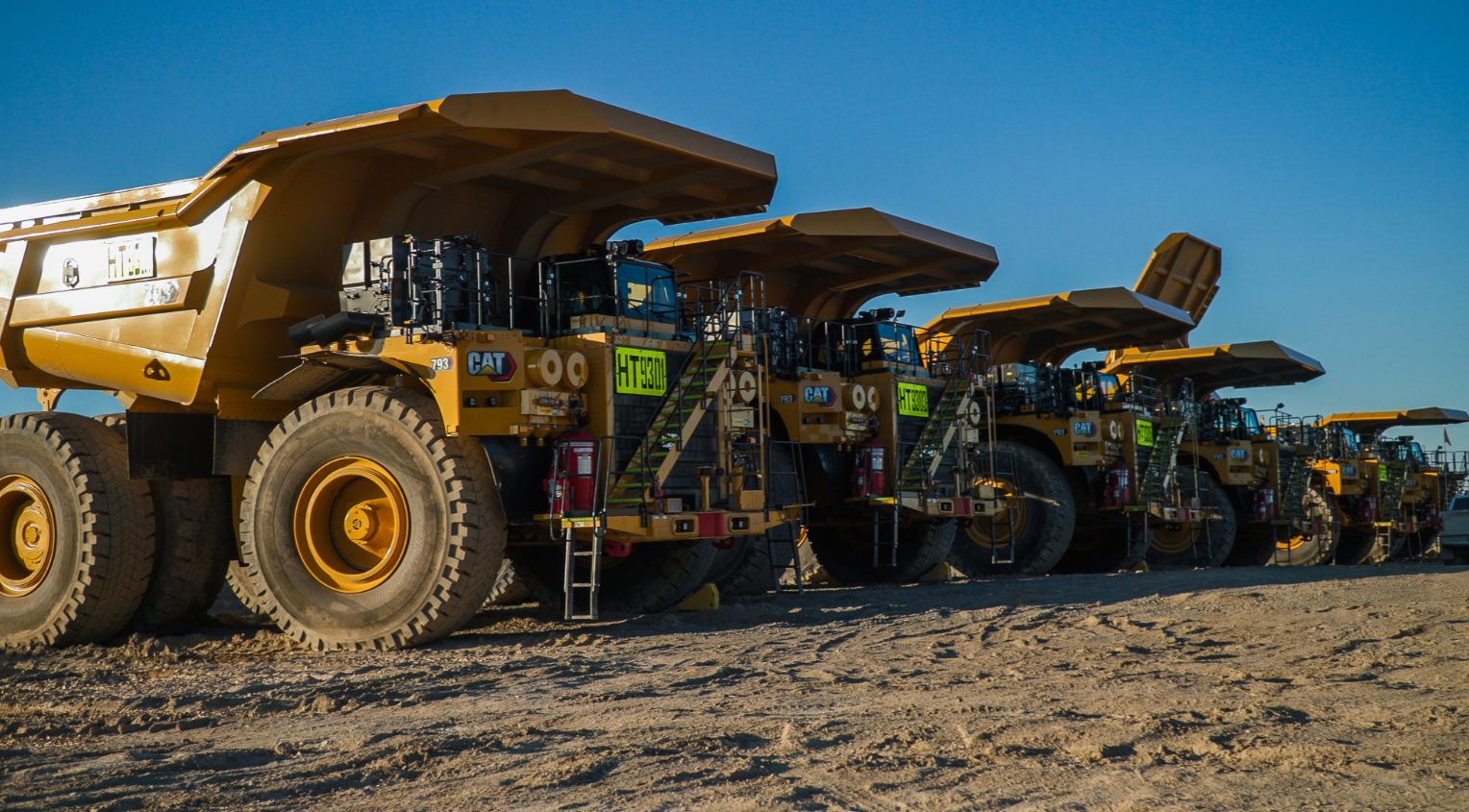
The EP2 mine plan considers the use of conventional open pit mining methods (drill-blast-load-haul), like the current operation. The existing mine equipment fleet – which includes Caterpillar 793 trucks with a Cat 6060 and two Cat 6040 hydraulic shovels – will be expanded progressively as mining rates increase from the 2025 mining rate of approximately 40 Mt/y to expected peak mining rates of 90-95 Mt/y, in line with the 2024 Expansion Study.
The company says it continues to evaluate alternative methods for transportation of waste material to help drive future cost savings, including crushing and conveying, as well electrification of the mine fleet. Decisions on electrification of the mine fleet and alternative methods for transportation will be made in 2026 and will depend on several factors, including securing the necessary long-term power requirements from BC Hydro.
The majority of site infrastructure requirements for EP2 are already in place for Phase 1 and Phase 1A. Certain other facilities will be upgraded or expanded to support EP2 operations.
The Blackwater Mine will continue advancing the construction of the tailings storage facility (TSF) and site water management infrastructure in alignment with previously established plans. This work includes raising the elevation of the existing tailings dam and developing the expanded footprint of the facility downstream, as originally contemplated. The scope and design of these facilities do not change with EP2, and the timing of the TSF raises and capital spend is planned to be consistent with the schedule defined in the 2024 Expansion Study. Detailed plans for the TSF and water management infrastructure installation may evolve along with ongoing site investigation drilling.
The costs associated with expanding the mine fleet, continuing to progress tailings and water management infrastructure, as well as other site infrastructure upgrades are in addition to the EP2 capital cost. Annual expenditure estimates for these items will be provided each year and for 2026 will be included as part of our production and cost guidance in January 2026. The 10-year all-in-sustaining cost guidance above includes sustaining capital costs associated with the mine fleet, tailings and water infrastructure projects, and other site infrastructure. During the expansion period (2026-2028), capital costs associated with expanding production will be considered growth capital and will not be included in AISC.
The company has received certain undertakings from BC Hydro which will secure sufficient supply of green hydropower for EP2. The EP2 investment decision is conditional upon receipt of formal confirmation of that supply, expected in early 2026.
The Blackwater Mine’s Federal and Provincial Environmental Assessment Certificates (EACs) allow for processing of up to 21.9 Mt/y (60,000 t/d). Alignment is required to the Provincial Mine’s Act permit to match the EACs, which is expected to be obtained in 2026, as well as certain minor permits for construction. In the near future, management plans to pursue increased permit limits for processing beyond EP2.
Back to Phase 1A, this was annoucned in September 2025, and was identified as an attractive step change opportunity to increase nameplate capacity from 6 Mt/y to 8 Mt/y by the end of 2026.
Some of the Phase 1A enhancements will support further optimisation of the existing processing plant and will be brought online in steps ahead of the overall Phase 1A completion date.
Phase 1A engineering, procurement and construction are advancing well. Some minor components have already been commissioned, the 3.5 MW vertical grinding mill has been ordered, and overall, 10 out of the 13 procurement packages have been committed.
During December 2025, the foundation civil works were completed for the new CIL pre-aeration and leach tanks. Foundation civil works are now progressing for the leach area containment slab, as well as the vertical mill supporting concrete and building foundations, with concrete pours for these facilities expected during Q1 2026.
The benefit of throughput increases from Phase 1A are expected to be realised by the end of 2026. The company estimates that Phase 1A will be completed at a capital cost of US$110 million, within the previously announced guidance range.
The post Artemis Gold announced Blackwater Phase 2 development board approval appeared first on International Mining.