
Automakers Chase the ‘Holy Grail’: Electric Motors That Don’t Depend on Chinese Rare Earths

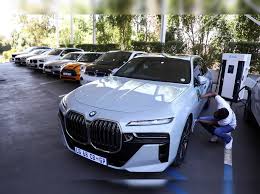
Global automakers are accelerating efforts to develop rare-earth-free electric motors, aiming to reduce their dependence on China, which currently dominates up to 90% of the world’s rare earth processing and magnet supply. The shift marks a major technological and geopolitical turning point in the EV industry, as companies race to secure resilient and sustainable supply chains.
Rare earth magnets—made from elements like neodymium, dysprosium, and terbium—form the backbone of permanent magnet motors used in most electric vehicles. But with rising prices, supply risks, and increasing geopolitical tensions, automakers are now pursuing alternative motor technologies that eliminate or significantly reduce reliance on Chinese materials.
Major companies including Toyota, BMW, Tesla, and General Motors are investing in new motor architectures such as:
-
Induction motors, which use copper instead of rare earth magnets
-
Switched reluctance motors, known for improved efficiency at lower cost
-
Ferrite-based magnet motors, which rely on abundant iron-based materials
-
Hybrid magnet configurations with drastically reduced rare earth content
Toyota recently unveiled a breakthrough ferrite magnet technology, while BMW is rolling out rare-earth-free motors in its next-generation EV lineup. Meanwhile, startups across Europe and the US are pioneering innovative designs using composite materials, advanced cooling systems, and AI-optimised winding patterns.
Industry analysts describe the transition as the “holy grail of EV engineering,” capable of reshaping global supply chains and reducing the auto sector’s vulnerability to geopolitical shocks. However, they caution that rare-earth-free motors still face hurdles, including efficiency trade-offs and higher production costs at scale.
The push for alternatives comes as governments tighten regulations on critical mineral sourcing, with the US and EU promoting domestic magnet supply chains and recycling. Experts predict that by 2030, a significant proportion of EVs could be powered by motors using little to no rare earths.
The race is not just technological—it’s strategic. Automakers that successfully crack the code of high-performance rare-earth-free motors may gain a decisive advantage in the rapidly expanding global EV market.