

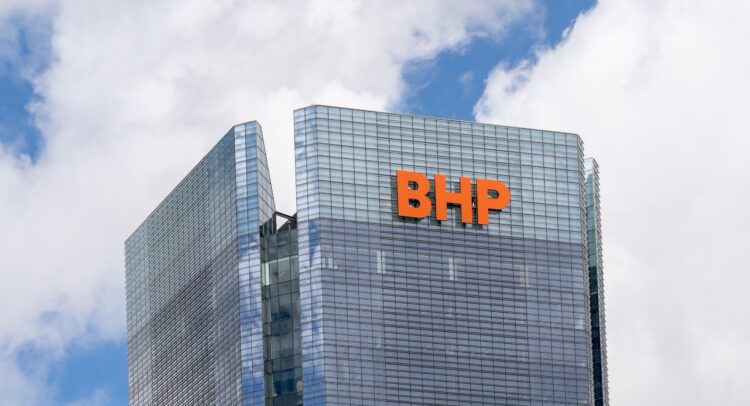
BHP Group Limited (ASX: BHP, NYSE: BHP), the world’s largest mining company by market capitalization, is increasingly viewed as an attractive investment opportunity due to its robust shareholder yield, high return on invested capital (ROIC), and strategic exposure to high-demand commodities like copper, uranium, and potash. With a diversified portfolio, low-cost production, and a valuation significantly below its peers, BHP is well-positioned to capitalize on global trends in energy transition, infrastructure, and agriculture. This article examines why BHP stands out as a potential hidden gem for investors in 2025, analyzing its financial metrics, commodity focus, valuation, and risk management strategies, while addressing recent developments and market dynamics.
High Shareholder Yield: A Magnet for Income Investors
BHP offers a compelling shareholder yield of approximately 7.4%, which combines its dividend yield and share buyback program. According to recent data, BHP’s dividend yield is around 4.84%, based on a $0.50 per-share interim dividend announced in February 2025, reflecting a payout ratio of approximately 77%. The company also returned $1.2 billion through share buybacks in 2024, enhancing shareholder value by reducing the number of outstanding shares, a tax-efficient method to boost per-share value. Over the past decade, BHP has distributed $83 billion in dividends and buybacks, translating to an average annual yield of about 8%. This consistent return of capital makes BHP particularly attractive for income-focused investors seeking reliable cash flows in a volatile commodity market.
The finance card above shows BHP’s current stock price at $51.201 USD as of August 4, 2025, with a market capitalization of $128.72 billion. The stock has risen 2.30% over the past month, indicating positive momentum despite a 23% drop in first-half profit due to lower iron ore and coal prices. BHP’s disciplined capital allocation ensures sustainable dividends, even in weaker commodity price environments, making it a stable choice for long-term investors.
Outstanding ROIC: A Marker of Efficiency
BHP’s return on invested capital (ROIC) stands at an impressive 19%, meaning the company generates $190 for every $1,000 invested in its first year, nearly double the industry average for major miners like Rio Tinto and Vale. In fiscal 2024, BHP reported an underlying EBITDA of $28 billion with a 54% margin and a return on capital employed (ROCE) of 29%, reflecting the efficiency of its tier-one assets. The copper segment, in particular, is projected to achieve a midcycle ROIC of 13% by fiscal 2029, well above BHP’s weighted average cost of capital (WACC) of 9%, earning it a “moatworthy” status.
High ROIC is a strong indicator of a company’s ability to generate value from its investments, often correlating with market outperformance. BHP’s low-cost production, especially in iron ore and copper, allows it to maintain profitability even during commodity price downturns. For instance, its Western Australia Iron Ore operations and Escondida copper mine in Chile are among the lowest-cost producers globally, ensuring resilience against market volatility. This efficiency positions BHP as a high-quality, cyclical investment for those seeking long-term growth.
Commodities Driving Growth: Copper, Uranium, and Potash
BHP’s diversified portfolio spans iron ore, copper, coal (metallurgical and energy), nickel, and potash, with a growing focus on commodities critical to the global energy transition and sustainable agriculture. Below is an analysis of its key growth drivers:
Copper: The Backbone of Electrification
Copper is a cornerstone of BHP’s growth strategy, driven by surging demand for electric vehicles (EVs), renewable energy systems, and data centers. The finance card above indicates BHP’s stock price has benefited from a 10% rise in copper prices to approximately $4.34 per pound in mid-2025 (though the user-provided data cites $5.59 per pound, which may reflect a peak or regional premium). BHP’s copper production increased 10% in the third quarter of 2024, largely due to higher output at Escondida, the world’s largest copper mine, and a 44% rise in copper segment EBITDA to $5 billion.
BHP holds the world’s largest copper mineral resources, with key operations at Olympic Dam, Prominent Hill, and Carrapateena in South Australia, and Escondida in Chile. The company is expanding copper production through projects like Spence and exploring opportunities in Peru, Ecuador, and Arizona. With global copper demand projected to grow 4% annually through 2030, driven by electrification and India’s semiconductor industry, BHP’s copper assets are a significant growth catalyst. However, supply challenges, such as the closure of Panama’s Cobre Panama mine, have tightened the copper concentrate market, supporting price stability.
Uranium: Powering the Nuclear Renaissance
Uranium prices have climbed to $71 per pound, reflecting growing adoption of nuclear energy as a low-carbon power source. BHP’s Olympic Dam mine in South Australia, one of the world’s largest uranium deposits, positions the company to capitalize on this trend. CEO Mike Henry has highlighted uranium as a “golden opportunity” for Australia, especially as global demand rises with nuclear energy’s role in net-zero goals. BHP’s ability to increase uranium production could drive significant revenue, particularly as developed economies implement interest rate cuts to stimulate industrial activity.
Potash: Feeding a Growing World
Potash, used in fertilizers, is another growth driver, with BHP’s Jansen project in Canada expected to supply 10% of global potash demand once fully operational. The project, despite a $4.5 billion investment to date and an additional $11 billion needed, is projected to operate in the lowest cost quartile, ensuring long-term profitability. Potash contributes over $1 billion in annual revenue, supported by rising global food demand and sustainable farming trends. However, near-term oversupply in the potash market may temper profitability, making it a long-term play.
Iron Ore and Coal: Mixed Outlook
While iron ore remains BHP’s largest revenue contributor, its outlook is mixed due to softening demand from China, which accounts for 60% of BHP’s sales. Iron ore prices are projected to stabilize at $80–$90 per ton, with BHP’s low-cost production ensuring profitability even in downturns. The coal segment, including metallurgical and energy coal, faces challenges, with operations like Mount Arthur set to close by 2030. BHP’s shift toward copper and potash reflects a strategic move away from carbon-intensive commodities like coal.
Valuation: An Undervalued Opportunity
BHP trades at a valuation 50% lower than competitors like Rio Tinto and Freeport-McMoRan, with a forward price-to-earnings (P/E) ratio of 14 compared to the industry average of 20–25. The finance card above shows a current price of $51.201 USD, with a 12-month analyst target of $48.50, suggesting a cautious outlook but potential for upside if commodity prices rebound. Analysts estimate BHP’s intrinsic value at $52 per share, offering a potential 10% annualized return, excluding deep-cycle buying opportunities. The stock’s price consolidation over the past year, with a year-high of $63.21 and a year-low of $39.73, indicates stability and potential for upward movement during pullbacks.
BHP’s undervaluation is partly due to a 30% share price decline over the past two years, driven by weaker iron ore and coal prices and global economic slowdowns. However, its diversified portfolio, low-cost assets, and strong cash flows mitigate these risks, making it an attractive buy for value-oriented investors. Recent analyst downgrades, such as BMO Capital’s shift to “Market Perform” and Berenberg’s “Sell” rating, reflect near-term concerns about commodity price volatility, but positive ratings from Morgans and JPMorgan highlight BHP’s long-term potential.
Risk Management: Navigating Volatility
Investing in BHP, like any mining stock, involves exposure to commodity price volatility and macroeconomic risks. Key risks include:
-
Commodity Price Swings: Iron ore, copper, and coal prices are sensitive to global demand, particularly from China.
-
Macroeconomic Slowdown: A global recession could dampen commodity demand, though India’s growth as the fastest-growing major economy offers a counterbalance.
-
Project Execution Risks: Delays or cost overruns at the Jansen potash project could impact cash flows.
-
Trade Policies: Potential tariffs, such as those proposed by the U.S., could affect BHP’s exports, though CEO Mike Henry believes the impact will be muted.
To manage these risks, investors are advised to buy during price pullbacks, as seen in BHP’s consolidation phase, and use automated stop-loss orders to limit downside exposure. BHP’s diversified portfolio and low-cost production provide a buffer against volatility, while its focus on future-facing commodities like copper and uranium aligns with long-term global trends.
Why BHP Stands Out
BHP’s combination of high shareholder yield, exceptional ROIC, and exposure to high-demand commodities makes it a compelling investment. Its copper segment, bolstered by assets like Escondida and Olympic Dam, positions it to meet rising demand for electrification and renewable energy. Uranium and potash further enhance its growth potential, while its iron ore operations remain profitable despite market challenges. The company’s undervaluation, disciplined capital allocation, and commitment to net-zero emissions by 2050 align with both investor and ESG priorities.
Recent developments, such as a 10% rise in third-quarter copper output and the launch of the BHP Potash Academy in Canada, underscore BHP’s operational strength and long-term vision. Despite a 23% profit drop in the first half of 2024, CEO Mike Henry’s optimism about recovering demand in China and developed economies, supported by central bank rate cuts, signals a positive outlook. BHP’s strategic shift away from iron ore toward copper and potash, under incoming chairman Ross McEwan, further enhances its appeal as a diversified, future-focused miner.
Conclusion
BHP Group is a hidden gem for investors seeking exposure to the global energy transition and sustainable agriculture. Its 7.4% shareholder yield, 19% ROIC, and low-cost production in copper, uranium, and potash position it for sustained growth. Trading at a 50% discount to peers, BHP offers a compelling valuation with potential for 10% annualized returns. While commodity price volatility and project risks remain, BHP’s diversified portfolio, operational excellence, and strategic focus on high-demand commodities make it a standout choice. As global demand for infrastructure, clean energy, and food security grows, BHP is poised to deliver long-term value for investors.