
BME says it is driving the development of connected AI-powered mining operations

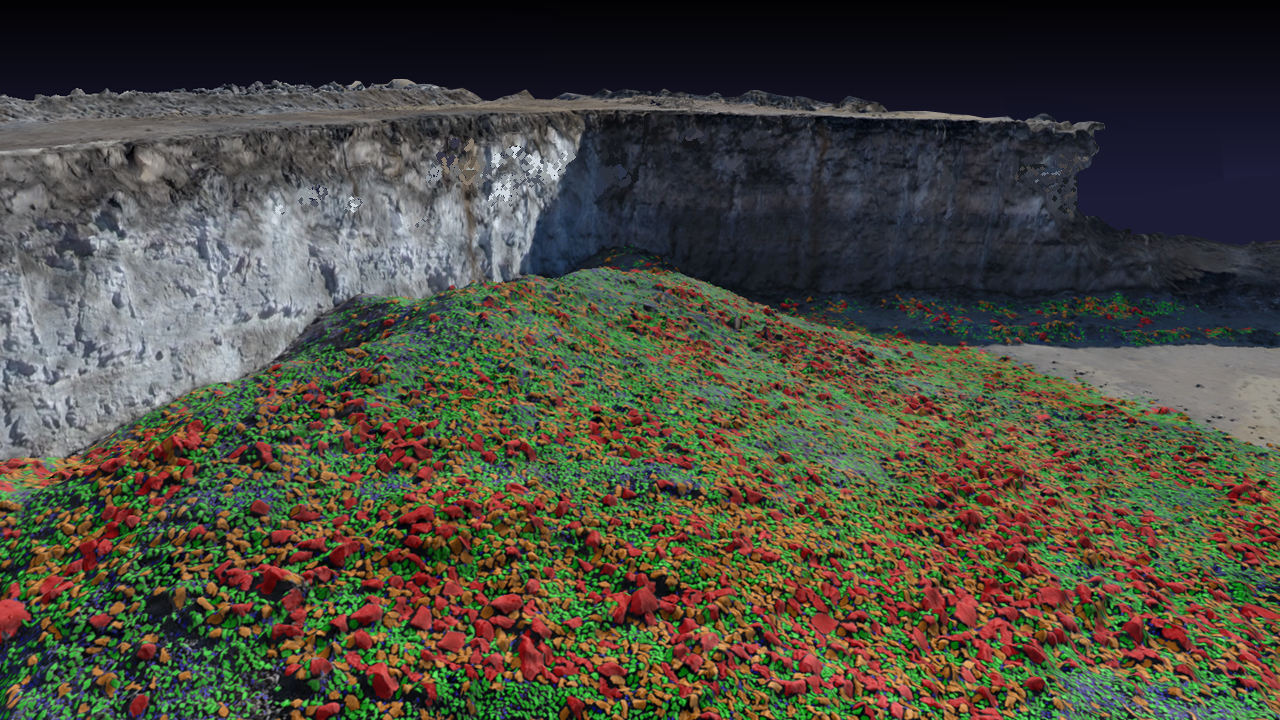
In the fast-evolving mining industry, BME – a member of the Omnia Group – is transforming traditional blasting from a rock-breaking activity into a sophisticated, data-driven enabler of safer, more efficient and sustainable operations, it says.
“With over 40 years of specialised expertise, we are proving that when advanced explosives are integrated with cutting-edge digital technologies, the value created extends far beyond the blast bench,” Nishen Hariparsad, General Manager of Technology & Marketing at BME, says.
“This aligns perfectly with BME’s commitment to delivering innovative, value-adding solutions that drive real operational and environmental progress,” he said. In this way, BME says it has positioned itself not just as an explosives provider, but as a strategic partner in building the smarter, greener mines of tomorrow.
Hariparsad said that through premium electronic initiation systems, AI-powered platforms and a deliberate focus on integrity-first autonomy, BME was helping mines close the loop from pit to plant while prioritising the single most important outcome: safety.
“Explosives remain the most cost-effective method of breaking rock, but their true power lies in application,” he said. “BME’s philosophy of positive disruption places responsible, sustainable solutions at the centre.”
The company’s flagship AXXIS electronic initiation system exemplifies this shift. “By delivering unmatched precision and accuracy, AXXIS produces predictable fragmentation outcomes that cascade through the entire value chain,” Hariparsad said. “The benefits include faster excavation, higher shovel and loader productivity, improved mill throughput, reduced crusher downtime and lower reliance on diesel generators.”
He noted that these were not incremental gains, but measurable reductions in environmental footprint and operational cost. “This proves that sustainability and profitability are not opposing forces but mutually reinforcing outcomes,” he said.
Hariparsad said a significant game-changer was the way BME was using data intelligently as opposed to just collecting more data.
“BME has evolved from a fit-for-purpose explosives supplier to a future-fit technology partner by treating blasting as the first link in a fully connected, autonomous and auditable mining system,” he said.
The company’s digital technologies capture critical data at every stage – from hole loading through to final mill product – enabling real-time decision making, it claims.
“Electronic initiation systems, for example, allow engineers to access best-practice blasting parameters, reducing downtime, vibration and overbreak,” he said, adding that the result was not just better fragmentation at the blast face, but downstream benefits. These are overlooked when evaluating only the unit cost of the product instead of the total value across the chain, BME notes.
“For example, accurate blasting enables predictive maintenance scheduling, tighter crusher feed control, optimised energy consumption and consistent mill throughput,” Hariparsad said. “These are advantages that appear far downstream of the procurement decision yet deliver the greatest financial and environmental return.”
Hariparsad said that BME recognised that AI, autonomy and automation would define the mine of the future – and was deliberately shaping how these technologies were embedded.
“XPLOSMART, our AI-enabled blasting optimisation system, is built on an ‘integrity-first’ foundation,” he said. “XPLOSMART is not merely another algorithm; it represents a mindset shift that places traceability, explainability and safety at its core.”
He said that engineers remained firmly in control. “Every AI-generated recommendation is traceable back to its source data, fully auditable and designed to support – never replace – human oversight,” he explained.
He added that outcomes spoke directly to customer priorities: safer pit walls, steadier plant feed and lower energy consumption per tonne. “Considering the data feeding these AI systems is verified and trustworthy, the insights are actionable across the entire operation, from blast design to final product,” he explained.
He said that this approach aligned with the industry’s move toward completely autonomous mines – a reality already unfolding at select operations worldwide. “As people move off the bench, they must be up-skilled for higher-value roles in data analysis, system optimisation and strategic decision making – the essence of a genuine just transition,” he said.
Redefining resource extraction
Hariparsad said that the outdated image of mining – dusty, dangerous and labour-intensive – bore little resemblance to today’s reality. “The industry has embraced world-class innovations to overcome intricate technical hurdles while placing actionable data directly in the hands of mining personnel,” he said.
He noted that by demonstrating that technology aligned with meaningful purpose, the mining industry would be able to better attract younger talent to replenish the skills pipeline.
“The mining sector is far removed from outdated perceptions; it has evolved into a sophisticated digital domain, moving beyond simply extracting rock,” he said.
Hariparsad said that in the future, mining would no longer be defined by explosives, open pits, or haul trucks. “Instead, it will be characterised by seamless interactions between humans and intelligent systems operating around the clock,” he said. “These relationships will extend to algorithms, mines and markets, companies and regulators, primary and secondary resources, as well as extraction and regeneration processes.”
He said that the business models emerging from these interactions would shape the economics, politics, and sustainability of critical materials. “Mines will evolve into integrated materials intelligence systems,” he said, adding that these ecosystems would be achieved through the consolidation of resources, technologies, and strategic partnerships.
While pockets of innovation exist today, he noted that they often operated in isolation. “By fostering effective collaborations and developing a cohesive ecosystem of interdependent technologies and solutions, we can realise a true materials intelligence system that enables us to achieve far more with significantly less,” he said.
He said BME viewed technologies as a robust pathway to navigate turbulent markets – characterised by rising utility costs, commodity price fluctuations and other pressures that our customers face daily. “These challenges become our own, driving our commitment to innovation,” he said.
He said BME’s research and development efforts were deliberately focused on delivering tangible benefits in efficiency, safety, productivity and sustainability. “By actively listening to our clients and aligning our priorities with their needs, we develop targeted solutions that address real-world pain points,” he concluded.
The post BME says it is driving the development of connected AI-powered mining operations appeared first on International Mining.