

Support CleanTechnica’s work through a Substack subscription or on Stripe.
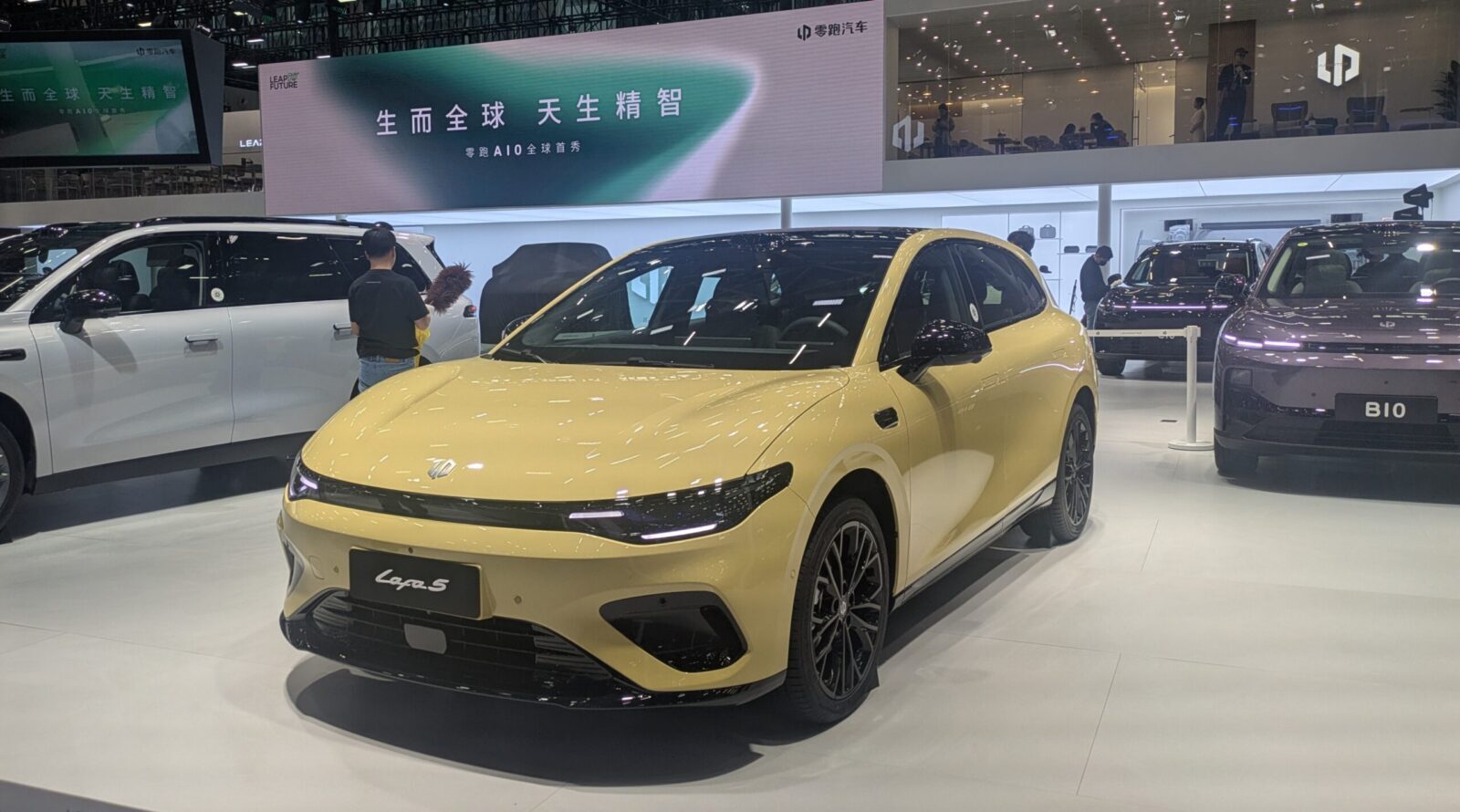
When looking at the cars from Leapmotor, I got the impression that they were attractive but a bit like vanilla ice cream. Good, but not the most flavorful. However, in the context of their partnership with Stellantis, the potential to rebrand with localized flavors on top of that “vanilla” is something to look forward to.
While sitting in the back of a Lafa 05 (aka B05), I started up a conversation with a marketing person from Li Auto. Li Auto vehicles are anything but vanilla, with lots of tech but polarizing styling. She asked me what I thought. Overall, the design was clean and restrained. The materials that you touched the most seemed to be high quality, with hard plastics proliferating a little out of reach … but the most exciting thing was what it could become with a few tweaks. Change out a few injection molded trim pieces, and it could be an Opel inside. Swap out some more trim, bumper covers, headlights, etc., and it could easily be a Peugeot. While the tech on board wasn’t the most advanced at the show, it also wouldn’t overwhelm the older European buyers and wouldn’t look too out of place in the lineup of existing European brands. From what I have heard, the tuning is comfort oriented to fit Chinese market preferences. But a few steering and suspension tweaks with the stiff structure and RWD chassis could quickly change that.
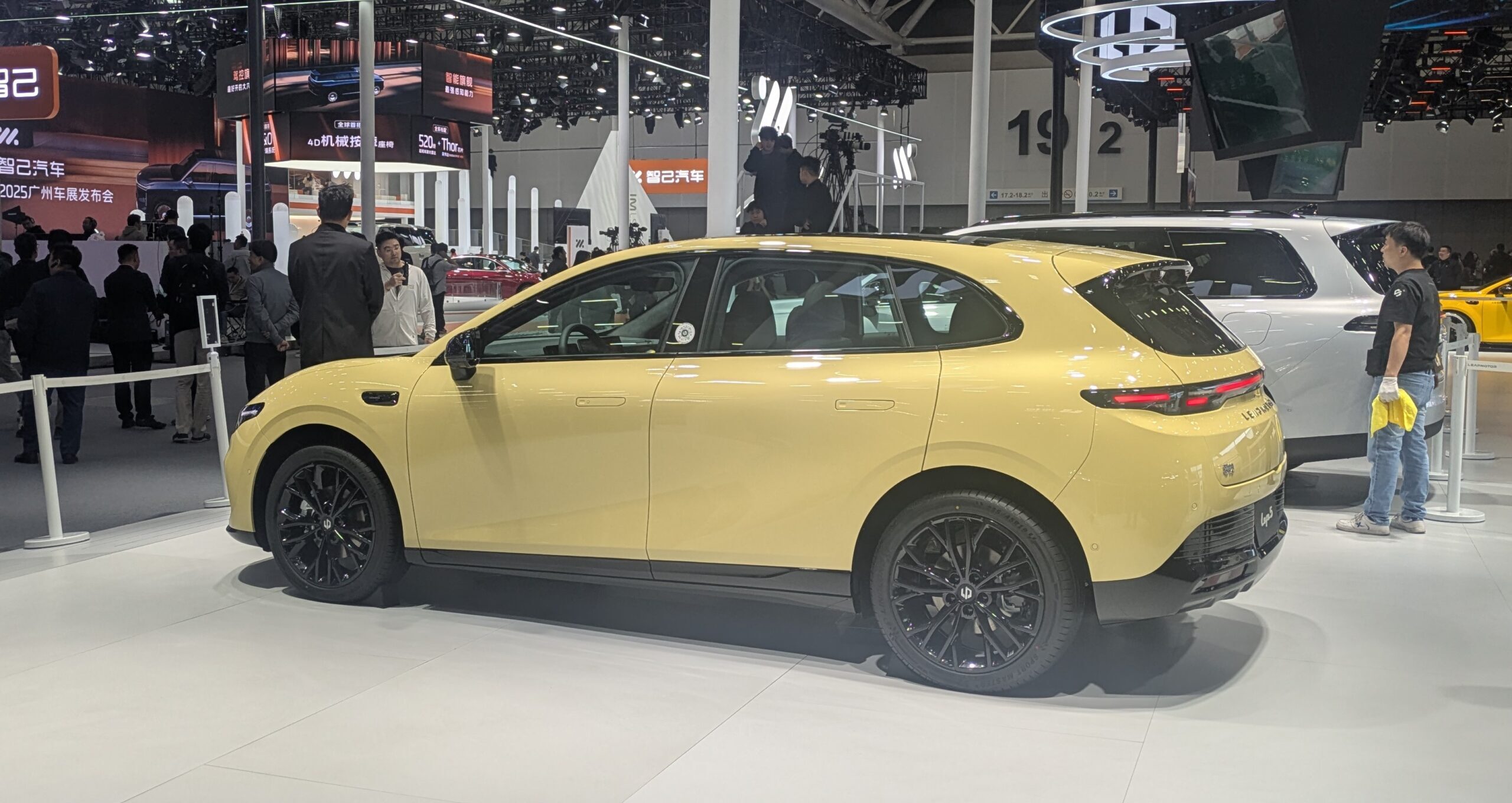
While not the most exciting vehicle at the show overall, it was very exciting because I could actually see the B05 working in Western markets. In addition, with an entry level price of 92,800 RMB ($13,100), enough cost has been engineered out to make it adaptable to European tariffs or more expensive localized manufacturing on the continent.

Beyond the Lafa 5, the A10 (aka B03X) also debuted at the show. The press release on the Stellantis media website shows that Leap’s partner is excited about it. This 4.2 m long (165 in.) SUV/crossover could easily be rebadged as a Fiat, or even as a European market Jeep. It offers 500 km of CLTC range and LiDAR-based ADAS in a value-oriented package. No details on price yet, although it is expected to fall below the B05. It could be attractive to urban drivers in many markets.
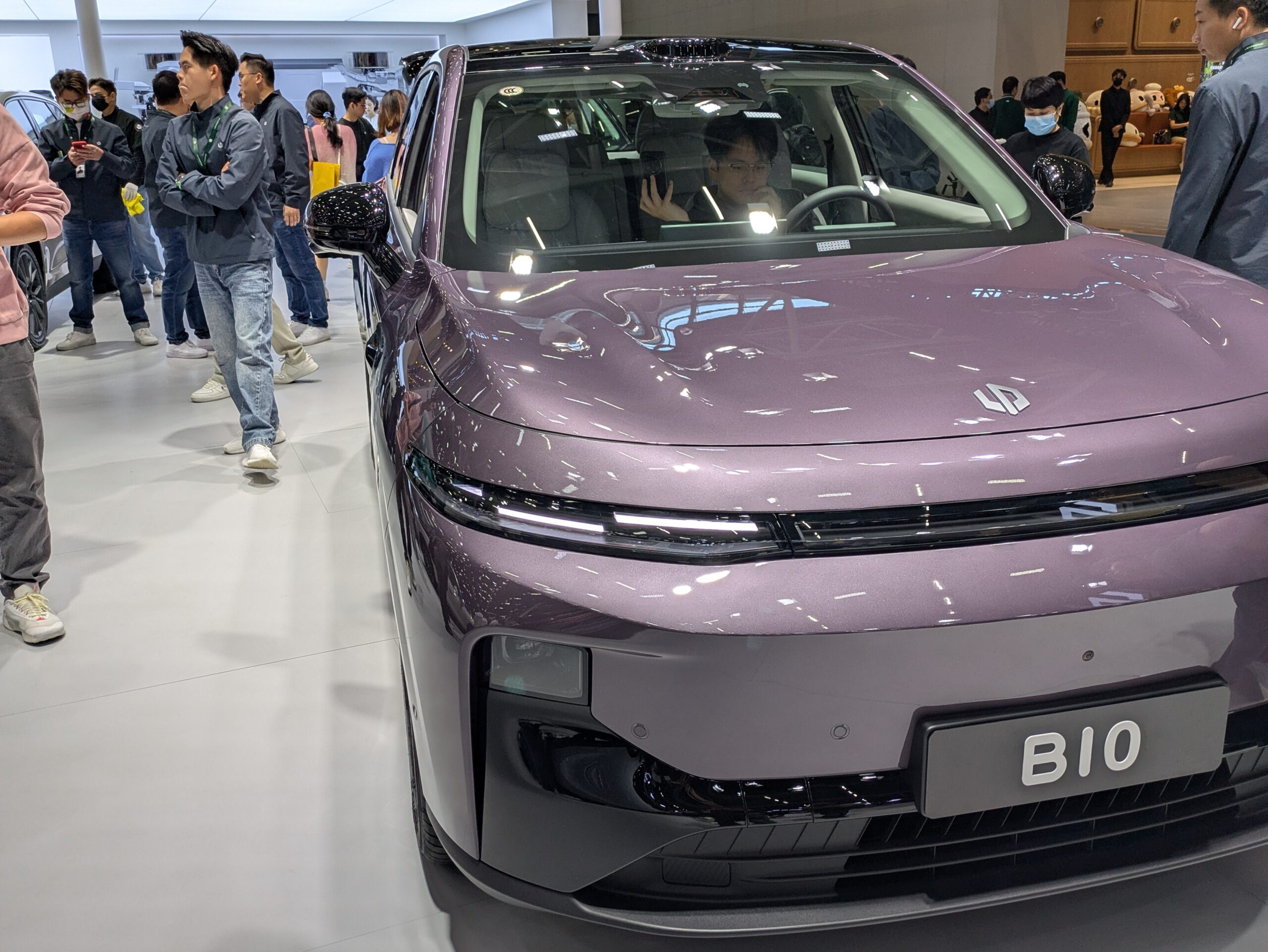
One size up from that, the B10 could fit well into the popular compact crossover segment and be rebadged to fit several brands. It comes with RWD and up to a 67 kWh LFP battery with 168 kW charging capacity. With a 0–100 km/h time of 8 seconds, it isn’t the fastest EV out there. However, with a 99,800 RMB starting price ($14,000), it has a strong value proposition.
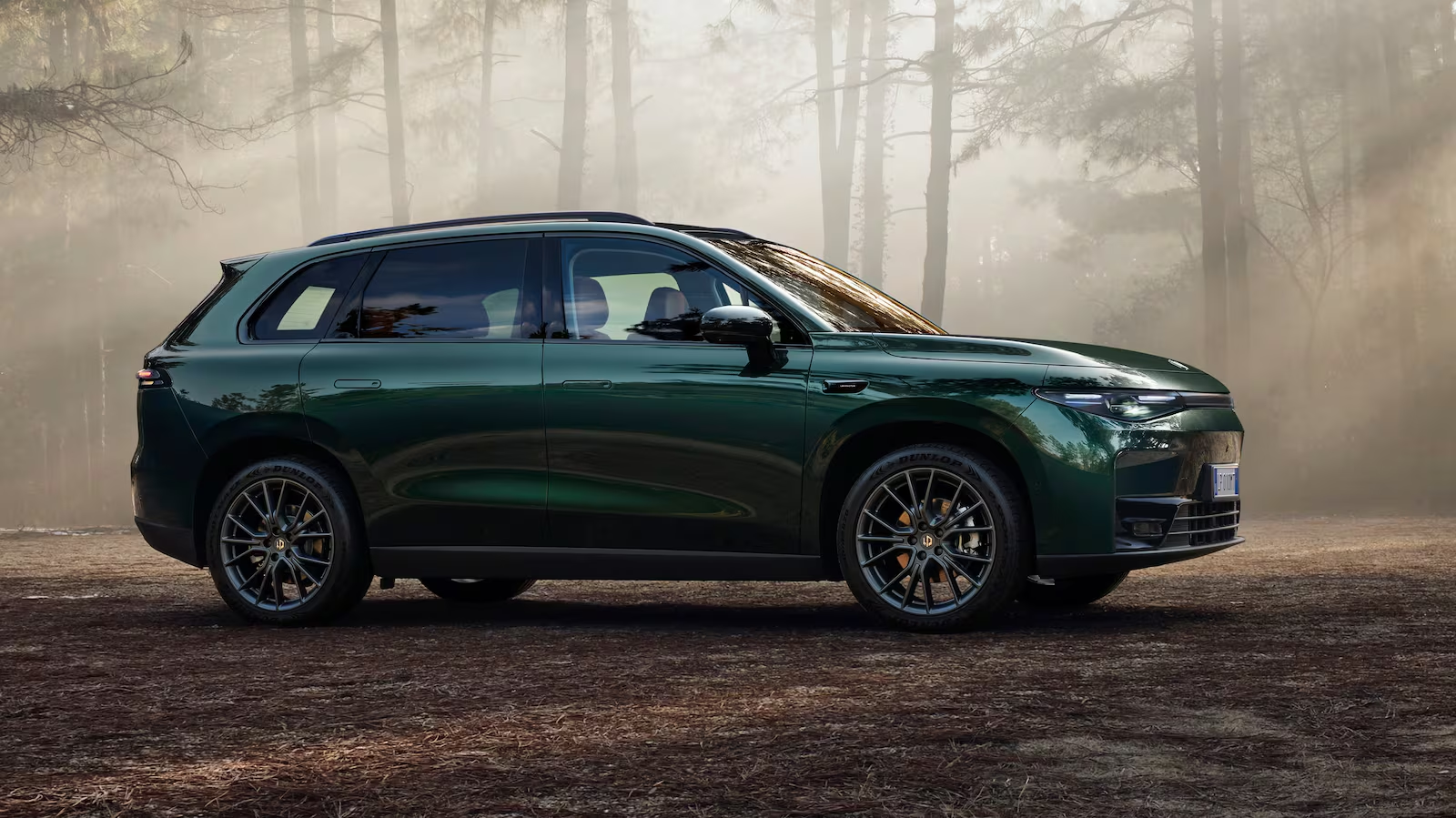
Into the midsized segment, the C10 SUV/crossover wouldn’t take too much restyling to fit into the US Jeep lineup. The EV versions come on 800V architecture with prices starting from 122,800 RMB ($17,000) in China. For a few thousand dollars more, the top spec 598 hp AWD BEV version accelerates from 0–100 km/h in 4 seconds. With a little restyling, it could easily slot below the new Jeep Recon in price ($65,000) for a more road-centric vehicle. However, it would likely slot above it in build quality and technology.
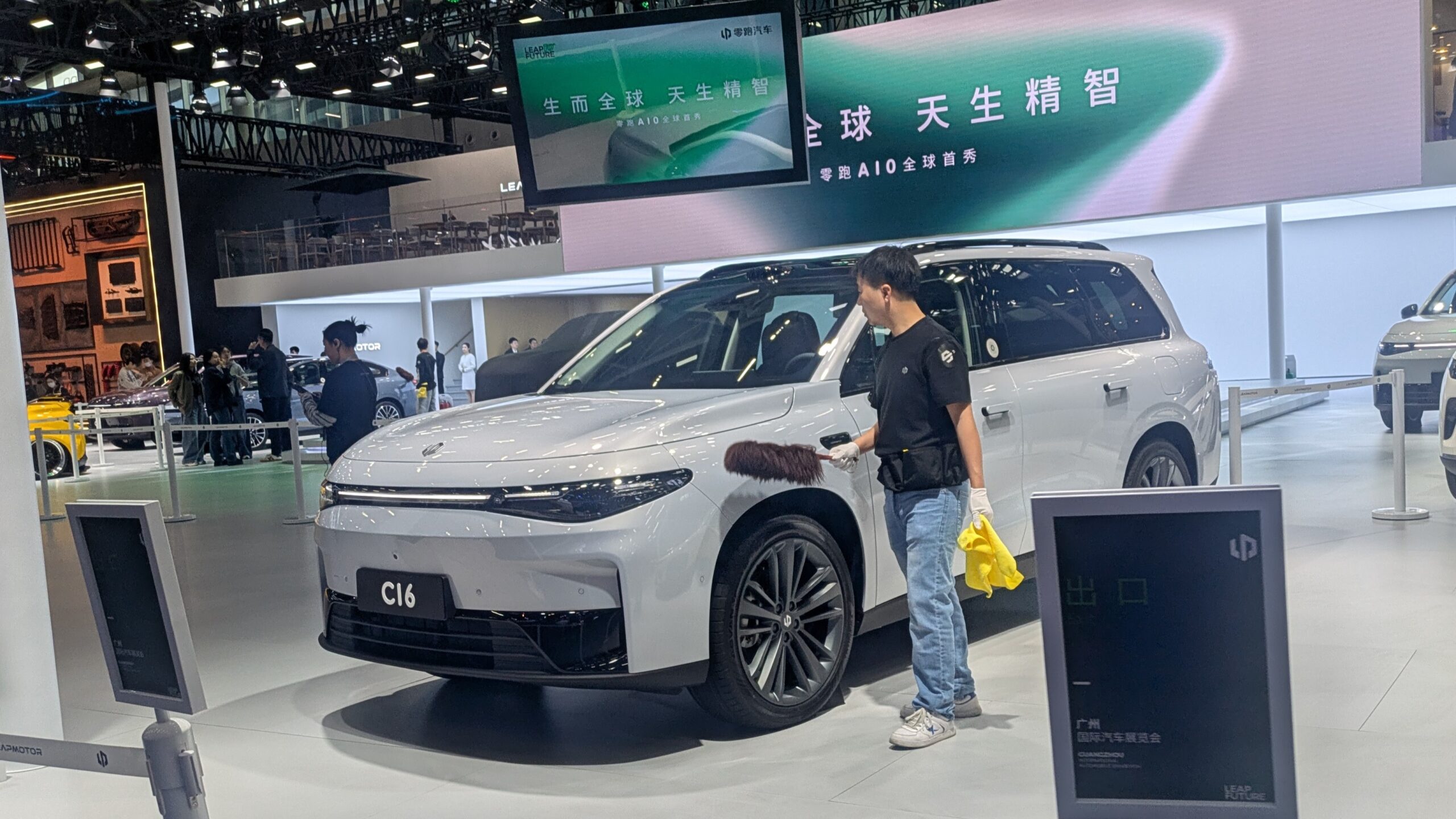
One size up from that, the larger B16 could easily be rebadged to fit Dodge or Chrysler’s family-oriented lineup. The SUV/crossover is offered in two- or three-row configurations for family-hauling duties. The BEV comes with LFP batteries in capacities from 74.9 kWh to 81.9 kWh, for a range of up to 630 km CLTC. BEV versions come with RWD with 295 hp. Meanwhile, the EREV combines 200–280 km (125–175 miles) of battery range with a 1.5l range extender but drops to 228 hp on the rear axle. In China, prices fall from 151,800 to 181,800 RMB ($21,000 to $26,000).
The Rebadge Potential
It might still be wishful thinking, but there is a chance that these vehicles could eventually no longer fall into the “You Can’t Buy This America” category. Stellantis hasn’t announced the rebadges, but the potential is clearly there. Even if Chinese production is blocked by protectionism, Stellantis is ramping up production in its plants in Poland and Spain. More production and technology integration could be on the way. More Leapmotor models are also on the way and updates are launched regularly. Those cars could potentially make it to the US, pending trade relations with the EU. If the next administration brings back ZEV mandates and CAFÉ fuel economy penalties, Stellantis could be also scrambling to find high-volume EVs for the US market (if they don’t abandon it).
Overall, Leapmotor cars were attractive vehicles but not as exciting as some other EVs I saw at the show, such as those from XPENG, which hosted me. However, the chance that we might eventually see these vehicles on Western roads with a few toppings added by familiar brands to fit local tastes makes the otherwise vanilla of the cars an exciting flavor.
Sign up for CleanTechnica’s Weekly Substack for Zach and Scott’s in-depth analyses and high level summaries, sign up for our daily newsletter, and follow us on Google News!
Have a tip for CleanTechnica? Want to advertise? Want to suggest a guest for our CleanTech Talk podcast? Contact us here.
Sign up for our daily newsletter for 15 new cleantech stories a day. Or sign up for our weekly one on top stories of the week if daily is too frequent.
CleanTechnica uses affiliate links. See our policy here.
CleanTechnica’s Comment Policy