
Bucket Wheel Excavators: Powering High-Yield Mining for Lignite and Phosphates

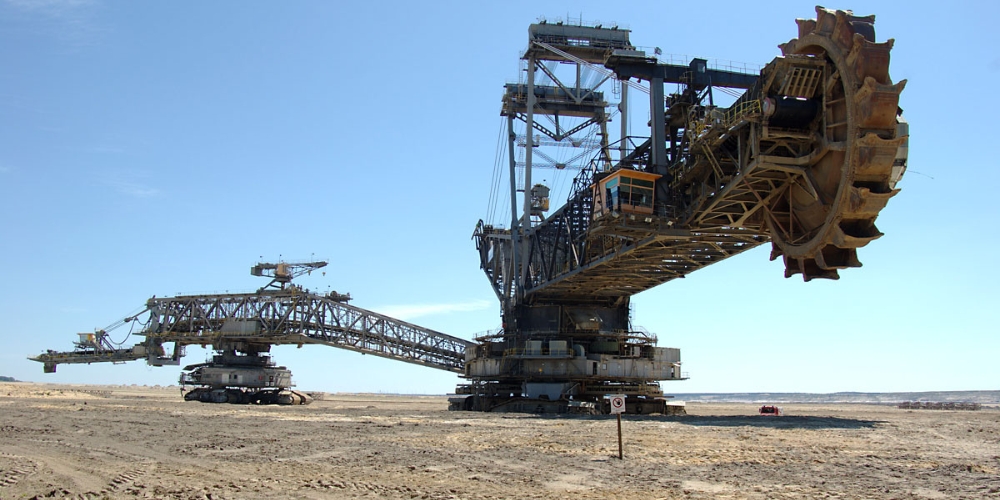
Bucket wheel excavators (BWEs) are engineering marvels that drive the backbone of heavy mining operations, particularly for lignite, phosphates, and other bulk minerals. Renowned for their massive scale and unparalleled productivity, these machines can achieve outputs of up to 240,000 tonnes per day in lignite mining, as reported by Thyssenkrupp, a global leader in mining equipment. With average productivity for large excavators (over 50 tons) ranging from 1,000 cubic meters per hour (m³/h) to several hundred thousand tons per day, BWEs are critical to efficient mineral extraction. In the context of India’s recent mineral discoveries, such as the ₹1.5 lakh crore gold reserves in Jabalpur, and the push for self-reliance under Atmanirbhar Bharat, BWEs hold transformative potential for the mining sector. This article explores the productivity, applications, and implications of bucket wheel excavators, highlighting their role in powering India’s economic and industrial ambitions as of August 14, 2025.
The Power of Bucket Wheel Excavators: Productivity Metrics
Bucket wheel excavators are among the largest machines in the world, designed for continuous mining of soft to semi-hard materials like lignite, phosphates, and overburden in open-pit mines. Their productivity is measured in two primary metrics: cubic meters per hour (m³/h) for volumetric output and tons per day for material weight. According to Thyssenkrupp, a single BWE can achieve a staggering 240,000 tonnes per day in lignite mining, equivalent to filling a football stadium with material every few hours. This high handling capacity makes BWEs indispensable for large-scale operations.
For large excavators (over 50 tons) used in mines and quarries, statistical studies indicate an average productivity of approximately 1,000 m³/h, though this varies based on machine size, ore type, and operating conditions. For instance:
-
Lignite Mining: BWEs can extract 200,000–240,000 tons per day due to lignite’s low density (1.1–1.4 tons/m³), translating to 140,000–218,000 m³/day.
-
Phosphate Mining: Productivity may range from 100,000–200,000 tons per day, as phosphates are denser (1.5–2.0 tons/m³), requiring adjustments in bucket design and cycle time.
-
Other Minerals: In mixed-material quarries, outputs range from 50,000–150,000 tons per day, depending on rock hardness and site logistics.
These figures highlight the versatility and efficiency of BWEs, which can operate 24/7 with minimal downtime, unlike traditional excavators. Their continuous digging mechanism, using a rotating wheel with multiple buckets, ensures a steady flow of material, making them ideal for high-volume mining.
Factors Influencing BWE Productivity
The productivity of bucket wheel excavators depends on several factors:
-
Machine Size and Design: Larger BWEs, like Thyssenkrupp’s models with wheel diameters up to 21 meters, can handle higher volumes. Smaller units may average 500–800 m³/h, while mega-excavators exceed 2,000 m³/h.
-
Ore Type: Lignite, being softer, allows higher outputs than denser materials like phosphates or iron ore, which require slower digging cycles.
-
Operating Conditions: Weather, terrain, and site logistics (e.g., conveyor belt integration) impact efficiency. For example, wet or sticky ore can reduce output by 10–20%.
-
Maintenance and Technology: Regular maintenance and advanced features like automated controls and IoT sensors enhance uptime and precision, boosting productivity by up to 15%.
In India, where lignite mining is concentrated in states like Tamil Nadu and Gujarat, and phosphate mining occurs in Rajasthan, BWEs could significantly enhance output, supporting the nation’s mineral self-sufficiency goals.
Applications in India: Lignite, Phosphates, and Beyond
India’s mining sector is poised for growth, with the recent discovery of 35 million tonnes of gold-bearing ore in Jabalpur, Madhya Pradesh, valued at ₹1.5 lakh crore, underscoring the need for advanced extraction technologies. BWEs are particularly suited for:
-
Lignite Mining: India produces about 45 million tonnes of lignite annually, primarily for thermal power plants. BWEs could double output in mines like Neyveli (Tamil Nadu), where lignite deposits are abundant, supporting energy security.
-
Phosphate Mining: Rajasthan’s phosphate mines, critical for fertilizer production, could benefit from BWEs to increase output, reducing India’s $2 billion phosphate import bill.
-
Gold and Other Minerals: While gold ore in Jabalpur may require specialized processing due to its hardness, BWEs can handle overburden removal, accelerating site preparation and reducing costs.
The Ministry of Coal, under Secretary Shri Vikram Dev Dutt, has emphasized sustainable mining as part of Atmanirbhar Bharat. BWEs, with their efficiency and ability to integrate with conveyor systems, align with this vision by minimizing environmental impact compared to traditional methods.
Economic and Technological Implications
The adoption of BWEs in India’s mining sector offers significant economic and technological benefits:
-
Economic Impact: A single BWE producing 200,000 tons per day could extract Jabalpur’s 35 million tonnes of gold-bearing ore in under six months, generating thousands of jobs and ₹1.5 lakh crore in revenue. Reduced lignite and phosphate imports would save $3–5 billion annually, strengthening foreign exchange reserves.
-
Tech Rush: The Jabalpur discovery has sparked interest in mining-tech startups. BWEs could integrate with drone-based surveying (e.g., Skylark Drones), AI-powered exploration (e.g., Tathastu AI), and IoT for mine safety (e.g., SenseHawk), creating a $1–2 billion market by 2030.
-
Global Competitiveness: Shandong, China’s 13 million tonnes of iron ore concentrate output in 2024 highlights the scale of modern mining. India’s adoption of BWEs could position it as a global mineral hub, countering challenges like the US’s 50% tariffs on Indian exports.
Challenges and Opportunities
Challenges
-
High Capital Costs: BWEs require significant investment (₹100–200 crore per unit), posing challenges for smaller mining firms.
-
Environmental Concerns: Large-scale excavation risks habitat disruption, requiring strict adherence to environmental regulations, as seen in Jabalpur’s eco-sensitive Mahakoshal region.
-
Skilled Workforce: Operating BWEs demands specialized training, necessitating skill development programs aligned with India’s National Skill Development Mission.
-
Global Trade Tensions: US tariffs and supply chain disruptions, similar to those affecting Shandong’s iron ore industry, could impact equipment imports for BWEs.
Opportunities
-
Job Creation: BWEs can create 5,000–10,000 jobs per major project, from operators to maintenance engineers, boosting local economies.
-
Sustainable Mining: Integration with green technologies, like electric-powered BWEs and water-efficient processing, aligns with India’s environmental goals.
-
Market Diversification: Leveraging FTAs with the UK and UAE can facilitate BWE technology imports and mineral exports, offsetting US tariff impacts.
-
Startup Ecosystem: The mining-tech rush offers opportunities for startups to innovate in automation, safety, and sustainability, supporting Atmanirbhar Bharat.