
Cabinet Approves ₹1,500 Crore Incentive Scheme to Boost Critical Mineral Recycling in India

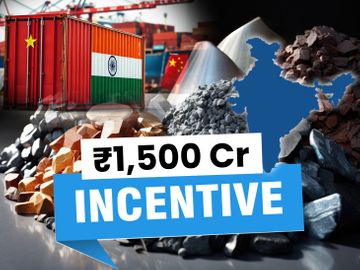
In a major push toward sustainable resource management, the Union Cabinet has approved an incentive scheme worth ₹1,500 crore to promote critical mineral recycling across the country. The scheme is aimed at building capacity to recycle battery waste and electronic waste (e-waste) to extract essential critical minerals, reducing dependence on imports and supporting India’s clean energy ambitions.
Why Critical Mineral Recycling Matters
Critical minerals like lithium, cobalt, nickel, and rare earth elements are vital for batteries, renewable energy technologies, electric vehicles, and advanced electronics. With India’s demand for these minerals rising sharply, recycling is seen as a key pathway to secure supply chains and minimize environmental damage from primary mining.
Key Features of the Scheme
-
Financial Incentives: ₹1,500 crore allocated to support companies investing in recycling infrastructure.
-
Focus Areas: Extraction of lithium, cobalt, nickel, and other critical minerals from battery waste and e-waste.
-
Capacity Building: Encouragement of technology adoption, R&D, and scaling of modern recycling facilities.
-
Circular Economy Model: Promoting reuse and recovery to reduce the nation’s dependency on imported raw materials.
National and Global Context
India currently imports the bulk of its critical minerals, leaving it vulnerable to supply chain disruptions and global price volatility. Recycling not only helps reduce this dependence but also contributes to environmental sustainability by lowering the pressure on land, water, and ecosystems associated with mining. Globally, leading economies like the U.S., EU, and Japan have already invested heavily in recycling as part of their green transition, and India is now taking steps to align with this trend.
Industry Impact
-
Battery Manufacturers: Access to recycled lithium, cobalt, and nickel will lower production costs and support domestic EV and renewable energy industries.
-
E-Waste Recyclers: New business opportunities will emerge as formal recycling infrastructure expands.
-
Investors: Strong policy support will attract both domestic and international players to set up advanced recycling plants in India.
The ₹1,500 crore incentive scheme reflects India’s commitment to building a resilient, sustainable, and self-reliant supply chain for critical minerals. By turning waste into a resource, the government is not only tackling the challenge of growing e-waste but also laying the foundation for a robust circular economy that aligns with India’s climate and energy goals.